
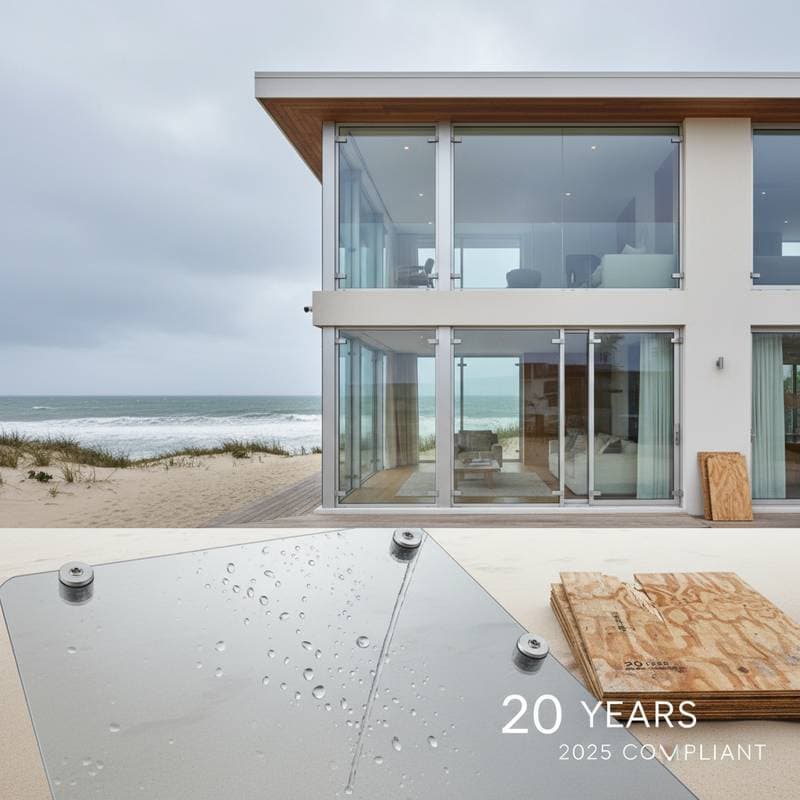
Why Transparent Storm Panels Outlast Plywood for Coastal Protection
Coastal homeowners confront a persistent threat: protecting properties from intense storms, powerful winds, and airborne debris. Plywood has served as the standard for temporary storm barriers for decades. However, transparent storm panels emerge as a superior alternative, offering enhanced performance, ease of use, and enduring benefits. For those residing along the coast, selecting protection that maintains visibility and preserves aesthetics proves crucial.
This guide details the advantages of transparent panels over plywood in coastal settings. Readers gain insights into actual expenses, setup processes, effectiveness metrics, and upkeep needs. Expert recommendations assist in selecting the optimal system for specific properties.
Cost Breakdown by Project Size
Project expenses hinge on the extent of coverage required and the chosen panel type.
| Project Scope | Average Total Cost | Typical Coverage | Ideal For |
|---|---|---|---|
| Small Home (under 1,500 sq. ft.) | $2,000 - $3,500 | Key windows and doors | Seasonal storm readiness |
| Mid-Size Home (1,500 - 2,500 sq. ft.) | $3,500 - $7,000 | All exterior openings | Properties in moderate coastal areas |
| Large Coastal Home (2,500+ sq. ft.) | $7,000 - $12,000 | Complete building envelope | High-risk hurricane-prone regions |
Transparent panels support permanent or semi-permanent setups, minimizing repeated preparations each storm season. Plywood demands fresh cutting, marking, and securing with every event, which accumulates significant labor expenses over time.
Labor Expenses and Setup Factors
Installation labor rates fluctuate by location, typically ranging from $40 to $75 per hour. For a mid-size home featuring approximately 20 openings, expect 15 to 25 hours of work.
Transparent panels accelerate the process through custom sizing and attachment via tracks or bolts, facilitating straightforward detachment. Plywood necessitates on-site trimming, marking, drilling, and reinforcement for each application. This efficiency yields labor savings of several hundred dollars per storm.
Setup Comparison
| Installation Factor | Plywood | Transparent Panels |
|---|---|---|
| Custom Fit | Requires manual cutting | Factory-precut to precise dimensions |
| Hardware System | Screws and anchors | Track or clip mechanisms |
| Labor Time (per window) | 30 - 45 minutes | 10 - 20 minutes |
| Reinstallation Time | Complete recutting if damaged | Rapid reattachment |
Across multiple seasons, transparent panels cut labor costs by as much as 60 percent relative to repeated plywood handling.
Strategies to Reduce Costs on Transparent Storm Panels
While transparent panels involve higher initial investment, targeted approaches lower expenses without compromising safety.
- Focus protection on priority areas. Secure large windows, sliding glass doors, and main entrances susceptible to wind forces first.
- Opt for track-based systems. These enable swift installation and removal, shortening labor for subsequent deployments.
- Purchase in low-activity periods. Costs escalate ahead of peak storm seasons, so plan setups during quieter months.
- Select standardized dimensions. Uniform sizes decrease fabrication and customization fees from suppliers.
- Ensure correct storage practices. Keep panels stacked horizontally in moisture-free areas to maximize durability lifespan.
- Integrate with broader renovations. Combine panel installation with updates like window replacements or exterior cladding to share contractor mobilization charges.
Implementing these tactics trims overall project budgets by 10 to 20 percent, while upholding robust defense.
Pitfalls to Sidestep in Storm Protection
Superior materials falter under poor execution or neglect. Steer clear of these prevalent oversights:
- Selecting untreated plywood prone to water absorption and rapid mold growth
- Overlooking panel labeling for specific windows, leading to disarray during urgent setups
- Bypassing required permits for systems mandated by local regulations
- Applying inadequate fasteners that permit wind uplift in extreme gusts
- Ignoring routine inspections of attachment points or surface cleaning
Transparent panels streamline deployment and upkeep, mitigating many such risks after initial professional fitting.
Selecting and Implementing the Ideal Protection System
Transparent storm panels combine resilience, transparency, and user-friendliness in ways plywood cannot replicate. Although the upfront price exceeds plywood, their extended durability, low maintenance demands, and adherence to coastal codes position them as the prudent choice for sustained protection. Homeowners achieve peace of mind through reliable barriers that preserve natural light and views, ultimately safeguarding investments against escalating storm threats.