
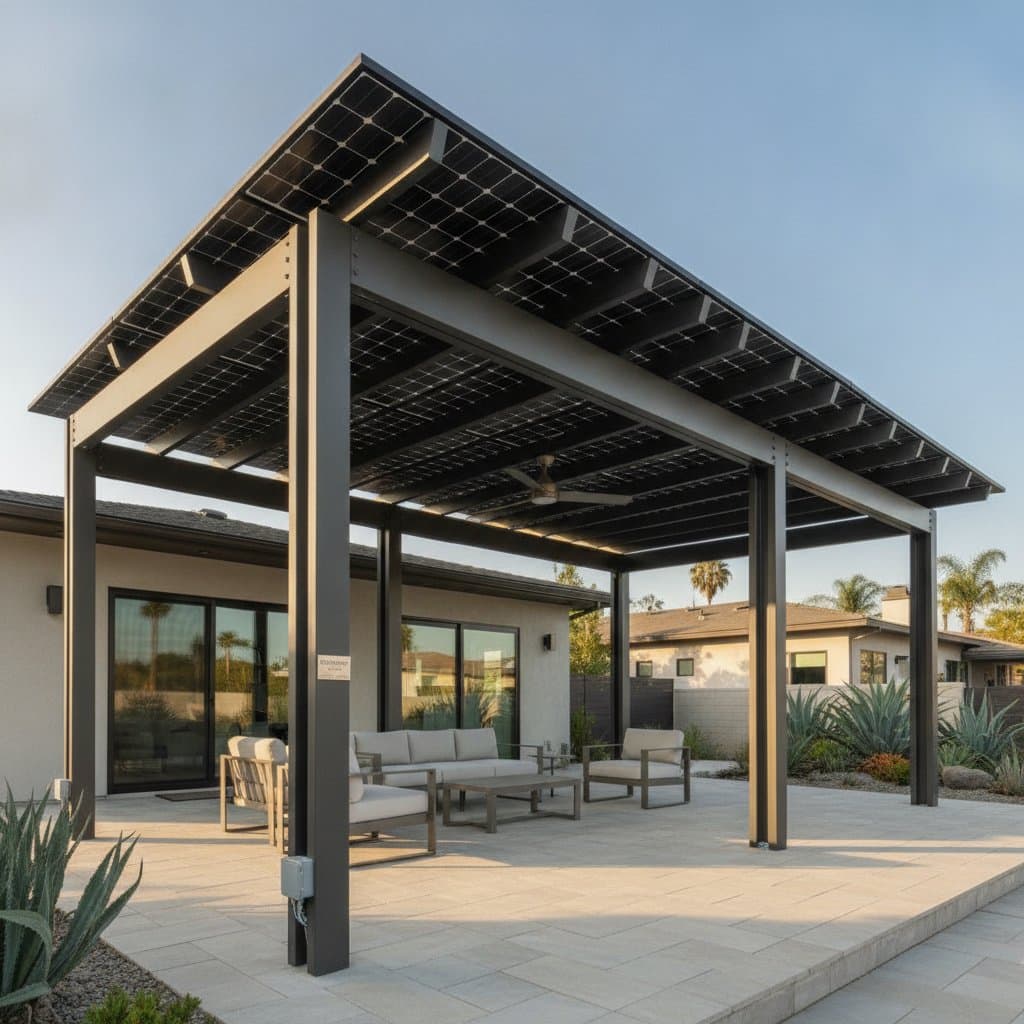
Solar Pergolas Cut Patio Energy Bills by 40%
A hot patio can turn outdoor living into an uncomfortable chore and push nearby rooms toward higher cooling costs. A solar pergola offers shade overhead while photovoltaic panels convert sunlight into electricity for your home. In San Diego, the right design may reduce patio-related cooling demand and lower household energy bills by as much as 40 percent, depending on roof orientation, panel size, shade coverage, and household use.
This guide explains costs, design choices, installation concerns, and practical ways to create a smarter outdoor space. For complex electrical work or structural planning, get quotes from top-rated pros before construction begins.
In this Article
Cost factors
A solar pergola typically costs between $12,000 and $35,000 installed. The average project costs about $21,000 for a freestanding structure with a modest photovoltaic array.
Your price depends on several details. The structure material affects cost significantly. Aluminum often costs less than engineered wood, while cedar offers a warmer appearance but needs more maintenance. Solar equipment includes panels, inverters, wiring, disconnects, and mounting hardware. These components can cost $5,000 to $15,000 depending on system size and quality.
Site preparation adds another layer of expense. Concrete footings, grading, and utility trenching may add $2,000 to $7,000 to your project. Permits represent another consideration. San Diego area projects may require building and electrical permits. Local rules can differ by city.
Electrical service upgrades may prove necessary. An electrician may need to upgrade a panel or install a battery connection. A pergola does not automatically cut total energy bills by 40 percent. That result depends on panel production, air conditioner use, shade placement, and your utility plan. Ask for a production estimate based on your property, not a generic promise.
Solar pergola options
A freestanding pergola works well over patios, outdoor kitchens, and seating areas. It offers flexible placement and can face the best solar direction, but it needs substantial footings. An attached pergola connects to the home and may cost less to build. It provides convenient shade near doors, although wall connections require careful waterproofing and structural review.
A louvered solar pergola uses adjustable slats or panels to control sun and airflow. It offers excellent comfort, yet moving components increase cost and maintenance. Homeowners seeking shade, electricity generation, and a defined outdoor living area find these structures particularly beneficial.
DIY vs. pro
Assembling a basic pergola may suit an experienced DIYer, but solar installation requires licensed electrical work in many jurisdictions. Structural posts must resist wind uplift, and wiring needs proper grounding, conduit, disconnects, and weather protection.
Hire a contractor for stamped plans, footings, roof attachment, electrical connections, and permit coordination. You can save money by handling furniture layout, finish painting, or planting after the inspection.
Ways to save
Choose a simple rectangular design with standard panel dimensions. Position the structure where it shades west-facing windows and doors. Compare several written estimates with equipment and permit fees listed separately. Use drought-tolerant plants around the posts to reduce irrigation costs. Ask whether existing electrical equipment can support the system before ordering upgrades.
Maintenance and safety
Inspect fasteners, flashing, wiring covers, and drainage after heavy wind or rain. Keep panels clear of leaves and dust with gentle cleaning methods. Never climb onto the pergola or handle exposed wiring. Maintain required clearance around electrical equipment, and contact a professional if you notice heat damage, loose conductors, or cracked panels.
FAQs
Can a solar pergola power my whole home?
Most residential solar pergolas supplement a rooftop system rather than replace it. Production depends on panel count, orientation, tilt, and shade. A contractor can calculate expected output and explain whether battery storage makes sense.
Does a pergola need a permit?
Most jurisdictions require permits for structures over a certain size or those involving electrical work. San Diego building codes typically mandate permits for solar installations and structural additions. Check with your local building department before starting construction.
Is a solar pergola worthwhile without batteries?
A solar pergola can reduce energy bills even without battery storage. The system generates electricity during peak sunlight hours when air conditioning demand is highest. Excess power feeds back into the grid through net metering programs.
What size pergola works best?
The ideal size depends on your available space, energy needs, and budget. A 12 by 16 foot structure typically accommodates standard panel configurations while providing adequate shade. Larger installations may require additional structural support and electrical capacity.
Getting Started with Your Project
Begin by evaluating your property's solar potential and structural requirements. Measure your patio area and note any existing electrical service. Contact licensed contractors for detailed assessments and written estimates. Review local permit requirements and utility interconnection policies before making final decisions. A properly designed solar pergola can transform your outdoor space while reducing energy costs for years to come.