
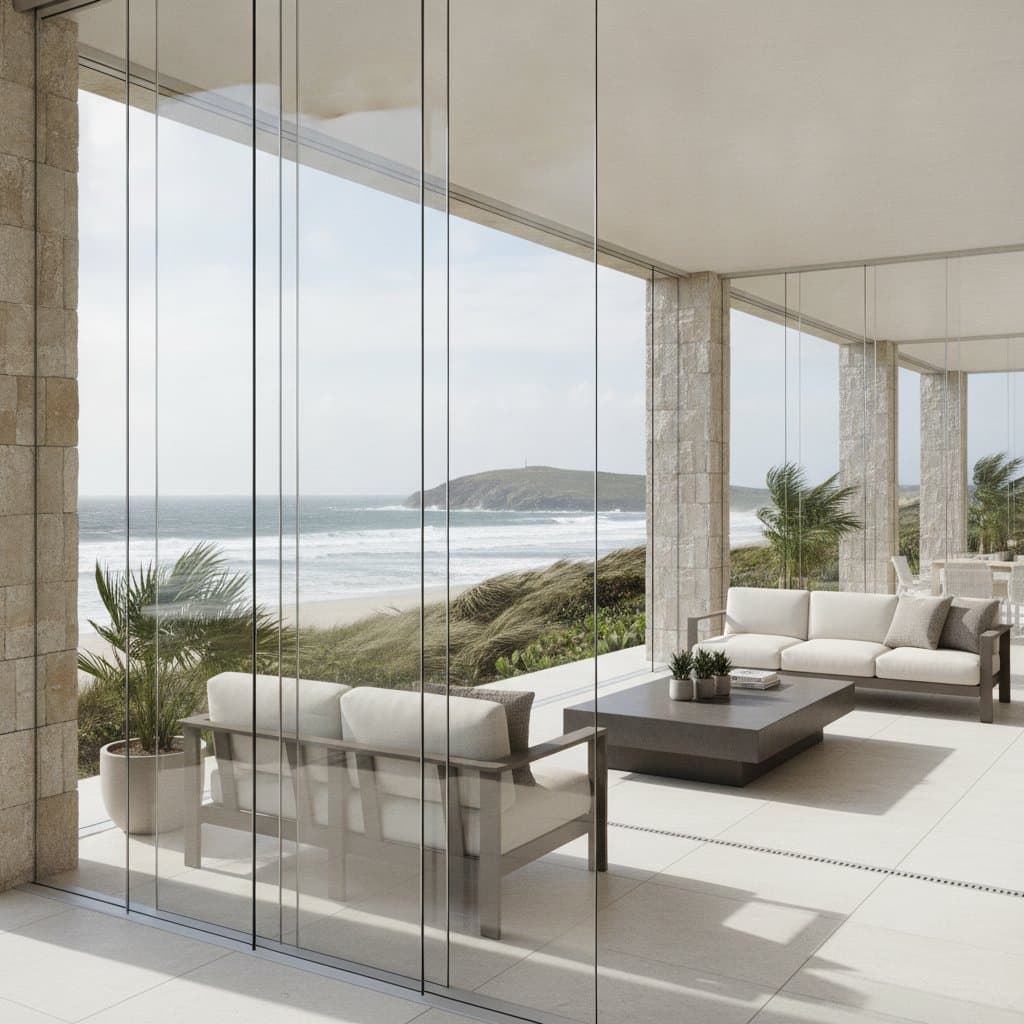
Hurricane Glass Walls Turn Beach Patios Into Year-Round Havens
A coastal patio should feel like an easy extension of your home, not a space you abandon when wind, salt spray, or a chilly evening rolls in. Hurricane glass walls and retractable glass walls offer a practical way to enjoy ocean views while adding shelter, flexibility, and comfort to outdoor living areas.
These systems use large glass panels that slide, fold, stack, or retract along tracks. When closed, they help shield a patio from wind and blowing rain. When open, they create a broad connection between your interior rooms and the outdoors.
Key Benefits
- Hurricane glass walls provide strong protection from wind, rain, and airborne debris.
- Retractable walls preserve coastal views while allowing fresh air and wide openings.
- Proper engineering, installation, drainage, and maintenance matter as much as appearance.
- Laminated, impact rated glass can improve safety, sound control, and security.
- A thoughtful design can turn an underused patio into a comfortable year round gathering space.
What Are Hurricane Glass Walls?
Hurricane glass walls are large glazed systems designed to meet strict wind and impact performance standards. Unlike ordinary sliding doors, they typically use reinforced frames, heavy duty hardware, impact resistant glass, and secure locking points.
The term hurricane glass commonly refers to laminated impact glass. This construction includes layers bonded together with a strong interlayer. If the glass cracks, the pieces tend to remain attached rather than scattering across the patio.
Performance requirements differ by location, building design, and exposure. A qualified contractor should verify local requirements and select a system tested for the conditions around your property.
Ask for product test reports, installation details, and engineering documentation before signing a contract. A beautiful wall cannot protect your patio if the system is not properly rated or installed.
Why Coastal Patios Benefit From Retractable Glass Walls
Coastal homes deal with a special mix of sun, salt, moisture, wind, and changing temperatures. Open patios offer fresh air and scenery, yet they can become uncomfortable when conditions shift. Retractable walls give you more control.
Flexible Indoor and Outdoor Living
A closed glass wall can make a patio feel like an additional room for dining, reading, entertaining, or storing comfortable furniture. Open the panels when the weather is pleasant, then close them when wind or rain arrives.
This flexibility also helps smaller homes feel more spacious. A living room, kitchen, or family area can visually flow into the patio without sacrificing a weather barrier.
Clear Views and Natural Light
Traditional solid walls block scenery and daylight. Hurricane glass walls keep the view open, which matters greatly for homes near the coast. Large panels can also brighten adjacent rooms and reduce the need for electric lighting during the day.
Look for low distortion glass and slim frame profiles when preserving views is a priority. Your contractor can explain which options suit the patio orientation and level of sun exposure.
Better Comfort Near the Water
Retractable walls can reduce direct wind, airborne moisture, and occasional rain on your furniture. They also create a calmer space for guests who prefer shelter while others enjoy the open patio.
Glass will not create the same sealed environment as a fully insulated room, especially when panels remain open. Still, the added protection can extend how often you comfortably use the area.
Glass Wall Options to Consider
Not every coastal patio needs the same configuration. Compare the main choices before selecting a design.
| System Style | Best Feature | Potential Limitation |
|---|---|---|
| Sliding panels | Familiar operation and broad openings | Requires wall space for panels |
| Folding panels | Opens a large section quickly | More visible hardware and panel stacking |
| Stacking panels | Creates a generous clear opening | Needs room for parked panels |
| Lift and slide panels | Smooth movement with strong seals | Often carries a higher price |
| Retractable screen and glass combinations | Adds insect control and ventilation | More components require maintenance |
Panel size, frame material, track design, and hardware quality all affect performance. Aluminum is common for coastal applications because it is durable and relatively light. Choose finishes designed for marine exposure, then confirm the warranty covers the conditions at your property.
Hurricane Glass Costs and Budget Factors
The cost of hurricane glass walls depends on opening size, panel count, engineering, materials, labor, and structural changes. A small patio opening may cost roughly $15,000 to $30,000, while a large custom installation can reach $50,000 or more.
These figures are broad planning ranges, not fixed quotes. Your budget may also include structural reinforcement around the opening, removal of existing doors or walls, new concrete work or track preparation, drainage improvements, electrical work for motorized systems, permits, inspections, and engineering, interior and exterior finish repairs, and screens, shades, or upgraded locks.
A patio with a level, sturdy opening is usually simpler than one that needs major framing changes. Ask for an itemized proposal that separates the wall system from related construction work.
Planning the Installation
A successful project begins with the opening, not the product brochure. Have a professional inspect the wall, foundation, slab, roof connection, and drainage path. Large glass panels add weight, and the structure must transfer wind loads safely.
Your contractor should also evaluate the direction of prevailing wind, exposure to salt spray and direct sun, existing water runoff and threshold conditions, clearance for furniture and panel movement, emergency exit requirements, access for delivery and future repairs, and compatibility with screens, shades, lighting, and ceiling fans.
Threshold design deserves special attention. A low track can improve accessibility, but it must still manage water effectively. Poor drainage can lead to leaks, staining, mold, or damaged flooring.
Request a mockup or visit a completed installation before choosing panel colors, handles, glass tint, and opening direction. Photos rarely show how much track space a system requires.
Safety, Security, and Maintenance
Impact rated glass improves resilience, yet no wall system removes every storm risk. Secure all panels according to the manufacturer instructions, inspect locks before severe weather, and follow local emergency guidance.
Salt air can be hard on metal components. Rinse exterior frames with fresh water as needed, especially after heavy spray or intense weather. Use a mild cleaner and a soft cloth on the glass. Avoid abrasive pads and harsh chemicals that can damage coatings or seals.
Keep tracks clear of sand, leaves, and small stones. Vacuum loose debris, then clean the channel according to the manufacturer instructions. Do not force a panel that feels stuck. A damaged roller or misaligned track can become more expensive if ignored.
Schedule professional service when you notice water entering around closed panels, loose handles or difficult locks, scraping, grinding, or uneven movement, cracked glass or damaged seals, or corrosion around fasteners or hardware.
Routine care protects your investment and keeps the walls operating smoothly.
Common Design Mistakes to Avoid
The most frequent mistake is choosing a wall based only on appearance. A slim frame and dramatic opening are appealing, but the system must suit the structure and climate.
Avoid these problems: skipping a structural review, treating standard glass as hurricane glass, ignoring the patio slope and drainage, forgetting where panels stack when open, installing furniture that blocks tracks, selecting hardware without coastal protection, assuming glass alone will control heat and glare, and leaving maintenance access out of the design.
Direct sunlight can make a closed patio warm. Consider solar control glass, exterior shades, ceiling fans, or a properly designed roof overhang. These features help create comfort without hiding the view.
Choosing a Qualified Contractor
Look for a licensed contractor with experience installing coastal patios, retractable walls, and impact rated glazing. Ask for references from nearby projects with similar wind exposure.
A strong contractor should explain the product rating in plain language, coordinate engineering and permits, provide a detailed installation schedule, identify structural and drainage concerns early, offer written warranty information, and explain cleaning and service requirements.
Collect several proposals, but do not compare them by price alone. A low bid may exclude engineering, finish repairs, drainage work, or proper coastal hardware.
Frequently Asked Questions
Can hurricane glass walls remain open during strong storms?
No. Retractable walls should be closed and locked according to the manufacturer storm procedure. Remove or secure patio furniture and follow local emergency instructions.
Are retractable glass walls completely waterproof?
They are designed to resist weather when closed, but performance depends on seals, drainage, installation, and exposure. No movable wall should be treated as a guarantee against every leak.
Creating Your Year-Round Coastal Retreat
Start by assessing your current patio conditions and identifying the specific weather challenges you face most often. Work with a qualified contractor to evaluate structural requirements and drainage needs before selecting a system. Focus on impact rated glass, marine grade hardware, and proper track design to ensure long term performance. With careful planning and regular maintenance, hurricane glass walls can transform your coastal patio into a comfortable, protected space that extends your living area throughout the year.