
Why Swim Spas Outsell Pools 3:1 in Coastal Yards
Coastal residents observe a growing trend: neighbors favor sleek swim spas over conventional swimming pools. This preference reflects a genuine shift, with homeowners in seaside areas opting for compact, energy-efficient swim spas at a rate three times higher than full-sized pools. The appeal extends beyond mere dimensions or expenses; it encompasses functionality, ease, and the enduring allure of coastal outdoor living.
Highlights
- Swim spas adapt well to confined coastal yards with limited space
- Reduced installation and upkeep expenses enhance affordability
- All-season functionality prolongs outdoor enjoyment past summer months
- Superior energy conservation attracts environmentally aware individuals
- Therapeutic jets and exercise features merge wellness with leisure
- Contemporary aesthetics integrate smoothly into exterior environments
Home serves as an ideal sanctuary, particularly when the backyard functions as a private haven. Examine the factors positioning swim spas as the preferred option for coastal dwellers seeking pool advantages without associated complexities.
What Is a Swim Spa?
A swim spa merges elements of a pool and a hot tub. This design remains compact for restricted areas while generating sufficient current for sustained swimming. Typical units include variable jets suitable for physical activity, therapeutic massage, and water-based recovery.
Consider the integration of lap pool conditioning with spa relaxation. Users engage in swimming, immersion, and unwinding within a single enclosed apparatus. Such adaptability explains the transition among coastal property owners.
Key Differences Between Swim Spas and Pools
| Feature | Swim Spa | Traditional Pool |
|---|---|---|
| Size | Compact (12–20 feet long) | Large (20–40 feet long) |
| Installation Time | Weeks | Months |
| Water Use | Low | High |
| Maintenance | Minimal | Ongoing |
| Temperature Control | Adjustable | Seasonal |
| Usability | Year-round | Warm seasons only |
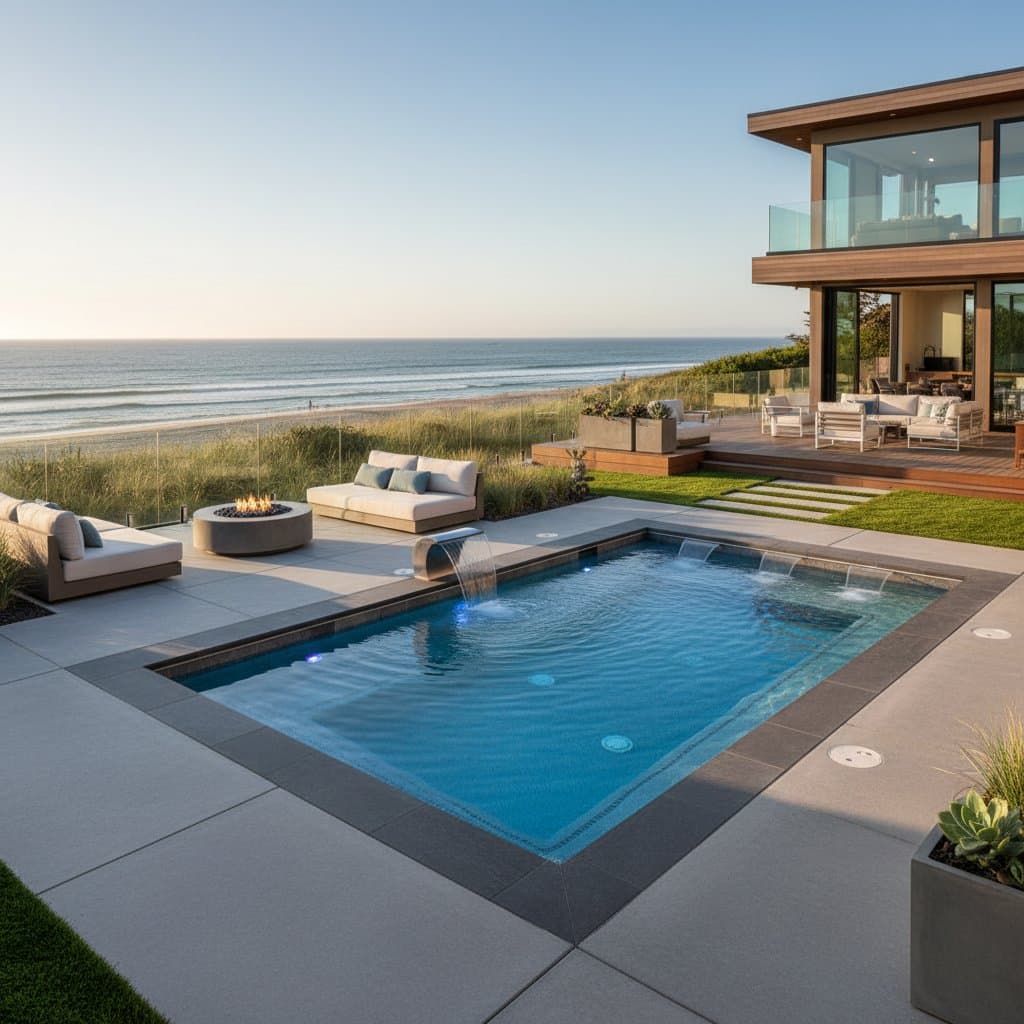
Photo: A modern backyard featuring a compact swim spa amid tropical landscaping.
Why Swim Spas Dominate Coastal Yards
1. Space-Saving Design for Tight Lots
Properties near the coast frequently occupy modest parcels, where space allocation proves essential. Conventional pools dominate limited areas, restricting options for lounging, planting, or culinary setups. Swim spas install precisely within patios, platforms, or enclosed gardens.
Partial in-ground or elevated placements enable layered arrangements that enhance natural surroundings. Individuals passionate about exterior activities yet unwilling to forgo gathering areas find this solution ideal. Measure yard dimensions prior to model selection; numerous producers provide adaptable casings suited to specific configurations.
2. Easier Installation and Lower Costs
Traditional pools demand digging, piping, barriers, and regulatory approvals. Swim spas deliver fully assembled with integrated plumbing, simplifying setup and accelerating completion. Substantial savings occur in workforce and supplies.
Average cost comparison:
| Project Type | Estimated Cost Range |
|---|---|
| Swim Spa Installation | $20,000–$40,000 |
| In-ground Pool Installation | $50,000–$100,000+ |
Ongoing care remains economical. Units require fewer sanitizers and smaller water quantities, with heating mechanisms demonstrating greater efficiency. Owners dedicate less effort to upkeep and more to leisure in their exteriors.
3. Year-Round Enjoyment in Coastal Climates
Mild seaside conditions still render pool temperatures uncomfortable outside peak warmth. Swim spas incorporate precise heating adjustments, permitting shifts from refreshing swims to heated immersions via simple controls. Owners utilize them across all seasons, establishing them as reliable investments.
A household in a seaside district employs the unit for afternoon conditioning during summer, then elevates warmth for evening decompression beneath the night sky.
4. Fitness and Hydrotherapy in One
Swim spas support more than passive rest. Variable currents facilitate stationary swimming, offering joint-friendly resistance training. This suits active participants, older adults, or those in rehabilitation.
Therapeutic jets provide comprehensive muscle relief from tension and anxiety. Access a dedicated health facility directly outdoors.
Health benefits of swim spas:
- Gentle cardiovascular conditioning
- Enhanced range of motion and agility
- Diminished anxiety and muscular discomfort
- Improved rest patterns
5. Eco-Friendly and Energy Efficient
Seaside residents prioritize ecological responsibility. Swim spas manage reduced water capacities and draw minimal power compared to pools, particularly with thermal barriers and optimized circulators. Standard outlets suffice for operation without extensive modifications.
Such performance yields decreased service charges and lighter ecological impact, aligning with sustainable practices.
6. Customization Options to Match Any Style
Contemporary swim spas eschew outdated, cumbersome appearances. Streamlined forms harmonize with exterior motifs. Encircle with flooring, incorporate illuminated accents, or embed within masonry for premium visuals.
Popular design ideas:
- Deck Integration: Align the unit with timber or synthetic platforms for fluid presentation.
- Infinity Edge: Simulate unending water extension toward sea or skyline.
- Privacy Screens: Incorporate cane barriers or vertical greenery for secluded ambiance.
- Outdoor Lounge Pairing: Pair with seating or heating elements to form comprehensive social areas.
Photo: A seaside platform showcasing a swim spa with infinity edge facing the ocean.
7. Longer Lifespan and Easier Maintenance
Fiberglass and acrylic constructions withstand corrosion and saline atmospheres superior to various pool surfaces. Regular attention ensures longevity over decades. Enclosed purification avoids extensive piping or intricate sanitizer management.
Maintenance routine:
- Assess water quality each week
- Service filters on a monthly basis
- Empty and replenish periodically, every few months
- Secure the lid to preserve warmth and block refuse
This straightforward schedule suits occupied professionals preferring leisure over intensive cleaning.
Frequently Asked Questions
How long does it take to install a swim spa?
Installation typically concludes within weeks. Steps include establishing a stable base, linking electricity, and introducing water. Extensive excavation or building proves unnecessary.
Can a swim spa be used for both exercise and relaxation?
Yes. Configurable jets generate opposition for perpetual swimming, complemented by seated areas and therapeutic sections for subsequent easing.
Do swim spas add value to a home?
Yes. Though smaller than pools, they draw purchasers valuing fitness integration, opulence, and simplicity. Compact designs resonate with contemporary preferences for practical exteriors.
Are swim spas suitable for coastal climates?
They excel in seaside environments. Durable materials endure saline exposure and moisture, while heating enables adaptation to fluctuating conditions.
What maintenance tasks are required?
Routine involves weekly water testing, monthly filter cleaning, periodic draining and refilling every few months, and consistent cover use to maintain heat and exclude debris. These steps ensure optimal performance with minimal effort.
Integrate Wellness into Your Coastal Backyard
Swim spas redefine exterior enhancement for seaside properties. They occupy spaces inaccessible to pools, incur lower operational demands, and offer exceptional adaptability.
Consider a swim spa if pool installation deters due to financial or spatial constraints. Consult regional suppliers, review efficiency specifications, and envision elevating your outdoor area to a premier seaside escape.