
Why Recycled Ocean Plastic Tops Decking Choices
Homeowners often gaze at the ocean and ponder solutions for the pervasive plastic waste drifting on its surface. Recycled ocean plastic decking provides such a solution. This innovative material reshapes perceptions of outdoor living spaces while advancing planetary conservation efforts. Its exceptional durability, minimal upkeep requirements, and profound environmental advantages position it as a preferred option among environmentally aware individuals.
Highlights
- Recycled ocean plastic decking converts marine debris into robust, aesthetically pleasing boards.
- It withstands rot, mold, and fading more effectively than traditional wood.
- Upkeep demands remain low, which conserves both time and financial resources.
- Selection of this material aids in diminishing ocean pollution and landfill accumulation.
- Options include diverse colors and designs that replicate the appearance of natural wood.
- It suits coastal environments, such as those in San Diego, where exposure to moisture and salt accelerates wood deterioration.
No residence compares to one where the deck contributes to ocean preservation. The following sections examine the reasons recycled ocean plastic emerges as the premier material for sustainable decking.
What Is Recycled Ocean Plastic Decking?
Recycled ocean plastic decking originates from plastic debris retrieved from oceans, beaches, and inland waterways. Manufacturers clean and process this plastic, then combine it with supplementary recycled elements like wood fibers or minerals to produce resilient boards capable of enduring severe weather. The final product resembles conventional wood in appearance and texture yet excels in performance within demanding exterior settings.
How It Differs From Regular Composite Decking
Standard composite decking incorporates recycled components, yet ocean plastic decking advances this approach by procuring plastics exclusively from marine sources. Each board thus signifies progress toward cleaner seas and a reduced carbon footprint. It delivers comparable advantages to composite decking, augmented by a compelling narrative of sustainability.
| Feature | Recycled Ocean Plastic Decking | Traditional Wood Decking |
|---|---|---|
| Maintenance | Low; requires only periodic cleaning | High; necessitates sealing and staining |
| Durability | Resistant to rot, warping, and insects | Susceptible to splintering and decay |
| Environmental Impact | Derived from reclaimed ocean waste | Frequently sourced through deforestation |
| Appearance | Wood-like textures with varied colors | Natural aesthetic that fades gradually |
| Lifespan | Exceeds 25 years with basic care | 10 to 15 years with consistent maintenance |
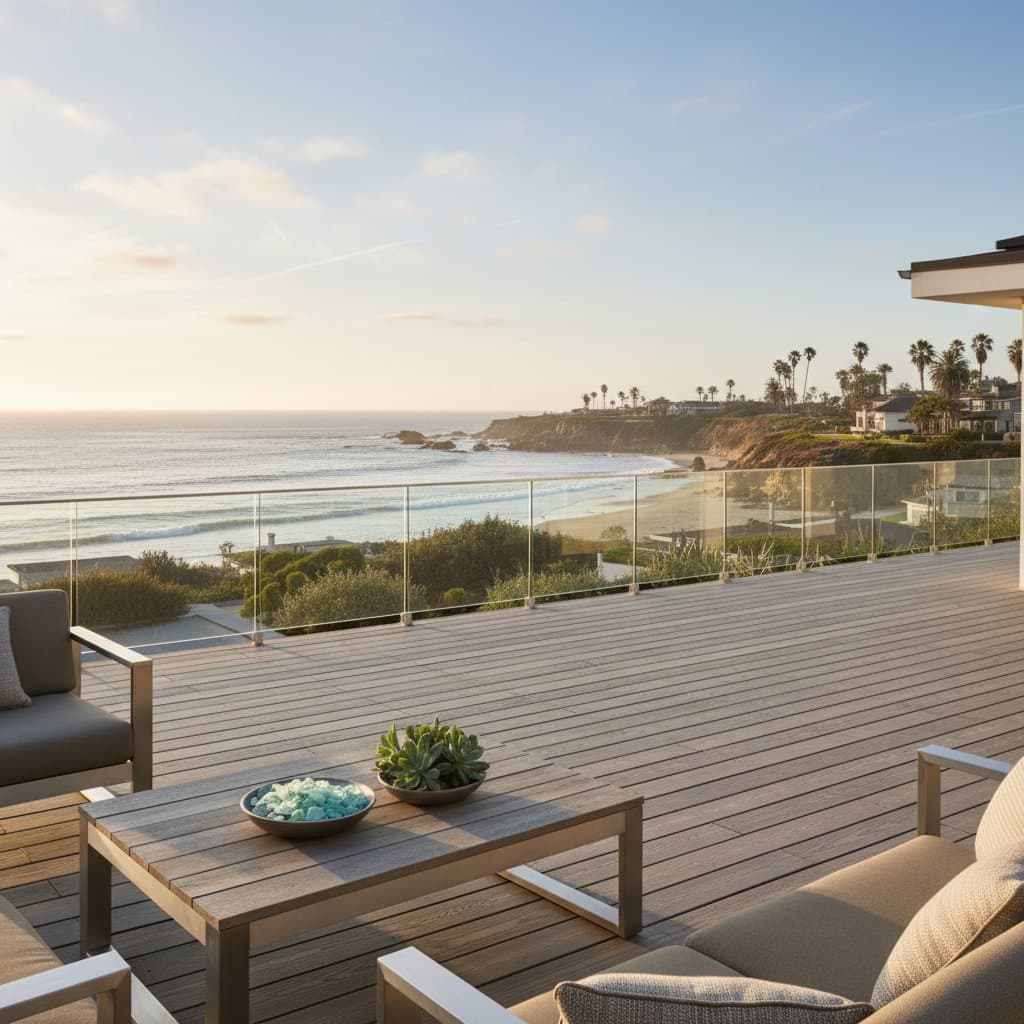
Photo: A coastal deck constructed with recycled ocean plastic boards, offering a view of the Pacific Ocean.
Why Homeowners Are Choosing It
1. Sustainable Living Made Simple
Opting for recycled ocean plastic decking represents an accessible method to effect meaningful environmental change. Reutilization of marine plastics diminishes pollution levels and safeguards marine life. This process converts commonplace refuse into practical, attractive features for residential yards.
Tip: Seek brands that collaborate with accredited ocean cleanup initiatives to verify that purchases support genuine remediation activities.
2. Built to Handle Coastal Conditions
Coastal residence presents idyllic scenery, though salt-laden air and elevated humidity challenge conventional deck materials. Recycled ocean plastic boards endure these elements effectively. They repel moisture infiltration, thereby avoiding expansion, distortion, or fractures. Residents in San Diego or similar waterfront locales benefit substantially from this resilience.
3. Low Maintenance, High Reward
Envision a deck that eliminates the need for sanding or refinishing. Recycled plastic decking maintains its condition through simple periodic washing with mild soap and water. This approach allows more opportunities for leisure activities, such as hosting gatherings, observing sunsets, or savoring morning beverages, rather than dedicating hours to preservation tasks.
4. Style Without Compromise
Contemporary recycled plastic decking offers an extensive array of hues and finishes that emulate wood. Selections range from inviting cedar shades to refined grays or rich walnut tones. Numerous manufacturers incorporate embossed patterns that replicate authentic wood grain, delivering a genuine visual appeal devoid of hazards like splinters.
Photo: Close-up view of recycled plastic decking boards featuring lifelike wood grain texture.
5. Long-Term Value
Although recycled ocean plastic decking involves a higher initial investment than wood alternatives, its economic benefits accrue over years. Savings materialize through reduced expenses on maintenance, repairs, and replacements. Furthermore, its enduring quality preserves aesthetic integrity for extended periods, enhancing property worth upon eventual sale.
| Cost Factor | Recycled Ocean Plastic Decking | Pressure-Treated Wood |
|---|---|---|
| Initial Cost per Square Foot | $6 to $12 | $3 to $7 |
| Maintenance Cost (Annual) | Minimal | $200 to $400 |
| Lifespan | 25 years or longer | 10 to 15 years |
| Total Long-Term Cost | Lower overall | Elevated due to ongoing care |
Photo: A residential deck made from recycled plastic boards, encircling a swimming pool.
Common Questions About Recycled Ocean Plastic Decking
How Strong Is Recycled Plastic Decking Compared to Wood?
Recycled plastic decking demonstrates superior strength and stability relative to wood, as it avoids water absorption and thermal expansion. It also repels fading, fractures, and pest infestations, rendering it suitable for prolonged exterior applications.
Is It Slippery When Wet?
Leading manufacturers engineer boards with embossed surfaces or fine channels to enhance grip. The sensation underfoot parallels that of treated wood, ensuring safety for bare feet near water features or lounging areas.
Can It Be Installed Like Regular Decking?
Installation mirrors that of wood decking; boards accept cuts, drills, and securements seamlessly. Several systems employ concealed fasteners, yielding a smooth, fastener-free surface.
Does It Fade Over Time?
Premium recycled plastic decking integrates ultraviolet inhibitors to counteract solar degradation. Although minor color shifts may develop, the transformation occurs uniformly, contrasting with wood's patchy graying.
What Happens When It Reaches the End of Its Life?
A key advantage lies in its recyclability. Numerous producers facilitate the return of worn boards for remanufacturing, establishing a cyclical process that curtails additional waste generation.
Pro Tips for Choosing the Right Decking
- Verify certification labels. Confirm participation in authenticated programs for ocean-derived recycling.
- Evaluate warranties. Products often include 25-year or lifetime guarantees against fading and discoloration.
- Align colors with architectural style. Pale shades dissipate heat more efficiently, benefiting sun-exposed regions.
- Inquire about concealed fasteners. These options promote a polished appearance and eliminate protrusion risks.
- Incorporate ventilation planning. Adequate under-deck airflow mitigates thermal accumulation, even with plastic materials.
Photo: Profile perspective of a ventilated substructure upholding recycled plastic decking boards.
Maximizing Benefits in Your Outdoor Retreat
Installation of a recycled ocean plastic deck reveals immediate enhancements. The surface remains temperate to the touch, repels stains from spills, and tolerates routine family activities. Most rewarding is the awareness that this addition has diverted waste from marine ecosystems.
To commence upgrading your exterior area, solicit estimates from regional contractors experienced in recycled plastic installations. Complement the deck with eco-conscious furnishings or indigenous plantings to cultivate an environment that excels in both form and function.