
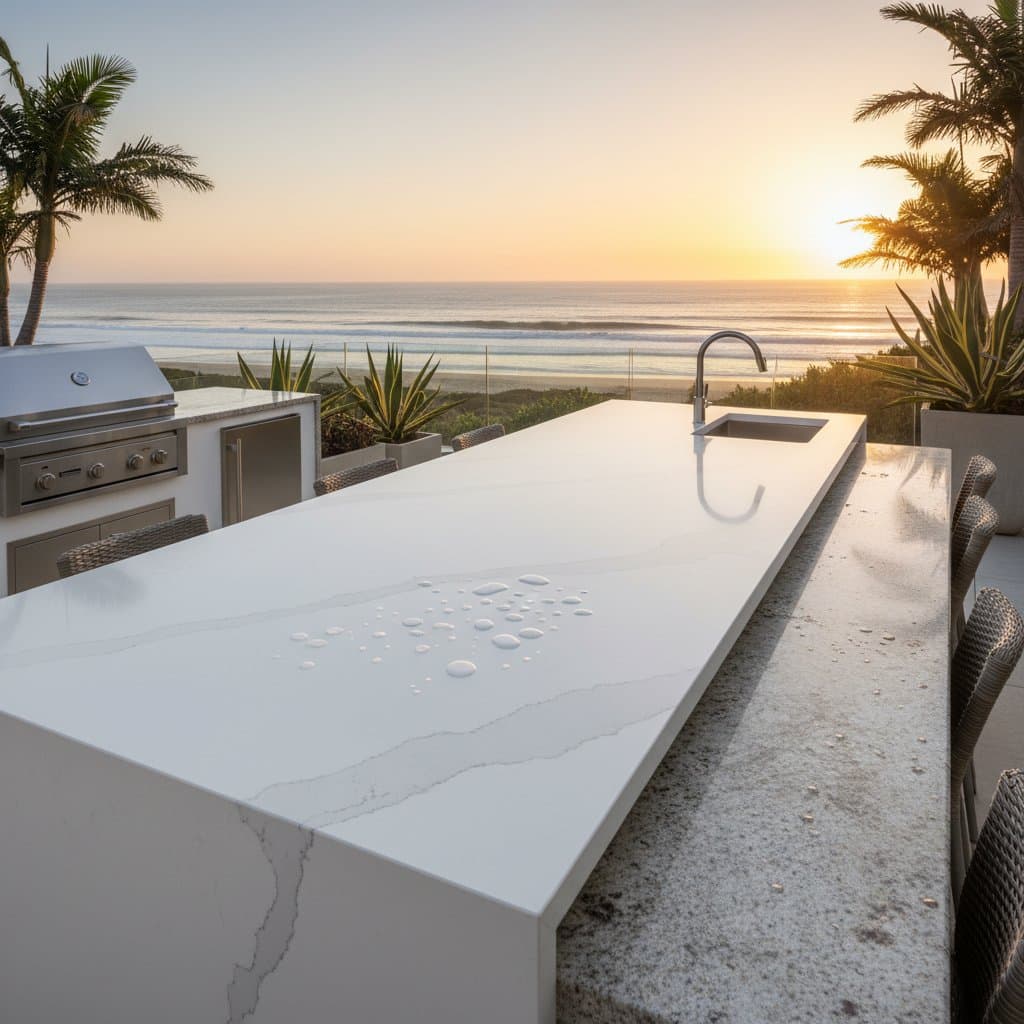
Why Quartz Countertops Withstand Coastal Salt Better Than Granite
Coastal living offers stunning views and refreshing breezes, yet it presents unique challenges for outdoor kitchens. Salt-laden air, high humidity, and intense sunlight can degrade materials over time. Quartz countertops rise above these elements, providing superior durability compared to granite. This article explores the reasons quartz maintains its integrity in harsh coastal conditions.
The Harsh Realities of Coastal Environments
Living near the ocean means exposure to corrosive salt spray, which accelerates wear on building materials. Humidity levels often exceed 80 percent, fostering mold and promoting material expansion and contraction. Ultraviolet rays and temperature swings further stress surfaces, leading to fading and cracking.
These factors demand countertops that resist corrosion without constant upkeep. Traditional stones like granite struggle here, while engineered quartz thrives. Understanding these environmental pressures helps homeowners select materials that endure.
Understanding Granite in Outdoor Settings
Granite forms from natural igneous rock, composed primarily of quartz, feldspar, and mica. Its porous nature requires sealing to prevent absorption of liquids and contaminants. In coastal areas, salt can penetrate these pores, causing etching and discoloration.
Over time, unsealed or poorly maintained granite develops pits and weakens structurally. Humidity exacerbates this by trapping moisture within the stone, leading to efflorescence or white, powdery deposits. Granite's appeal lies in its unique veining and colors, but these benefits diminish without rigorous care.
Limitations of Granite Against Salt
Salt crystals form when seawater evaporates on granite surfaces, expanding and cracking the stone. This process, known as salt weathering, proves especially damaging in splash zones near pools or barbecues. Homeowners report visible deterioration within two to three years in high-exposure areas.
UV exposure fades granite's natural hues, turning vibrant patterns dull. Temperature fluctuations cause micro-fractures, compromising the surface's integrity. These issues make granite less ideal for demanding coastal installations.
The Engineered Strength of Quartz
Quartz countertops consist of 90 to 95 percent ground natural quartz mixed with resins and pigments. This engineered composition renders quartz nonporous, eliminating the need for sealing. Manufacturers cure the slabs under high pressure, creating a dense, uniform material resistant to stains and scratches.
In coastal settings, quartz repels salt and moisture effectively. Its composition prevents absorption, maintaining a smooth, intact surface year after year. Available in various finishes, quartz blends timeless elegance with modern reliability.
Quartz's Resistance to Salt and Corrosion
Unlike granite, quartz does not react chemically with sodium chloride in salt air. The nonporous surface sheds salt particles easily, preventing buildup and erosion. Tests show quartz retaining full integrity after prolonged exposure to saline solutions, where granite shows measurable degradation.
Humidity poses no threat to quartz, as it resists warping or delamination. UV stabilizers in the resin protect against fading, ensuring colors remain vivid under constant sun. This resilience translates to fewer repairs and lower long-term costs.
Comparing Performance: Salt, Moisture, and UV Resistance
When exposed to salt fog chambers simulating coastal conditions, quartz surfaces exhibit zero penetration after 1,000 hours. Granite, even sealed, absorbs up to 5 percent moisture, leading to spalling. Quartz's engineered barriers provide a clear advantage in preventing salt-induced damage.
Moisture resistance follows a similar pattern. Quartz repels water completely, avoiding the mold issues common with granite. In humid environments, this feature preserves hygiene and appearance.
UV performance highlights another edge for quartz. While granite cracks under thermal stress, quartz flexes slightly without fracturing. These properties make quartz the preferred choice for outdoor kitchens facing daily environmental assaults.
- Salt Resistance: Quartz sheds salt; granite etches.
- Moisture Handling: Nonporous quartz vs. absorbent granite.
- UV Durability: Stable quartz colors vs. fading granite.
- Maintenance Needs: Minimal for quartz; frequent sealing for granite.
- Longevity: Quartz lasts 25+ years; granite may need replacement sooner.
Low-Maintenance Appeal of Quartz
Quartz requires only soap and water for cleaning, simplifying upkeep in busy coastal homes. No annual sealing means less time and expense compared to granite's demands. This practicality appeals to homeowners seeking convenience without sacrificing style.
Stain resistance proves invaluable during outdoor entertaining. Spilled wine or food juices wipe away effortlessly, unlike on granite where residues can embed. Quartz's uniformity ensures consistent performance across the entire surface.
Aesthetic and Design Versatility
Quartz mimics natural stone with realistic patterns and textures, offering coastal-inspired designs like soft whites and ocean blues. Thickness options from 1.25 to 1.5 inches suit various kitchen layouts. Edge profiles, such as eased or bullnose, enhance visual appeal without added vulnerability.
Integration with other materials proves seamless. Pair quartz with stainless steel appliances or teak cabinetry for a cohesive look. Its versatility allows customization to match any architectural style, from modern minimalist to rustic seaside.
Practical Steps for Selecting Quartz
Evaluate your outdoor kitchen's exposure level first. Measure salt proximity, such as distance from the ocean or pool. Consult certified fabricators to review slab samples under natural light.
Consider thickness for high-traffic areas; thicker slabs withstand impacts better. Budget for professional installation to ensure proper support and sealing of joints. These steps guarantee a flawless, enduring installation.
- Assess environmental factors.
- Choose color and pattern.
- Select appropriate thickness.
- Hire experienced installers.
- Plan for basic cleaning routines.
Embracing Quartz for Enduring Coastal Beauty
Quartz transforms outdoor kitchens into resilient spaces that capture the essence of coastal living. Its ability to defy salt, humidity, and sun ensures lasting functionality and charm. Homeowners enjoy worry-free gatherings with surfaces that stay pristine.
Investing in quartz means prioritizing quality over quick fixes. This choice supports sustainable living by reducing replacement needs. Experience the difference in a material designed for the demands of seaside durability.