
Why Modular Rooms Are 2026's Flexible Patio Fix
Homeowners often seek ways to adapt outdoor spaces to shifting needs, such as seasonal changes or varying social gatherings. Modular outdoor rooms address this demand by providing reconfigurable structures that allow for easy expansion, contraction, or rearrangement of patios. These systems offer unmatched versatility compared to fixed decks or traditional patios, enabling transformations into shaded retreats, entertainment areas, or productive workspaces as required.
Highlights:
- Rearrange layouts to accommodate evolving requirements
- Install, remove, or expand without extensive construction
- Suit patios, decks, and compact outdoor areas
- Offer customizable walls, roofs, and flooring
- Combine indoor comfort with outdoor accessibility
What Are Modular Outdoor Rooms?
Modular outdoor rooms consist of prefabricated panels or units that assemble like interlocking components. These structures function as scalable backyard extensions, where individual sections attach, detach, or reposition to form desired layouts.
Construction typically involves lightweight aluminum frames, insulated panels, and durable, weather-resistant materials. Features may include sliding glass doors, retractable walls, and built-in lighting systems. Such designs ensure the space adjusts to lifestyle changes over time.
Photo: A modular room on a coastal deck, featuring retractable walls and a pergola-style roof with an ocean view.
Why Homeowners Choose Modular Patios
Modular rooms provide practical solutions to challenges like constrained space, variable weather, and high renovation costs. Their design prioritizes functionality alongside visual appeal, making them a preferred option for modern outdoor living.
Key Benefits
- Flexibility: Reconfigure sections to establish zones for relaxation, meals, or professional tasks.
- Affordability: These systems require lower investment than comprehensive outdoor overhauls.
- Efficiency: Complete setup in a matter of days rather than weeks.
- Sustainability: Incorporate recyclable materials to minimize environmental impact.
- All-Season Versatility: Integrate insulation or shading elements for consistent comfort.
| Feature | Modular Rooms | Traditional Patios |
|---|---|---|
| Installation Time | Days | Weeks or months |
| Customization | High | Limited |
| Reconfigurable | Yes | No |
| Cost Range | Moderate | High |
| Mobility | Portable | Fixed |
Tip: Evaluate electrical connections and drainage requirements prior to installation. Proper planning facilitates the addition of lighting, ventilation, or kitchen features in the future.
How Modular Rooms Enhance Patios and Decks
Consider starting the day with breakfast in a brightly lit section, then converting it to a shaded lounge for evening gatherings. Modular rooms enable such seamless adaptations, maximizing the utility of available space.
Practical Applications
- Outdoor Office: Incorporate privacy screens and acoustic insulation for focused remote work.
- Fitness Area: Remove panels to allow airflow and sunlight during exercise sessions.
- Social Space: Link multiple units for screenings or communal dining.
- Overnight Accommodation: Select configurations with enclosed pods suitable for guests.
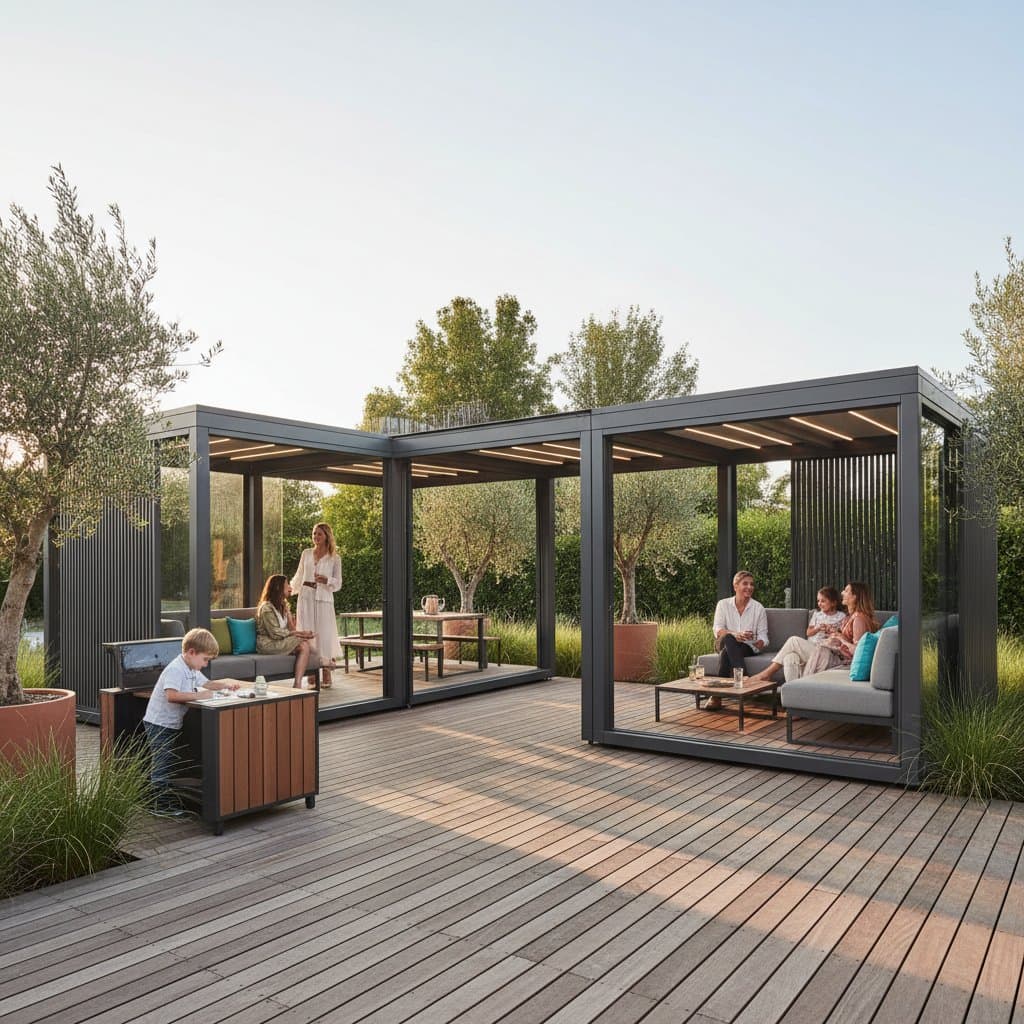
Photo: A modular deck arrangement including a removable dining section and adjustable canopy amid verdant surroundings.
Cost Considerations for Modular Outdoor Rooms
Pricing for modular outdoor rooms depends on material standards, dimensions, and specialized elements. Generally, these options prove more economical than permanent enclosures.
Standard Price Ranges:
- Entry-Level Configuration: $5,000 to $10,000 for basic shaded or deck extensions
- Intermediate Option: $12,000 to $25,000 including insulated barriers, glass elements, and illumination
- High-End Setup: $30,000 and above with automated features, complete enclosures, and premium surfaces
Influential factors encompass base preparation, weather durability, and layout intricacy. Options like solar integration or advanced drainage elevate initial expenses while enhancing enduring benefits.
Tip: Allocate an additional 15 percent of the budget for supplementary items and modifications. Elements such as specialized flooring or tailored illumination may accumulate costs, though the modular nature allows for phased implementation.
Maintenance Strategies for Modular Patios
Upkeep for modular systems remains straightforward, with most panels requiring only mild soap and water for cleaning. Modular components feature replaceable parts, and roofs withstand diverse weather patterns effectively.
To maximize durability:
- Examine connections and seals biannually.
- Ensure drainage paths remain unobstructed.
- Coat metal elements with protectants in coastal environments.
- Secure detachable panels during severe weather events.
Photo: A contemporary modular lounge with removable glass sections and embedded LED lights, illuminated at twilight.
Steps to Implement Your Modular Patio
Assess your outdoor area and daily routines to identify priorities like additional shading, seclusion, or adaptable zones. Research modular options aligned with your aesthetic preferences and financial parameters.
Consult regional providers experienced in configurable decks and outdoor structures. Obtain visual simulations to preview potential arrangements prior to purchase.
Modular rooms empower patios to evolve alongside personal circumstances, delivering sustained value through adaptability and ease of use.