
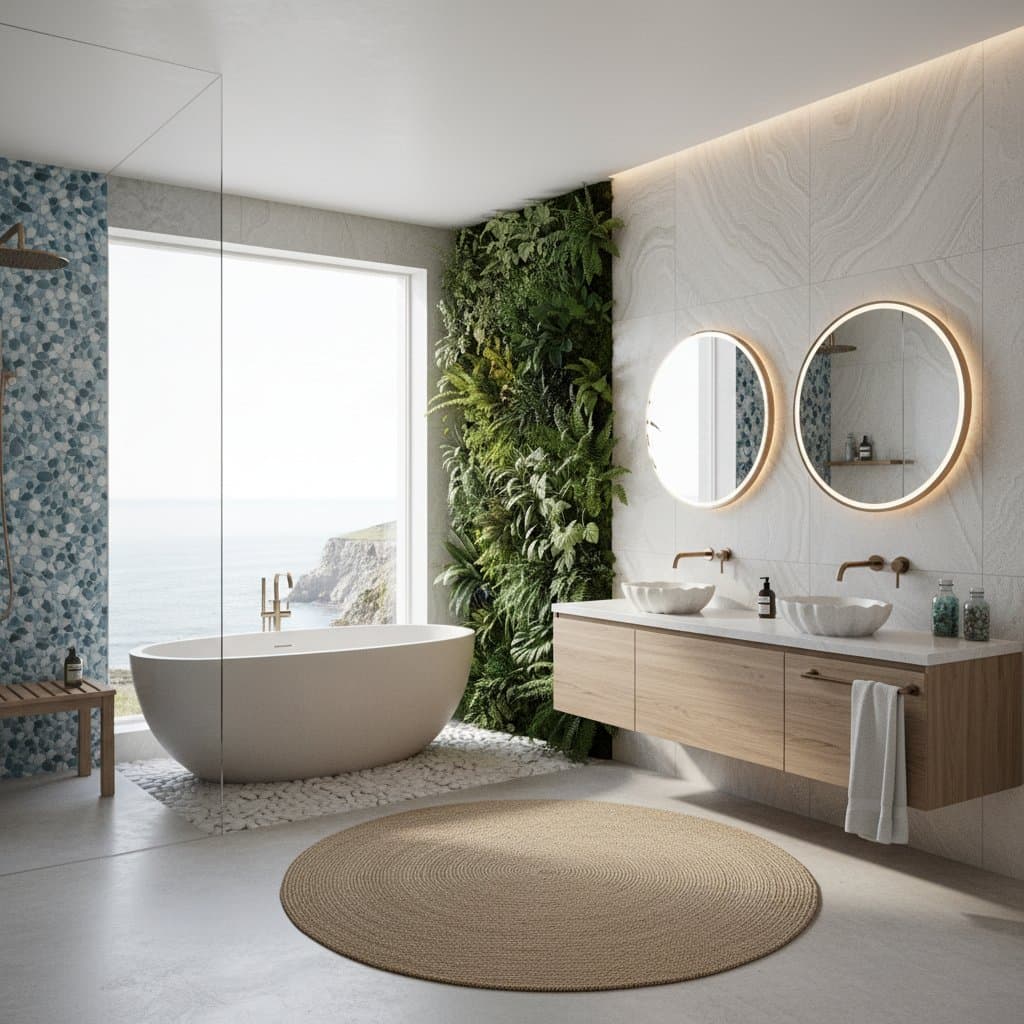
Bring Ocean Views Indoors with Biophilic Bathrooms
A bathroom designed as a seaside retreat alters the daily experience of beginning and concluding each day. Biophilic design connects interior spaces to the natural world, enabling the conversion of an ordinary bathroom into a revitalizing area influenced by ocean themes. Through the use of organic materials, plentiful natural illumination, and textures reminiscent of water, individuals can introduce the soothing cadence of the coastline into their living environments.
What Is a Biophilic Bathroom?
A biophilic bathroom incorporates elements from nature to replicate the peacefulness of exterior settings. This method extends past simple additions like potted plants; it employs motifs, substances, and configurations that echo the harmony and calm observed in the natural realm. The objective involves crafting an area that possesses aesthetic appeal while fostering psychological and physiological health.
Essential characteristics frequently encompass:
- Natural light accessed via skylights or expansive windows
- Organic materials such as stone, wood, and clay
- Colors inspired by water, including gentle blues, greens, and neutral sands
- Living vegetation that cleanses the air and provides tactile interest
- Spacious arrangements that promote ventilation and linkage to external areas
The Cost of Creating a Biophilic Bathroom
Renovating a bathroom with natural inspirations results in expenses that fluctuate considerably according to dimensions, selections of materials, and degrees of personalization. Homeowners typically allocate between $10,000 and $35,000 for a renovation in biophilic style. Modest enhancements, including fresh tiles, illumination fixtures, and foliage, may commence at approximately $5,000, whereas comprehensive overhauls featuring premium completions and modifications to the structure might surpass $50,000.
| Project Type | Average Cost | Typical Features |
|---|---|---|
| Small Refresh | $5,000–$10,000 | Fresh paint, updated fixtures, added greenery, limited tile replacement |
| Mid-Range Remodel | $15,000–$25,000 | Surfaces of natural stone, enhanced lighting, improved shower enclosure |
| High-End Oasis | $30,000–$50,000+ | Bespoke cabinetry, deep soaking tub, skylights, embedded garden components |
Factors That Influence Total Cost
Several variables determine the overall expenditure for a biophilic bathroom project. The size of the space plays a primary role; larger bathrooms demand more materials and labor. Location affects pricing as well, with urban areas often incurring higher costs due to elevated labor rates and material transportation fees.
Material quality represents another key factor. Opting for sustainable, imported stones or custom-fabricated elements increases the budget. Labor complexity, such as installing skylights or integrating living walls, requires specialized skills that elevate expenses. Finally, unforeseen issues like plumbing adjustments or structural reinforcements can add significant amounts to the final tally.
Labor and Installation Costs
Labor constitutes a substantial portion of the budget, often ranging from 40 to 60 percent of the total project cost. Basic tasks like painting or installing shelving might cost $50 to $100 per hour, while intricate work such as electrical wiring for lighting or plumbing for new fixtures can reach $150 to $250 per hour.
Installation of specific biophilic features varies. Adding a skylight involves $500 to $1,500 in labor, depending on roof access and sealing requirements. Green wall systems require professional mounting to ensure proper irrigation and stability, typically adding $1,000 to $3,000. Hiring certified contractors guarantees compliance with building codes and prevents future repairs, justifying the investment in skilled labor.
Material Choices That Evoke the Ocean
Stone and Tile
Natural stone options like travertine, marble, or pebble mosaics introduce immediate tactile depth and visual interest. For achieving a coastal aesthetic, select stones in soft grays or sand hues that mimic beach pebbles. Ceramic or porcelain tiles featuring undulating patterns or finishes resembling sea glass capture and distribute light effectively, while offering resilience against wear and simplicity in maintenance.
Wood Accents
Materials such as teak, cedar, or bamboo provide warmth that balances the chill of stone elements. These woods resist moisture, making them suitable for vanities, storage units, or ceiling panels. When sealed appropriately, they endure over time and acquire a subtle patina that amplifies the innate character.
Glass and Metal
Partitions or windows of frosted glass soften incoming natural light while preserving seclusion. Fixtures in brushed nickel or matte brass replicate the tones of weathered driftwood and shoreline sands, unifying the overall composition.
How to Save Money on a Biophilic Bathroom
- Emphasize natural light sources over expensive synthetic alternatives. Installing one skylight can dramatically alter the ambiance.
- Blend premium and affordable materials. Pair authentic stone highlights with porcelain imitations that replicate the appearance.
- Retain current infrastructure. Preserve existing plumbing positions to avoid expensive relocations.
- Implement incremental changes. Update surfaces and hardware without undertaking complete demolition.
- Incorporate vegetation judiciously. Utilize suspended or wall-affixed planters to generate substantial effect at low expense.
DIY vs. Hiring a Professional
DIY Potential
Homeowners can manage tasks like applying paint, assembling open shelving, or placing plants. Swapping out hardware or applying removable tiles also suits self-directed efforts for subtle improvements.
Professional Necessities
Operations involving plumbing, electricity, or structural changes demand licensed specialists. Faulty execution risks water leaks, humidity-related deterioration, or diminished property worth. For advanced biophilic installations like vertical gardens or tailored skylights, expert knowledge secures durability and adherence to safety standards.
Common Mistakes to Avoid
- Filling the area excessively with ornamental items, which diminishes openness
- Overlooking adequate airflow, resulting in mold accumulation
- Employing unsealed wood in moisture-prone areas
- Disregarding the orientation of natural light, causing uneven illumination
- Omitting protective barriers behind tiles or stone surfaces
Frequently Asked Questions About Biophilic Bathrooms
Do I need a large bathroom to use biophilic design?
No. Compact spaces can appear expansive through pale tones, reflective surfaces, and upright plant arrangements. Success relies on equilibrium and deliberate positioning of natural components.
What are the best plants for humid bathrooms?
Ferns, pothos, bamboo palms, and orchids flourish in moist conditions. Select varieties that endure reduced illumination if direct sun exposure remains limited.
Can biophilic design increase my home’s value?
Yes. Bathrooms highlighting natural illumination, eco-friendly materials, and wellness features attract purchasers desiring health-focused residences.
How do I keep natural materials waterproof?
Apply sealants formulated for stone and wood. Renew the treatment yearly to sustain defense against dampness.
What lighting works best in a coastal-inspired bathroom?
LED options in soft white or warm tones imitate natural daylight. Place fixtures to accentuate surfaces and bounce light from glass or tile elements for an organic radiance.
Is it expensive to add a skylight or window?
Expenses span $1,200 to $3,000 based on dimensions and placement. The enduring advantage of genuine light frequently compensates for the initial outlay.
Integrating Serenity into Everyday Use
A biophilic bathroom links users to the calming attributes of marine environments with each entry. The interplay of illumination, surface textures, and organic features alleviates tension and refines habitual practices. From comprehensive renovations to modest modifications, every decision advances a tranquil, vitality-enhancing setting.