
Nine Reasons Quartz Outlasts Granite in Salty Coastal Environments
Coastal residences provide breathtaking ocean vistas and invigorating breezes that enhance daily life. However, the same saline atmosphere that defines these locations accelerates deterioration in building materials, particularly kitchen countertops. Homeowners encounter persistent exposure to salt particles, elevated humidity levels, and intense sunlight, all of which test the endurance of interior surfaces.
Granite, prized for its organic patterns and textures, frequently exhibits etching, pitting, and color shifts in such conditions. These issues arise from interactions between salt-infused moisture and the stone's porous structure. Quartz countertops, engineered for superior performance, avoid these vulnerabilities and preserve their appearance and integrity over extended periods.
Quartz has gained prominence in seaside kitchens due to its refined aesthetics and robust defense against environmental stressors. It demands minimal upkeep, infrequent interventions, and reduced concern for longevity. The following outlines nine key reasons quartz surpasses granite in salty beach settings, complemented by strategies to sustain surface quality.
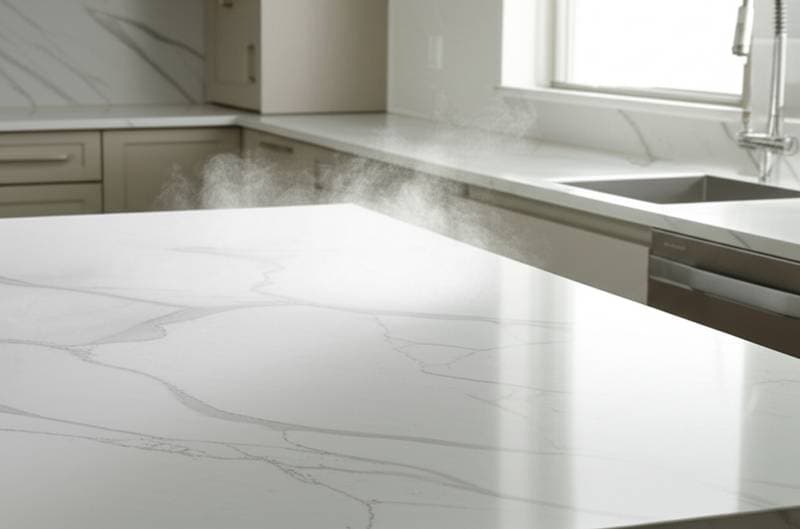
[Image: Contemporary coastal kitchen featuring white quartz countertops with a panoramic ocean backdrop]
Understanding Material Differences
1. Nonporous Composition Blocks Salt Penetration
Granite's natural porosity allows salt crystals from airborne moisture to infiltrate and expand, leading to micro-cracks and surface erosion. Quartz, manufactured from crushed stone bound by resin, forms a dense, impermeable layer that repels salt entirely.
This inherent barrier ensures quartz surfaces stay intact without absorbing corrosive elements. Homeowners benefit from a material that withstands daily coastal exposure without structural compromise.
2. Engineered Resin Enhances Durability
The resin in quartz not only seals the surface but also reinforces it against chemical reactions common in salty air. Granite lacks this synthetic binding, making it susceptible to mineral dissolution from sodium chloride.
As a result, quartz maintains uniform strength and resists the gradual weakening that affects natural stone. This construction choice supports long-term reliability in humid, salt-laden atmospheres.
3. Superior Resistance to Humidity-Induced Wear
High humidity in coastal regions promotes mold and mineral deposits on granite, exacerbating salt damage. Quartz's sealed nature prevents moisture retention, eliminating conditions for such buildup.
Surfaces remain dry and stable, even during prolonged exposure to damp air. This feature proves essential for kitchens where steam and ocean breezes mingle frequently.
Maintenance Advantages
4. Elimination of Routine Sealing Requirements
Granite demands periodic sealing to fortify its defenses against moisture and salt infiltration. Neglect in this process accelerates degradation and invites permanent damage.
Quartz requires no such treatments, as its factory-applied resin provides perpetual protection. This aspect suits active households or seasonal properties, freeing time for leisure rather than chores.
Practical Recommendation: Employ a microfiber cloth with a pH-neutral cleaner weekly to remove any salt residue and preserve the countertop's luster.
5. Effective Defense Against Staining Agents
Saltwater often mixes with kitchen spills like oils or acidic fruits, creating stubborn stains on granite's absorbent surface. Quartz repels these substances, ensuring no penetration or discoloration occurs.
Light-toned quartz varieties retain their vibrancy through years of use, supporting a pristine, contemporary appearance. This steadfast performance justifies quartz as a prudent selection for enduring aesthetics.
6. Simplified Cleaning Protocols in Moist Climates
Elevated humidity causes granite to cling to residues, necessitating vigorous cleaning to eliminate grime and salt films. Quartz, with its smooth finish, releases contaminants with minimal effort.
Follow this straightforward routine:
- Dilute mild detergent in warm water.
- Wipe gently using a soft cloth.
- Rinse and dry promptly to restore clarity.
Quartz dries swiftly, minimizing overnight salt accumulation from open windows capturing sea air.
Performance in Environmental Stressors
7. Heightened UV Stability Prevents Fading
Direct sunlight in coastal areas intensifies salt damage while promoting pigment breakdown in granite. Quartz incorporates UV stabilizers in its resin, safeguarding colors against bleaching.
Even under prolonged exposure, quartz holds its original hues far better than natural stone. This quality ensures countertops complement bright, sunlit kitchens without visual decline.
8. Reduced Risk of Thermal and Chemical Erosion
Fluctuating temperatures and salt-induced chemical attacks erode granite's polish over time. Quartz's uniform composition withstands these cycles, avoiding cracks or dulling.
The material's thermal stability suits varied cooking activities in humid settings. Homeowners experience fewer repairs, extending the lifespan of their investment.
9. Overall Cost Efficiency Through Longevity
Frequent sealing, cleaning, and restoration inflate granite's ownership costs in salty environments. Quartz's low-maintenance profile cuts these expenses significantly.
Initial investment in quartz yields savings via durability and minimal interventions. This economic advantage appeals to coastal dwellers seeking practical, high-value solutions.
Strategic Selection for Coastal Installations
When selecting countertops for seaside kitchens, evaluate these factors to optimize performance:
- Evaluate proximity to the sea. Properties oceanfront require maximum salt resistance compared to inland locations.
- Align with daily routines. Frequent meal preparation or entertaining favors quartz's quick-clean attributes.
- Select appropriate surface treatments. Polished finishes deter salt adhesion, whereas honed options minimize reflections from coastal glare.
- Incorporate airflow measures. Install exhaust fans or position vents to disperse cooking vapors and salt-carrying humidity.
These considerations preserve countertop condition and enhance the kitchen's functionality.
Common Queries on Coastal Countertop Materials
Does saline air genuinely harm granite surfaces?
Yes, airborne salt particles deposit as crystals that, with humidity, etch and matte granite finishes progressively.
Does quartz offer absolute protection from salt?
Quartz provides exceptional resistance through its nonporous, resin-infused design. Although all materials endure some aging, quartz endures coastal demands substantially longer than granite.
What is the recommended cleaning frequency for beach-adjacent quartz?
Daily or alternate-day wipes suffice. Apply a soap-water mix to clear salt layers and sustain polish.
Can sealing mitigate salt effects on granite?
Sealing offers temporary shielding, yet it degrades and requires renewal. Sealed granite still permits gradual salt ingress.
Do quartz surfaces discolor from coastal sun?
Quartz demonstrates strong UV tolerance. Minor fading may occur in select colors after extended exposure, but it outperforms granite markedly.
Sustaining Coastal Kitchen Excellence
Opting for quartz in seaside homes delivers assurance and timeless appeal. Its nonporous framework, resilient bonding, and environmental safeguards position it as the optimal choice where natural stones falter. Implement these insights to enjoy a kitchen that thrives amid ocean influences for decades.