
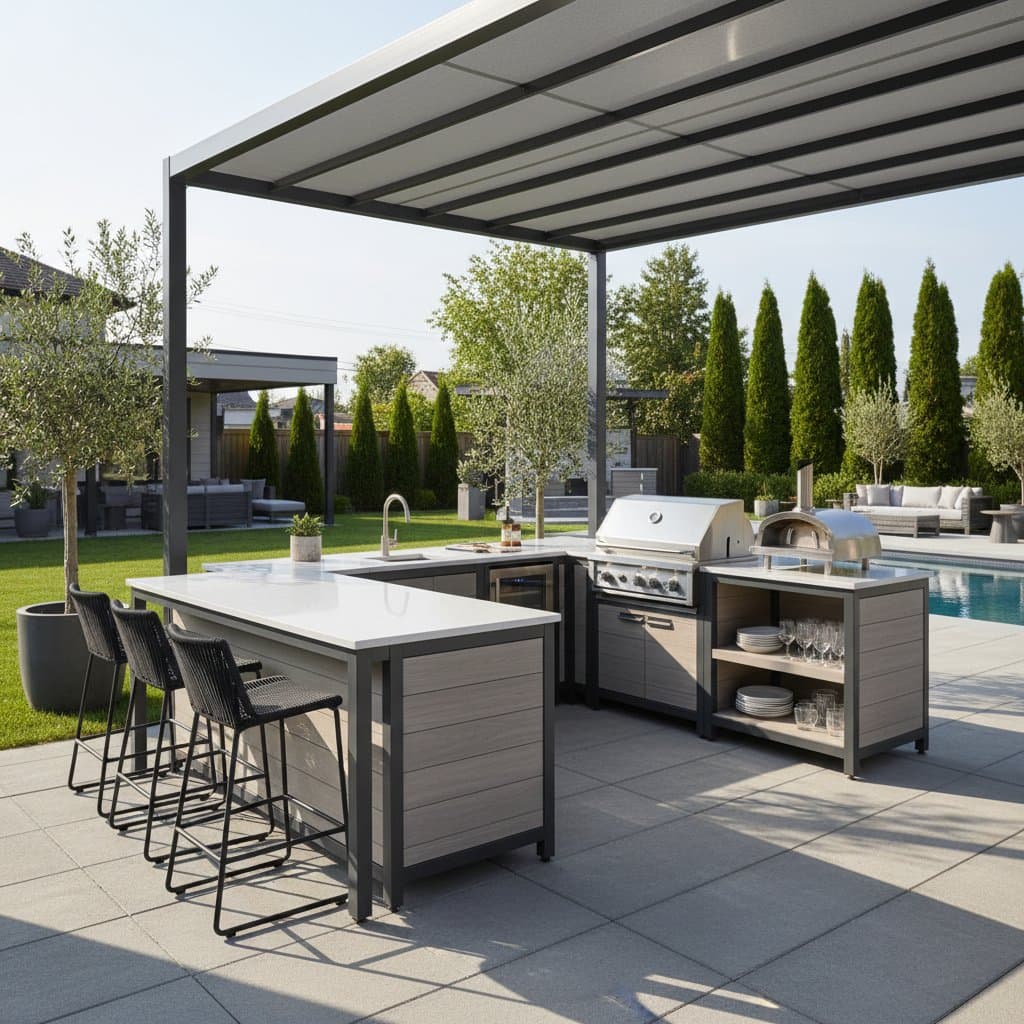
Modular Outdoor Kitchens: Reconfigure in Minutes and Save Up to 50%
Designing an outdoor kitchen once required a fixed layout, permanent appliances, and unyielding materials. That approach has changed. Modular outdoor kitchens provide homeowners with the ability to reconfigure, expand, or relocate cooking stations in minutes. This flexibility allows outdoor spaces to adapt to various occasions, from neighborhood barbecues to intimate dinners.
If you seek details on modular outdoor kitchen costs, functionality, and investment value, this guide offers clear insights and practical recommendations.
Average Cost of a Modular Outdoor Kitchen
The average cost of a modular outdoor kitchen falls between $8,000 and $20,000, influenced by the number of modules, materials selected, and appliances included. A basic setup featuring a grill island and prep counter begins at approximately $5,000. High-end options with multiple cooking zones, refrigeration, and storage surpass $25,000.
In comparison, traditional built-in outdoor kitchens range from $15,000 to $40,000. Modular systems prove 30 to 50 percent more affordable due to their factory-built construction, which minimizes on-site labor and reduces material waste. This method delivers professional results without prolonged construction timelines.
| Project Type | Typical Cost Range | Average Cost | Installation Time |
|---|---|---|---|
| Small Modular Setup | $5,000 - $9,000 | $7,000 | 1 to 2 days |
| Mid-Range Modular Kitchen | $10,000 - $18,000 | $14,000 | 2 to 3 days |
| Large Custom Modular Layout | $20,000 - $25,000+ | $22,000 | 3 to 5 days |
| Traditional Built-In Kitchen | $15,000 - $40,000 | $25,000 | 2 to 4 weeks |
Cost by Material
Material choices affect both the visual appeal and the overall price of modular kitchens. Options include stainless steel, concrete composite, powder-coated aluminum, and weather-resistant polymer finishes.
| Material Type | Price per Linear Foot | Durability | Maintenance | Appearance |
|---|---|---|---|---|
| Stainless Steel | $400 - $700 | Excellent | Low | Sleek, modern |
| Concrete Composite | $300 - $600 | High | Moderate | Contemporary, textured |
| Powder-Coated Aluminum | $250 - $500 | High | Low | Lightweight, colorful |
| Polymer/Resin | $200 - $400 | Moderate | Very Low | Casual, weatherproof |
Stainless steel stands out as the premium selection for its superior durability and potential to enhance resale value. Polymer modules serve as a cost-effective choice, particularly in coastal areas exposed to salt corrosion.
Labor Costs and Installation
Modular outdoor kitchens feature a low labor requirement, a key benefit. Installation typically accounts for 10 to 20 percent of the total cost, with fees ranging from $500 to $3,000 based on site preparation, utility connections, and surface leveling.
These systems arrive pre-engineered for assembly, eliminating the need for concrete footings, framing, or masonry work common in traditional designs. Homeowners can anticipate complete installation in one to three days, which limits disruption and cuts labor expenses significantly.
Factors That Influence Total Cost
Multiple variables shape the final cost of a modular outdoor kitchen:
- Number of modules, including grills, sinks, prep counters, and refrigerators
- Appliance quality, from entry-level to commercial-grade models
- Utility connections for gas, water, and electricity
- Surface materials such as stone, composite, or tile countertops
- Site conditions, including uneven terrain or requirements for a concrete pad
- Custom finishes like powder coating or decorative panels
- Weather protection elements, such as pergolas, covers, or integrated storage
By evaluating these factors, you establish a realistic budget and prevent unforeseen expenses.
How Modular Outdoor Kitchens Work
Each module operates as a self-contained unit that secures to neighboring pieces via a straightforward connection system. You can relocate or swap sections without affecting the surrounding layout. Standard configurations encompass:
- Grill modules for main cooking tasks
- Side burner units for preparing sauces or side dishes
- Sink and prep stations for washing and chopping
- Refrigeration modules for storing beverages and condiments
- Storage cabinets for tools and accessories
Modular designs support gradual expansion. For instance, initiate with a two-piece grill and prep station, then incorporate refrigeration and bar seating as needs or finances permit.
Strategies to Save Money on a Modular Outdoor Kitchen
Reduce expenses while preserving quality through targeted decisions:
- Begin with essential modules, such as a grill island and counter, and expand incrementally.
- Select standard sizes over custom dimensions to lower manufacturing fees.
- Opt for robust mid-range materials like powder-coated aluminum to ensure enduring value.
- Position the kitchen on an existing patio to bypass new foundation requirements.
- Choose plug-in electric grills if gas line extensions prove costly.
- Purchase during off-season periods when outdoor products often receive discounts.
These approaches can decrease your initial outlay by 10 to 25 percent without sacrificing performance.
DIY Installation Versus Professional Services
DIY installation suits modular kitchens well, given their design for rapid assembly. Individuals proficient with basic tools can manage the process, particularly with systems that employ plug-and-play connections for electricity and gas. Plan for 6 to 10 hours dedicated to assembly and placement.
Professional assistance proves advisable for utility extensions or handling substantial modules that demand accurate leveling. Experts guarantee adherence to safety standards and enhance layout efficiency for cooking and gathering. In intricate projects, this service adds $1,000 to $3,000 yet ensures dependability and reassurance.
| Installation Type | Typical Cost | Best For | Pros | Cons |
|---|---|---|---|---|
| DIY Assembly | $0 - $500 | Simple setups on level patios | Cost savings, scheduling flexibility | Demands time and physical labor |
| Professional Installation | $1,000 - $3,000 | Extensive or utility-integrated kitchens | Safety assurance, precise setup | Increased labor expenses |
Common Mistakes to Avoid
Steer clear of these errors to safeguard your investment:
- Overlooking ventilation needs for gas appliances
- Positioning too many modules without adequate prep or counter space
- Disregarding weather safeguards that protect finishes and electronics
- Bypassing permits for gas or water integrations
- Selecting incompatible materials that degrade unevenly
Thorough planning maintains efficiency, safety, and aesthetic harmony in your kitchen.
Frequently Asked Questions About Modular Outdoor Kitchens
Do permits apply to modular outdoor kitchens?
Freestanding modules generally require no permits, though approvals may be necessary for gas, electrical, or plumbing work. Consult local building codes prior to proceeding.
What is the installation timeline for a modular outdoor kitchen?
Expect one to three days for most systems, varying with complexity and utility integrations.
Are modular kitchens suitable for coastal conditions?
Yes, provided you choose corrosion-resistant options like stainless steel or polymer. Routine maintenance and protective covers prolong service life in saline settings.
Maximizing Benefits from Your Modular Outdoor Kitchen
Once installed, your modular outdoor kitchen transforms backyard gatherings. Experiment with layouts to suit seasonal events, and integrate lighting or seating for enhanced usability. Regular upkeep ensures years of reliable performance, elevating everyday meals and special occasions alike.