
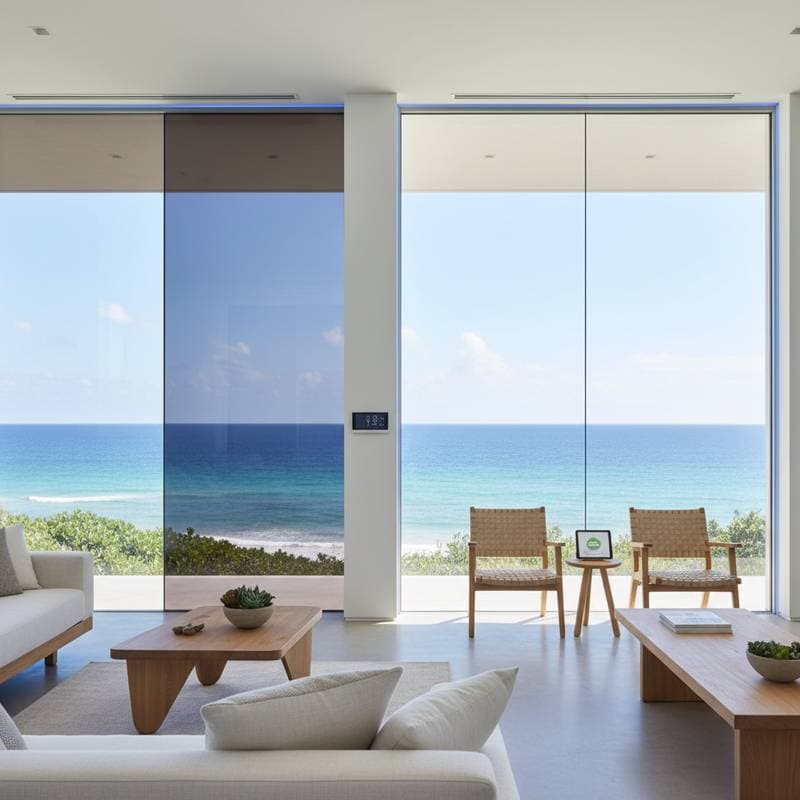
Smart Glass Reduces Air Conditioning Costs in Coastal Home Renovations
Picture yourself in the living room of your seaside home during a sunny afternoon. Sunlight streams through expansive windows, creating a warm, inviting atmosphere with that signature coastal radiance. Yet, soon the air conditioner activates at full capacity to combat the accumulating heat. Coastal residents often confront this challenge of balancing natural light with escalating energy expenses. Smart glass provides an advanced remedy that maintains interior coolness, comfort, and efficiency without forfeiting daylight or scenic ocean panoramas.
This piece examines electrochromic glass, commonly known as smart glass, and its capacity to substantially lower air conditioning expenditures in seaside renovations. Readers will discover its mechanics, installation expenses, suitable variants for marine environments, and choices between self-directed and expert fitting. The discussion also addresses upkeep routines, cost-reduction strategies, and essential considerations prior to window modernization.
Key Insight: Smart glass windows generally range from $700 to $1,200 per unit, with comprehensive home installations spanning $10,000 to $30,000. Such an outlay can diminish cooling expenses by as much as 30 percent, positioning it as a prudent energy option for oceanfront updates.
For expert advice, obtain estimates from reputable window specialists focused on energy-conscious coastal modifications.
Cost Influences
Expenses for installing smart glass fluctuate based on window dimensions, technological specifications, and renovation intricacies. The majority of owners allocate between $700 and $1,200 per window, with an average complete home overhaul approximating $18,000.
Examine the elements that shape the overall expense:
-
Window Dimensions and Number
Bigger panels demand additional electrochromic substances and wiring infrastructure, elevating the price per unit. Conventional single-pane windows fall at the lower spectrum, whereas expansive sliding doors or wide-view walls may surpass $3,000 apiece. -
Glass Innovation
Electrochromic glass, which darkens in reaction to solar exposure, commands a premium over thermochromic (temperature-responsive) or photochromic (light-responsive) alternatives. The advantage lies in enhanced regulation and superior energy conservation. -
Fitting Intricacy
Adapting to present frames proves more economical than outright window substitution. Properties featuring bespoke contours or arched glass necessitate meticulous alignment, thereby extending labor duration. -
Regulation Mechanisms
Elementary smart glass employs wall-mounted controls, whereas sophisticated setups link to residence automation centers or smartphone applications. Unified regulation frameworks may append $2,000 to $5,000 to the endeavor. -
Authorizations and Electrical Tasks
In shoreline districts, construction regulations might mandate particular wind-endurance specifications or hurricane-resistant glazing. Electrical modifications for intelligent controls and minimal-voltage cabling further inflate labor charges. -
Environmental and Orientation Aspects
Residences oriented toward the south or west gain the most from smart glass, as these positions endure peak thermal influx. The capital recoups more rapidly under such circumstances.
Projected Total Expenses:
| Project Category | Projected Expense Spectrum |
|---|---|
| Individual Window Adaptation | $700 – $1,200 |
| Expansive Terrace Entrance | $1,800 – $3,500 |
| Complete Residence Substitution | $10,000 – $30,000 |
| Unified Intelligent Framework | $2,000 – $5,000 Supplementary |
Essential Considerations
Prior to selecting smart glass for a seaside renovation, evaluate these pivotal aspects to secure optimal enduring outcomes.
1. Resilience and Salt Tolerance
Seaside atmospheres transport salt and dampness that may erode ordinary metal frames or impair electronic elements. Opt for smart glass featuring hermetic edge sealing and rust-proof fittings.
2. Energy Efficacy
Seek low-emissivity (Low-E) layers integrated with electrochromic films. This combination bolsters energy performance by repelling infrared warmth while permitting visible illumination passage.
3. Visual Choices
Tint variations extend from subtle gray to intense blue or bronze shades. In contemporary dwellings, impartial colors integrate smoothly with streamlined facades. Classic or Mediterranean styles might favor richer tones.
4. Upkeep and Sanitation
Smart glass demands routine similar to ordinary glass. Employ gentle, non-scratch cleansers and microfiber fabrics. Steer clear of abrasive substances that might harm detection borders or conductive surfaces.
5. Regulation Choices
Determine if manual toggles or automated setups that respond to solar brightness suit your needs. Intelligent automation delivers ease but entails extra electrical merging.
Strategies for Expense Reduction
Although smart glass involves significant initial spending, multiple approaches exist to curtail outlays and accelerate investment recovery.
-
Targeted Placement
Prioritize zones with intense solar incidence, like westward windows or patio accesses. Address remaining areas progressively as funds permit. -
Hybrid Selections
Merge electrochromic glass in primary zones with thermochromic variants in auxiliary spots such as restrooms or corridors. -
**Pursue Regional Incentives
Numerous seaside municipalities and service providers grant reimbursements for energy-savvy enhancements. Investigate local energy initiatives for glazing or window exchange benefits. -
Incorporate Amid Renovations
Introducing smart glass within a comprehensive overhaul lessens labor fees, given that structures and conduits remain accessible. -
Track Energy Gains
Utilize an intelligent thermostat or usage tracker to observe reduced air conditioning operation. This reveals the promptness of window recoupment.
Frequently Asked Questions
How does smart glass lower air conditioning expenses?
Smart glass modulates its opacity to obstruct infrared warmth, thereby stabilizing indoor climates. This lessens air conditioner activation frequency, potentially slashing energy consumption by up to 30 percent.
Can smart glass withstand seaside moisture and saline air?
Yes, contemporary electrochromic glass incorporates sealed perimeters and erosion-resistant casings to shield against humidity and salt erosion. Select variants certified for marine settings.
Does smart glass function amid electrical failures?
Electrochromic glass preserves its final opacity during disruptions. SPD glass, reliant on steady electricity, defaults to opaque or darkened states without power.
Is smart glass suitable for solar power setups?
Yes. Smart glass complements photovoltaic arrays, optimizing energy use and diminishing dependence on utilities. Together, they elevate home energy assessments.
What is the durability of smart glass?
Premium electrochromic glass endures 25 to 30 years under diligent maintenance. Electronic parts reside encased between glass plies, safeguarding them from elemental exposure.
Implementing the Upgrade
Transitioning to smart glass serves as both an aesthetic enhancement and a pragmatic energy strategy for seaside lifestyles. Owners gain refreshed interiors, seamless ocean sights, and diminished air conditioning bills without cumbersome coverings or screens. Begin by pinpointing rooms with maximal solar penetration, then secure a minimum of three proposals from seasoned fitters versed in marine challenges.
Through thoughtful preparation and material selection, renovations can harness daylight elegantly while ensuring comfort and efficiency. Smart glass converts each radiant seaside day into a chance for energy conservation and balanced enjoyment of vistas.