
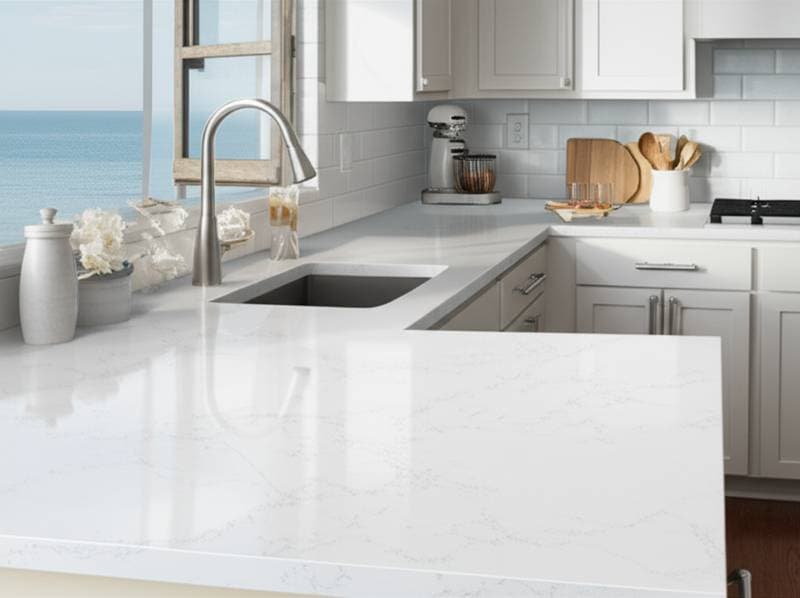
Why Quartz Countertops Outperform Granite in Coastal Environments
Residing near the ocean provides stunning vistas and serene living, yet it presents distinct challenges for home materials. Salty breezes infiltrate interiors, particularly kitchens with elevated moisture levels. Selecting appropriate countertops during renovation influences longevity substantially. This article details why quartz surpasses granite in salty coastal air, its defenses against corrosion and stains, and key considerations for coastal kitchen selections.
Understanding Salt Air's Impact on Surfaces
Coastal settings subject residences to salt, dampness, and temperature variations that degrade numerous construction elements. Countertops positioned by windows or doors encounter fine salt particles transported via sea winds.
Salt Corrosion Mechanisms
Airborne salt proves corrosive as it draws in and retains water. Upon evaporation, saltwater deposits minute crystals that erode protective coatings, induce discoloration, or create surface pits. Prolonged exposure diminishes the luster of natural stone and compromises structural integrity.
Importance of Countertop Composition
Various countertop substances respond differently to such exposures. Natural stones including granite possess porosity, permitting absorption of moisture and salt absent adequate sealing. Quartz, engineered for impermeability, gains superiority in seaside scenarios.
Quartz Durability Factors
Quartz differs from natural slabs such as granite or marble. Fabricated from ground quartz crystals united with resins and colorants, it forms a robust, consistent substance resistant to ambient pressures.
Impermeable Composition
Quartz's primary strength lies in its nonporous nature. Lacking absorption capacity for liquids or contaminants, it blocks salt and humidity infiltration. Consequently, corrosion, staining, and microbial proliferation remain prevented. Unlike granite, which demands periodic resealing for safeguarding, quartz requires no such interventions.
Defenses Against Stains and Fading
Granite's inherent minerals interact with salt and dampness, potentially yielding discoloration or matte areas. Quartz's resin components serve as a shield, preserving color uniformity despite proximity to the sea. This benefit amplifies in sunlit kitchens, where salt deposits intensify under ultraviolet rays.
Structural Resilience
Quartz exhibits remarkable hardness, complemented by resin-induced pliability that mitigates cracking or chipping amid thermal shifts. Pure natural stone like granite expands and contracts with humidity and warmth, occasionally resulting in micro-fractures or edge vulnerabilities over extended periods.
Quartz Versus Granite in Seaside Kitchens
Each material boasts aesthetic and strength merits, though coastal performance diverges markedly. Grasping these distinctions aids informed choices prior to countertop investments.
Upkeep Demands
- Quartz: Involves basic cleansing using gentle soap and water. Sealing proves unnecessary.
- Granite: Necessitates periodic sealing to shield from dampness and stains. Coastal salt accelerates sealant degradation, demanding more frequent applications.
Protections from Corrosion and Etching
- Quartz: Impermeable design confers high resistance to salt-induced corrosion and acidic etching.
- Granite: Inherent porosity invites etching or pitting should salt or acids linger on the surface.
Long-Term Aesthetics
- Quartz: Retains sleek texture and even hues for decades absent polishing.
- Granite: Risks luster loss or hazy patches as sealants fail or salt accumulates.
Economic Aspects
Quartz generally incurs a modest premium over granite, yet reduced upkeep and extended coastal viability enhance overall worth. Prices fluctuate based on manufacturer, pattern, and locale.
Crafting Coastal Kitchens with Quartz
Quartz extends beyond resilience to provide versatile styling options. As a manufactured product, it offers diverse motifs and shades suiting nautical themes, spanning pristine whites, neutral sands, to sea evoking blues and silvers.
Selecting Appropriate Sheens
In seaside kitchens, both satin and glossy sheens suit effectively, though gloss facilitates salt residue removal. Satin variants conceal smudges advantageously in busy zones.
Integrating with Nautical Elements
Quartz harmonizes with organic textures such as reclaimed wood, woven fibers, and pale cabinetry. It aligns seamlessly with corrosion-resistant stainless appliances prevalent in coastal designs.
Installation Guidelines
Engage certified, insured specialists experienced in countertop fitting. Inquire about their coastal project history, and solicit client testimonials or visual examples. Verify seam sealing integrity and edge treatments to bar salt or water entry.
Preserving Quartz in Seaside Settings
Quartz demands minimal effort, but targeted practices extend its visual and functional lifespan.
Routine Maintenance Practices
- Employ soft cloths with diluted mild cleanser for wiping.
- Steer clear of scrubbers or aggressive agents that might haze the resin.
- Follow with freshwater rinsing and complete drying to avert deposits.
Mitigating Salt Deposits
Proximity to shores heightens salt ingress through vents. Conduct regular countertop swipes, particularly adjacent to openings, to curb buildup. Air filtration units or humidity controls diminish suspended salts and vapors.
Safeguarding from Thermal Stress
Quartz tolerates heat adequately, but direct hotware contact risks resin impairment. Employ protective mats or stands consistently.
Frequently Asked Questions
What Advantages Does Quartz Hold Over Granite for Coastal Residences?
Quartz's nonporous factory-sealed build repels salt, dampness, and stains effectively. Natural granite absorbs these elements without routine resealing.
How Frequently Should Coastal Quartz Surfaces Receive Cleaning?
In saline environments, daily attention proves optimal. Swift passes with soapy water eliminate salt and vapor traces preemptively.
Does Prolonged Salt Exposure Harm Quartz?
Salt fails to infiltrate due to resin encapsulation. Routine care ensures sustained clarity and strength amid intense seaside contact.
Is Granite Viable Near Oceanic Shores?
Granite functions with heightened vigilance. Annual multiple sealings and vigilant cleansing avert salt-induced deterioration.
Are Quartz Countertops Environmentally Sound?
Many quartz formulations incorporate up to 90 percent recycled content, promoting sustainability. Production resins derive from low-emission processes, though natural granite extraction impacts quarries more directly.
Does Sunlight Cause Quartz to Fade?
Quartz resists ultraviolet degradation inherent in natural stones. Colors remain vibrant, unaffected by direct or indirect solar exposure over time.
What Is the Expected Lifespan of Quartz in Coastal Kitchens?
With appropriate maintenance, quartz endures 25 years or longer, outpacing granite in saline conditions by minimizing wear and repair needs.
Securing Coastal Kitchen Longevity
Opting for quartz in seaside kitchens combines aesthetic choice with prudent foresight. Its barriers to salt erosion, color shifts, and water harm sustain elegance and utility against rigorous marine influences. Through straightforward upkeep and expert fitting, quartz ensures enduring perfection and reliability.