
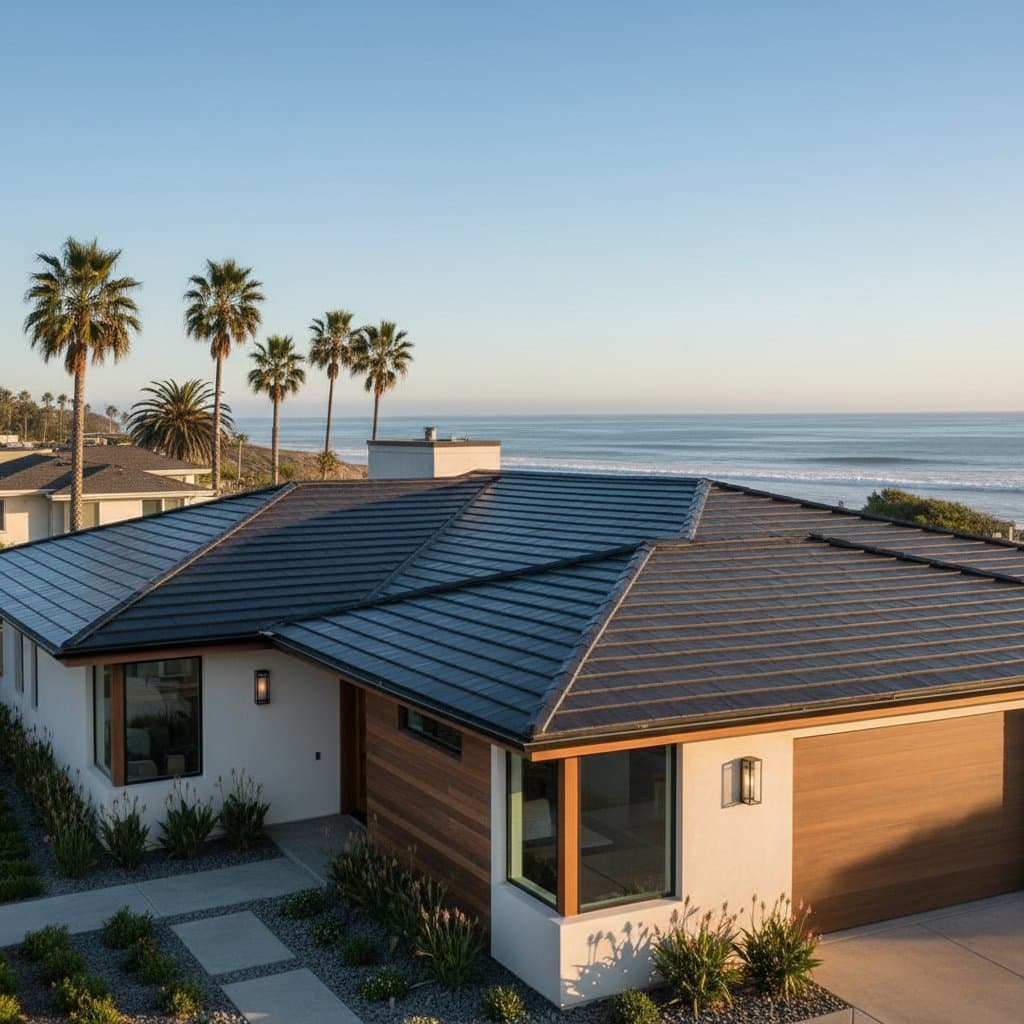
Solar Shingles: Achieving a Six-Year Return on Investment for Coastal Homes
Homeowners in coastal areas envision a roof that reduces energy expenses and withstands severe weather while maintaining an elegant appearance. Solar shingles fulfill this vision by integrating renewable energy generation with robust roofing materials. In regions such as San Diego, these shingles provide a compelling upgrade, yielding a return on investment in approximately six years through substantial savings and incentives.
Key Benefits
- Solar shingles integrate roofing and photovoltaic technology to produce clean electricity.
- Coastal residents achieve return on investment in about six years via energy cost reductions and tax benefits.
- Advanced designs earn hurricane ratings, resisting salt exposure and intense winds.
- Initial expenses exceed those of conventional panels, yet long-term efficiencies compensate.
- These shingles suit coastal properties prioritizing durability, performance, and visual harmony.
Understanding Solar Shingles
Solar shingles, or photovoltaic shingles, resemble conventional roofing tiles yet embed solar cells to produce electricity. Rather than mounting separate panels over existing roofs, these shingles serve as the primary roofing layer. This integration creates a streamlined profile that complements diverse architectural elements prevalent in coastal settings.
Each shingle links to an inverter, which transforms solar energy into electricity for household use. Surplus power feeds into the utility grid or charges battery systems for later application. Homeowners gain a seamless solution that enhances both functionality and aesthetics.
Advantages for Coastal Properties
Coastal locations enjoy plentiful sunlight, ideal for solar power generation. However, residents contend with corrosive salt air, forceful winds, and potential storm damage. Contemporary solar shingles achieve hurricane ratings through rigorous testing for wind loads and material strength, delivering dual benefits of shelter and energy output. Properties near shorelines derive particular value from this resilient technology.
Breaking Down the Six-Year Return on Investment
In coastal environments, solar shingles typically recoup costs within six years, influenced by consumption patterns, roof dimensions, and incentive programs. The following table outlines primary contributors:
| Factor | Estimated Impact | Description |
|---|---|---|
| Energy bill reductions | 40-60% decrease | Substantial cuts in monthly utilities |
| Federal and state rebates | 20-30% cost reduction | Credits that lower initial outlay |
| Property value uplift | 3-5% appreciation | Enhanced marketability upon sale |
| Upkeep requirements | Low | Comparable to routine roof care |
Consult at least three certified installers for precise estimates. Costs fluctuate based on roof configuration and product choices.
Installation Costs and Process
For a typical coastal residence, solar shingle installation ranges from $20,000 to $40,000. This figure surpasses expenses for traditional roofing or standalone panels, but the multifunctional design yields enduring financial advantages.
Cost Determinants
- Roof dimensions and pitch: Extensive or angled surfaces demand additional materials and effort.
- Electrical infrastructure: Upgrades to panels or additions like batteries elevate expenses.
- Permitting processes: Coastal regulations mandate extra reviews for storm-resistant components.
- Product selection: High-end brands provide superior output and design quality.
Professional crews handle the process, ensuring secure placement and system integration. Expect the project to span several days, depending on roof scale.
Advantages and Drawbacks
| Advantages | Drawbacks |
|---|---|
| Unified, attractive profile | Elevated initial investment |
| Renewable power output | Moderate efficiency levels |
| Storm-resistant build | Mandatory expert fitting |
| Elevated home worth | Challenging repairs if harmed |
| Reduced ongoing care | Unsuitable for low-light areas |
Coastal owners frequently find the strengths surpass limitations. The blend of form, fortitude, and self-sufficiency positions solar shingles as a strategic choice.
Performance in Coastal Environments
Marine conditions, including salt-laden air, moisture, and gales, challenge roofing integrity. Leading solar shingles feature tempered glass layers and anti-corrosion fittings, safeguarding against degradation in saline settings. Their interlocking arrangement blocks moisture penetration, and built-in seals minimize leak potential.
Essential Maintenance Practices
- Flush the surface with fresh water at regular intervals to clear salt deposits.
- Conduct yearly examinations for fractures or fading in shingles.
- Verify electrical links post-storm to confirm stability.
Implementing these measures preserves system performance and longevity, often spanning 25 years or more.
Strategies to Optimize Returns
Attain the six-year payback by selecting informed installation options and adopting efficiency habits.
Effective approaches encompass:
- Integrating shingles with battery storage to utilize generated power fully.
- Incorporating energy-saving devices to diminish overall demand.
- Arranging periodic evaluations via installer service agreements.
These steps accelerate financial recovery and enhance reliability.
Realizing Benefits from an Energy-Producing Roof
After installation, reductions in utility statements appear promptly, often in the initial billing cycle. Beyond economics, owners experience assurance from a roof that generates sustainable power and endures coastal rigors. For San Diego residents pursuing elegance and eco-friendliness, solar shingles offer a robust fusion of protection, design, and profitability.