
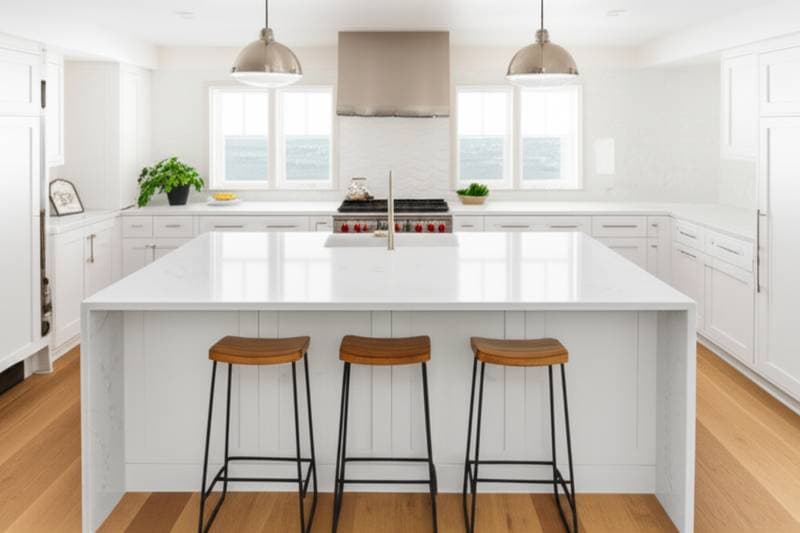
Why Quartz Countertops Outperform Granite in Coastal Kitchens
Residing near the ocean presents unique challenges for home surfaces due to pervasive salt air. This environment accelerates corrosion and discoloration on materials like vehicle exteriors and outdoor furnishings. In kitchen settings, selecting between quartz and granite countertops becomes crucial for longevity. Although both materials offer visual appeal, quartz demonstrates superior resilience in salty coastal conditions.
Key Advantages of Quartz Over Granite
- Quartz repels salt, moisture, and stains more effectively than granite due to its nonporous composition.
- Granite demands periodic sealing and upkeep, whereas quartz requires minimal effort to maintain.
- Engineered quartz provides uniform colors and patterns, ideal for contemporary coastal aesthetics.
- Quartz withstands high humidity levels, reducing risks of mold growth and surface etching.
- Environmentally aware residents value quartz for its use of recycled content and extended service life.
Homes with ocean views deserve interiors that endure the elements. Quartz countertops emerge as the optimal solution for coastal kitchens, combining performance with timeless design.
Challenges of Salt Air on Granite Surfaces
Granite attracts admiration for its organic patterns and textures. However, its inherent porosity allows salt particles and water to penetrate microscopic fissures. This interaction over time results in several issues.
Etching occurs as salt crystals abrade the polished finish, creating a matte appearance. Stains develop when unsealed sections absorb liquids, leading to permanent discoloration. Structural integrity may compromise through repeated saltwater exposure, potentially causing micro-cracks. Homeowners must apply sealant every six to twelve months to mitigate these effects, a process involving specialized products and labor.
Quartz eliminates these vulnerabilities entirely. Its engineered, nonporous nature prevents infiltration by salt or humidity. Routine care involves wiping with a soft cloth and mild detergent, restoring the surface to pristine condition without additional treatments.
To preserve any countertop in a coastal setting, employ a pH-neutral cleaner diluted in water. Avoid acidic substances like vinegar or citrus-based solutions, which could harm protective layers on either material.
Balancing Aesthetics and Durability in Coastal Design
Quartz integrates style and utility seamlessly in kitchen applications. Advanced manufacturing techniques replicate the intricate veining of natural stones such as granite or marble, yet deliver a flawless, consistent surface. This versatility facilitates coordination with surrounding elements like cabinetry, flooring, and wall treatments to create harmonious coastal interiors.
Recommended quartz selections for seaside residences encompass:
- Subtle white shades accented by faint gray lines, evoking sandy shores and open skies.
- Muted blue or green tones that reflect marine influences without overwhelming the space.
- Neutral beige varieties that blend warmth with practicality, concealing minor spills or residue.
In contrast, granite's dramatic veining suits larger areas but may dominate compact kitchens. Quartz allows precise customization of scale and intensity, fostering the light, ventilated ambiance characteristic of coastal living.
Visualize a kitchen featuring warm quartz in earthy tones paired with iridescent backsplash tiles reminiscent of sea glass. Such combinations enhance natural light and promote a serene atmosphere.
Sustainability Benefits of Quartz Selection
Leading quartz producers incorporate recycled glass, stone waste, and other byproducts into their formulations. This approach minimizes raw material extraction and energy consumption during fabrication. Furthermore, quartz installation avoids the application of volatile chemical sealants, promoting healthier indoor air quality.
Opting for quartz extends the lifespan of kitchen surfaces, decreasing the frequency of replacements. This choice curtails environmental impacts associated with quarrying natural stone and long-distance shipping. Coastal dwellers committed to green practices find quartz aligns with their values, delivering premium quality alongside ecological benefits.
Consider a streamlined kitchen outfitted with pristine white quartz fabricated from sustainable sources, complemented by renewable bamboo cabinets. This setup exemplifies modern responsibility without sacrificing sophistication.
Practical Experiences with Quartz in Seaside Homes
After installation, quartz countertops provide reliable performance amid daily coastal routines. Prepare meals, host gatherings, or ventilate the space freely, secure in the knowledge that salt ingress poses no threat. The material stays cool under hot pots, cleans swiftly, and retains its luster indefinitely.
For those undertaking a kitchen renovation near the shore, prioritize quartz in material planning. It excels in saline atmospheres, adapts to diverse stylistic preferences, and liberates time from granite's ongoing demands. The result is a functional, attractive space that withstands the sea's influence for years to come.