
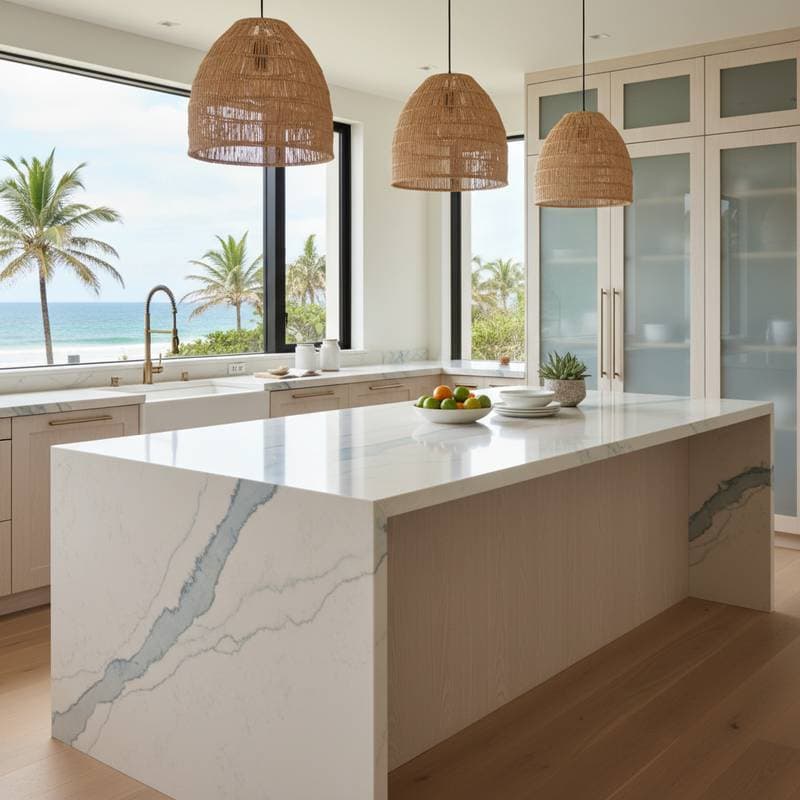
Why Quartz Outperforms Granite in Beach House Kitchens
Coastal homeowners have long favored the look of natural stone. A growing number now select quartz countertops for beach house kitchens instead. This change reflects how materials perform in humid, salt-filled air and how owners prefer to maintain their spaces.
This article explains why quartz countertops outsell granite in beach house kitchens. It covers performance in coastal conditions, maintenance needs, design options, and cost factors to support informed decisions.
The Engineered Edge of Quartz
Quartz countertops are made from crushed quartz crystals combined with resin and pigments. This process yields a nonporous surface that blocks stains, moisture, and bacteria. Granite, cut from natural stone, remains porous and needs repeated sealing.
Nonporous Performance
Humidity and salt air create constant stress on kitchen surfaces. Quartz never requires sealing, which reduces upkeep in vacation homes or rentals. The surface also limits places where bacteria or mold can grow in damp conditions.
Durability Under Daily Use
Quartz ranks among the hardest countertop options and resists chips from sand or dropped items. Granite can show visible damage from heavy pots and often needs noticeable repairs. The uniform structure of quartz provides consistent strength across the slab.
Controlled Appearance
Manufacturers adjust color and veining in quartz to match cabinetry or tile exactly. This precision suits clean coastal palettes. Quartz can replicate marble or concrete looks without the fragility of those natural materials.
Coastal Conditions and Material Response
Salt, moisture, and sunlight affect how surfaces age near the ocean. Quartz maintains its finish because resin binders limit moisture absorption. Granite can discolor when salty air enters its pores.
Simple soap and water cleaning removes spills and sand from quartz. Granite demands specialized cleaners and periodic sealing, which adds cost for rental properties. Quartz also blocks stains from wine, citrus, and sunscreen that may otherwise mark granite.
Cost and Long-Term Value
Material prices for quartz and granite overlap depending on thickness and color. Quartz often delivers better value through lower maintenance and longer surface life without refinishing. Professional installation applies to both, yet quartz fabrication benefits from its consistent density.
Design Trends and Selection Steps
Light color palettes now dominate beach house kitchens. Quartz offers crisp whites, soft grays, and sand tones that enlarge small spaces. These shades pair with flat-panel cabinets and stainless appliances.
Follow these steps to choose a surface:
- Match the quartz color to the overall kitchen palette.
- Select a polished finish for easier cleaning or a matte finish to reduce glare.
- Choose an eased edge for modern lines or a beveled edge for subtle detail.
- View large samples in the actual kitchen light at different times of day.
- Hire a certified fabricator to ensure proper cuts and warranty coverage.
Common Questions
Quartz resists salt air and moisture without sealing, which suits humid coastal homes. High-quality quartz includes UV protection to limit fading. Use trivets for hot cookware. With routine care the surface lasts decades. Many brands incorporate recycled content and avoid chemical sealers.
Planning Your Kitchen Upgrade
Quartz combines lasting appearance with practical performance in salt air and humidity. Careful color selection and professional installation produce a kitchen that stays attractive through years of coastal living.