
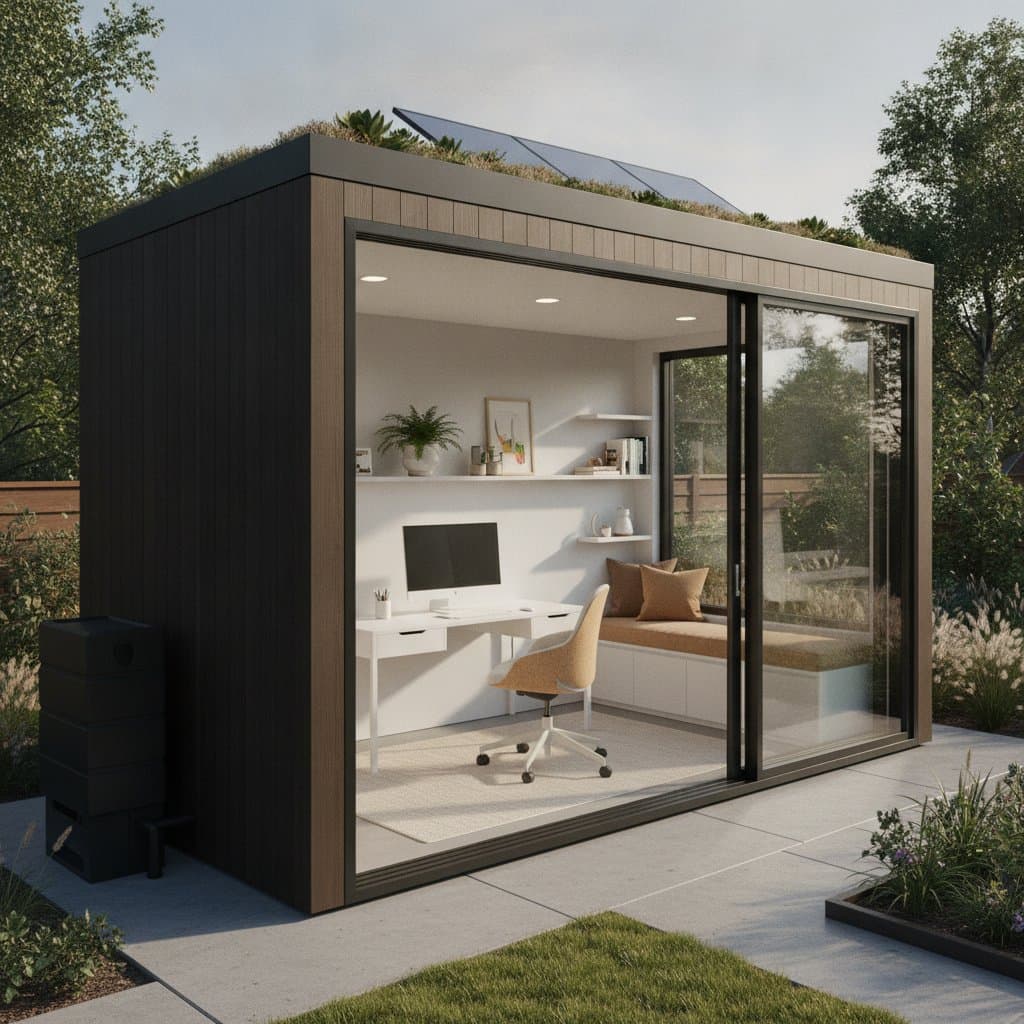
Why Modular Outdoor Rooms Lead 2026 Backyard Trends
Modular outdoor rooms deliver quick and adaptable backyard expansion for homeowners seeking more functional space. These prefabricated structures support remote work, guest accommodations, fitness routines, and social gatherings while avoiding the extended timelines of conventional construction.
Defining Modular Outdoor Rooms
A modular outdoor room consists of a prefabricated unit delivered in sections or as a complete assembly for rapid backyard placement. Units range from compact office pods to larger suites equipped with insulation, electrical systems, and climate control features.
Common applications include:
- Backyard offices that support focused remote work or creative tasks
- Guest pods that offer private lodging without changes to the primary residence
- Yoga or fitness studios that provide dedicated exercise environments
- Outdoor lounges that extend entertainment capacity with integrated seating
Core Advantages of Prefab Construction
Prefab methods reduce on-site disruption because modules are assembled in controlled facilities before delivery. Installation typically requires only a few days once the foundation is prepared. This approach also supports future reconfiguration as household needs evolve.
Key benefits appear in the following areas:
- Speed: Most units reach completion in days rather than the months required for site-built additions.
- Cost control: Total expenses often fall 30 to 50 percent below traditional construction costs.
- Adaptability: Interior layouts can shift between office, studio, or lounge functions with minimal structural changes.
- Resource efficiency: Many manufacturers incorporate recycled content and high-performance insulation.
- Style options: Exterior finishes range from modern metal cladding to wood siding that matches existing architecture.
Local zoning review remains essential before purchase. Some jurisdictions classify smaller units as temporary structures, which simplifies approval procedures.
Budget Expectations and Return Factors
Purchase prices for modular outdoor rooms generally span 15000 to 60000 dollars. Smaller office pods occupy the lower portion of this range, while units that include plumbing and full utilities reach the upper end.
Primary cost drivers include overall square footage, required utility connections, and selection of premium finishes such as expansive glazing or built-in cabinetry. Compared with site-built additions that frequently surpass 100000 dollars, these rooms provide measurable value through quicker occupancy and lower carrying costs during construction.
Tailoring Design to Specific Needs
Customization begins with a clear statement of intended use. Modern minimalist schemes favor clean lines, large sliding doors, and restrained color palettes. Eco-focused designs incorporate solar panels, bamboo surfaces, and vegetated roof systems. Entertainment configurations add built-in seating, compact bars, and audio integration, while creative studios benefit from skylights and adjustable shelving.
Steps to Launch a Project
Successful installation follows a structured sequence:
- Clarify the primary function of the space before reviewing product options.
- Survey the site for adequate access routes, drainage patterns, and setbacks from property lines.
- Obtain competitive proposals from established manufacturers that supply written warranties and service support.
- Coordinate utility rough-ins for power and data lines during the planning phase.
- Complete the installation with targeted landscaping and exterior lighting.
Reserve an additional 10 to 20 percent of the base budget to address foundation adjustments or unexpected utility extensions.
Ongoing Care and Long-Term Use
Routine Maintenance Practices
Maintenance stays straightforward. Periodic cleaning of interior surfaces, application of protective sealants on wood elements, and inspection of electrical connections preserve performance. These steps keep the structure ready for daily use throughout the year.
Homeowners gain immediate access to additional living capacity that supports both productivity and leisure without permanent alteration of the main residence.