
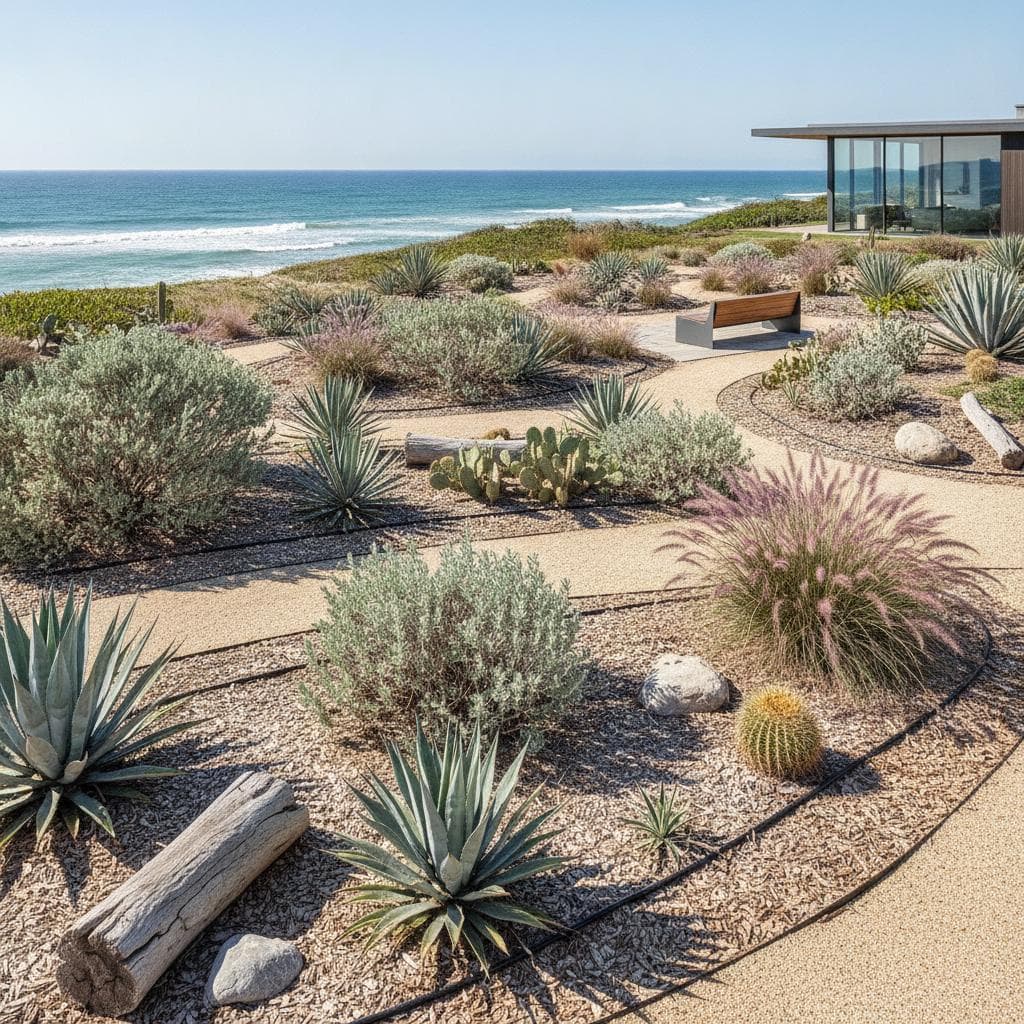
Coastal Gardens That Thrive on Half the Water
Coastal living brings endless sunshine, salty breezes, and ocean views. It also requires working with sandy soil and limited freshwater. Xeriscaping offers a practical strategy for a vibrant landscape that thrives without constant watering. This approach relies on drought-tolerant plants, efficient irrigation, and design choices that conserve water.
This guide shows how to build a low-water coastal garden. Readers will find specific steps for plant selection, site design, and ongoing care.
Xeriscaping Principles for Coastal Conditions
Xeriscaping reduces water use while supporting healthy plants. In coastal settings, it also counters salty air, sandy soils, and strong winds. The term comes from the Greek word for dry, yet a finished garden can display texture, color, and movement throughout the year.
The goal is not to create a barren yard. Instead, xeriscaping replaces thirsty lawns with layered plantings, permeable surfaces, and carefully directed water. A mix of upright grasses, spreading ground covers, sculptural succulents, and flowering shrubs can make the landscape feel lush while using a fraction of the water.
Advantages Near the Shore
- Lower water bills result when outdoor use drops by more than half.
- Maintenance decreases because drought-tolerant plants require less mowing and fertilizing.
- Native species receive support and ocean-bound runoff declines.
- Plants gain resilience against salt, wind, and dry spells.
Site Challenges to Address
Sandy soil drains rapidly and limits moisture retention. Salt spray can scorch foliage on tender species. Wind accelerates evaporation and stresses young plants. Fog and humidity influence disease pressure. Each factor is managed through plant choice, soil amendments, and layout decisions.
Site Assessment and Zone Planning
A successful design starts with observation. Note sun patterns, wind direction, and drainage across the property. Group plants by similar water needs to avoid waste.
Watch how water moves after irrigation or rainfall. Low areas may support plants that enjoy more moisture, while raised, exposed sections need especially tough species. Protect young plants from prevailing winds with fences, walls, or dense shrubs, but avoid blocking desirable coastal breezes completely.
Three Functional Zones
- Oasis areas near patios receive moderate water for color and comfort.
- Transition beds hold hardy shrubs and ground covers that need little irrigation.
- Arid edges feature native species sustained mainly by rainfall.
Use seating, stepping stones, and lighting to make each zone functional as well as attractive. A small patio surrounded by fragrant herbs can provide a comfortable outdoor room without adding a large area of thirsty turf.
Style Options That Suit Coastal Homes
Mediterranean layouts pair olive trees with lavender and gravel. Native prairie plantings combine grasses and flowering perennials. Tropical dry gardens use palms and agave with bold foliage. Each style should echo the architecture and local conditions.
Repeat a few key plants throughout the property to create visual continuity. Then add contrast through foliage shape, rock placement, or seasonal flowers. This approach gives a small garden a more intentional appearance and reduces the temptation to fill every space with high-maintenance plants.
Soil Improvement Steps
Sandy soil prevents waterlogging yet leaves roots dry. Mix compost or aged manure into the top six inches to increase moisture retention. Spread two to three inches of shredded bark mulch around each plant to slow evaporation. Skip heavy fertilizer applications that force soft growth and raise water demand.
Do not pile mulch against trunks or crowns, since constant moisture can encourage rot. Leave a small gap around each stem, and refresh mulch when bare soil becomes visible. In especially sandy beds, compost can be added gradually rather than all at once, allowing soil structure and beneficial organisms to improve naturally.
Plant Selection for Salt and Drought Tolerance
Choose species that store water or tolerate exposure. Combine succulents such as agave and sedum with ground covers like dymondia. Add grasses including blue fescue and fountain grass for movement. Include shrubs such as ceanothus and rosemary for structure. Flowering perennials like yarrow and gaillardia support pollinators.
Vary plant heights to create a layered composition. Place taller shrubs along property edges, medium perennials around paths, and low ground covers near retaining walls. Select plants with different bloom periods and foliage colors so the garden remains appealing even when flowers are not present.
Salt-Tolerant Coastal Species
- Beach morning glory handles direct spray.
- Sea lavender and New Zealand flax withstand wind.
- Toyon and coastal sagebrush remain green in exposed sites.
Place plants with matching water needs on the same irrigation line. Ask a local nursery about regional natives, since plants from nearby coastal habitats are more likely to tolerate the property’s soil, exposure, and salt conditions.
Irrigation and Hardscape Details
Drip systems deliver water at the root zone and cut evaporation. Water early in the morning when temperatures are lower. Reduce frequency after the first year. Collect rainwater in barrels for supplemental use. Inspect emitters monthly for clogs or leaks.
Install pressure regulators and filters to help drip equipment work consistently. Give newly planted shrubs slower, deeper irrigation so roots grow downward rather than staying near the surface. Adjust emitters as plants mature, since established root systems often extend beyond the original planting hole.
Gravel paths and permeable pavers reduce planted area while allowing rain to soak in. Natural stone and weathered wood add texture that complements vegetation. Use hardscape near entrances and seating areas to prevent foot traffic from compacting soil around delicate roots.