
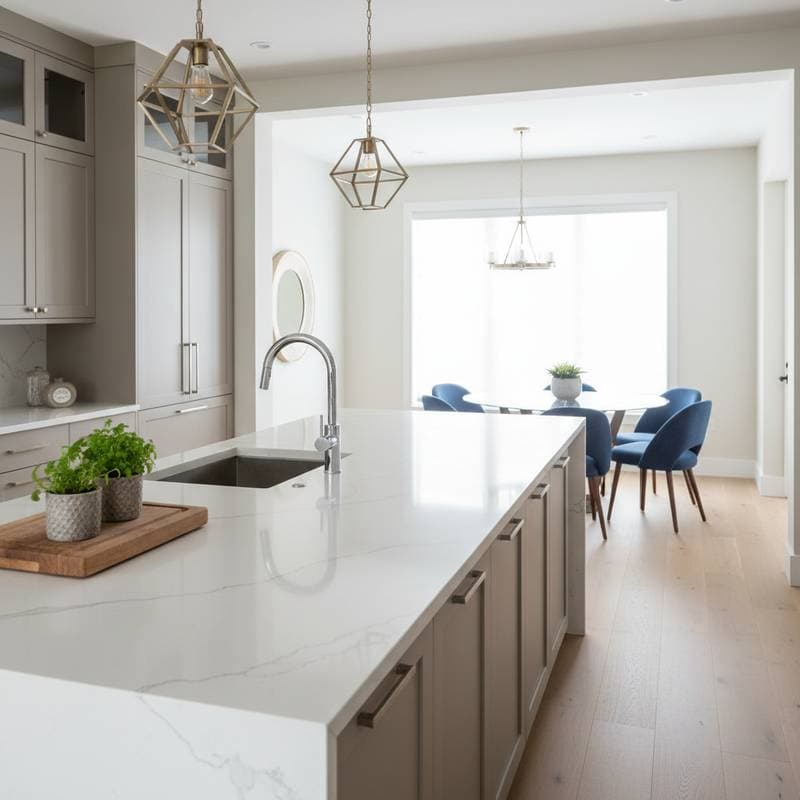
Why Quartz Beats Granite for 2025 Kitchen Remodels
Quartz countertops emerge as the preferred choice for kitchen remodels in 2025, outpacing granite in key areas such as durability, maintenance, and environmental impact. Homeowners seek materials that combine timeless appeal with practical benefits, and quartz delivers on both fronts. This article explores the advantages of quartz, providing insights into why it represents a smart investment for modern kitchens.
Understanding Quartz and Granite Basics
Quartz countertops consist of engineered stone made from approximately 90 percent natural quartz crystals combined with resins and pigments. This composition creates a uniform, resilient surface ideal for high-traffic areas like kitchens. Granite, in contrast, forms from natural igneous rock, featuring unique veining and colors drawn from quarried slabs.
While granite offers natural beauty, its variability can lead to inconsistencies in quality and performance. Quartz provides consistent strength across every installation, ensuring predictable results. For 2025 remodels, this reliability aligns with the demand for efficient, hassle-free upgrades.
Superior Durability of Quartz
Quartz stands out for its exceptional hardness, rated at seven on the Mohs scale, which resists scratches from everyday use such as chopping vegetables or sliding pots. Granite scores between six and seven but remains more susceptible to chipping at edges during installation or heavy impacts. In busy family kitchens, this durability translates to fewer repairs over time.
Engineered quartz also withstands heat better than many assume, though direct placement of hot pans requires trivets to prevent resin damage. Unlike granite, quartz maintains its integrity without sealing, eliminating the risk of weakened spots from improper maintenance. Homeowners appreciate this robustness, especially in homes with children or frequent entertaining.
Low Maintenance Advantages
One of the most compelling reasons to choose quartz involves its nonporous nature, which prevents absorption of liquids like wine or oil. Cleaning requires only a mild soap and water solution, applied with a soft cloth for daily upkeep. Granite demands periodic sealing to avoid stains, a process that involves specialized products and can take hours.
Bacteria find no harbor on quartz surfaces, reducing health concerns in food preparation zones. This feature proves particularly valuable in 2025, as awareness of hygiene grows post-pandemic. With quartz, homeowners spend less time on chores and more on enjoying their spaces.
Cost Considerations and Long-Term Value
Initial costs for quartz countertops range from $50 to $120 per square foot, depending on style and thickness, slightly higher than granite's $40 to $100 range. However, the absence of sealing and repair needs offsets this premium within a few years. Resale value increases with quartz installations, as buyers favor low-maintenance features in competitive markets.
For a standard 40-square-foot kitchen, the total investment in quartz might reach $4,000 to $5,000, including fabrication. Granite could cost $3,000 to $4,000 but incurs additional $200 to $300 annually for maintenance. Over a decade, quartz proves more economical, enhancing return on investment for remodel projects.
Design Versatility and Aesthetic Appeal
Quartz offers extensive customization, with manufacturers producing slabs in patterns mimicking marble, concrete, or pure stone. Colors span from subtle whites to bold blacks, allowing seamless integration with cabinetry and flooring trends for 2025, such as matte finishes and earthy tones. Granite's natural variations limit exact matches, often requiring compromises in design vision.
Thickness options, from 2 cm to 3 cm, provide flexibility for edge profiles like eased or bullnose, adding elegance without excess weight. Integrated sinks in quartz create a monolithic look, streamlining installation and aesthetics. Designers praise quartz for its ability to elevate kitchen styles from traditional to contemporary.
Sustainability and Eco-Friendly Production
Quartz production incorporates recycled materials, including post-consumer glass and stone waste, reducing the demand for new mining. Factories operate with energy-efficient processes, lowering the carbon footprint compared to granite quarrying, which disrupts ecosystems and consumes vast resources. In 2025, sustainable choices resonate with environmentally conscious consumers.
Certifications like Greenguard confirm quartz's low VOC emissions, ensuring indoor air quality remains high. Granite slabs transport long distances, increasing fuel use, whereas quartz fabricates locally in many regions. Selecting quartz supports greener building practices without sacrificing performance.
Direct Comparison: Quartz Versus Granite
| Feature | Quartz | Granite |
|---|---|---|
| Durability | High; scratch and chip resistant | Good; but more prone to damage |
| Maintenance | Minimal; no sealing required | Requires annual sealing |
| Cost | $50-$120/sq ft; long-term savings | $40-$100/sq ft; ongoing costs |
| Design Options | Highly customizable | Natural but variable |
| Sustainability | Recycled content; low emissions | High environmental impact |
This table highlights quartz's edge in practical applications. While granite appeals to those seeking organic uniqueness, quartz balances form and function for modern lifestyles.
Steps to Incorporate Quartz in Your Remodel
- Assess your kitchen layout and traffic patterns to determine square footage needs.
- Consult with a certified fabricator to select samples matching your color scheme.
- Review installation timelines, typically 1-2 weeks from measurement to completion.
- Budget for complementary elements like backsplashes to maximize the quartz impact.
- Plan for professional installation to ensure precise seams and edges.
Following these steps ensures a smooth process and optimal results. Local suppliers often provide warranties extending up to 25 years, adding peace of mind.
Investing in Quartz for Future-Proof Kitchens
Quartz countertops position your kitchen as a durable, stylish hub ready for 2025 and beyond. This material not only withstands daily demands but also boosts home appeal and efficiency. By choosing quartz over granite, homeowners secure a versatile upgrade that pays dividends in comfort and value.