
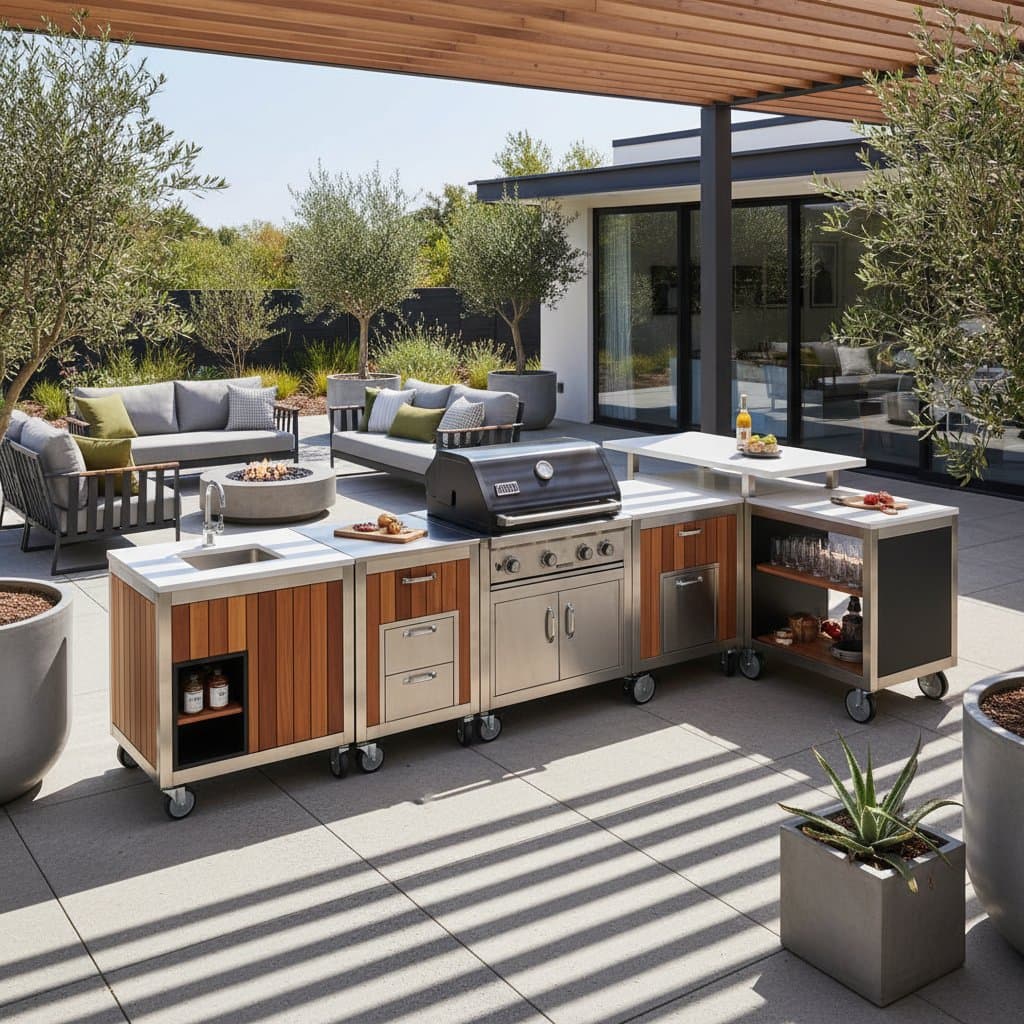
Why Movable Kitchens Outperform Built-In Outdoor Setups
Outdoor living evolves as homeowners seek adaptable solutions for cooking, entertaining, and relaxation. Fixed built-in barbecue islands once symbolized backyard elegance, yet movable kitchens now emerge as the superior choice, combining practicality with innovative design. These setups respond to social events, weather variations, and personal shifts without requiring extensive construction. This article examines the advantages of movable kitchens in contemporary outdoor design and provides guidance for creating one suited to specific environments.
The Emergence of Movable Kitchens
A movable kitchen, also known as a modular outdoor kitchen, consists of portable cooking stations, preparation surfaces, and storage elements that allow for varied configurations. Components often feature wheels or lightweight frames for straightforward repositioning.
In contrast to permanent masonry structures, movable systems expand alongside user requirements. Hosts of grand barbecues or intimate evening meals can reconfigure elements to suit the moment, fostering a vibrant rather than rigid backyard atmosphere.
The Appeal of Design Freedom
Homeowners appreciate movable kitchens for the liberty they provide in customization. Begin with a basic grill station and adjacent table, then incorporate additional units as finances and available area permit. This incremental method avoids premature commitment to a single layout.
Key benefits include:
- Reconfiguration for seasonal celebrations or social gatherings
- Relocation to shaded or protected zones during inclement weather
- Off-season storage of individual pieces
- Component addition or substitution without structural alterations
Such versatility suits patios, decks, and compact urban gardens alike.
Designing an Effective Movable Outdoor Kitchen
Effective planning ensures a movable kitchen harmonizes portability, utility, and visual unity within patios or lawns.
Step 1: Assess Cooking and Entertainment Preferences
Identify preferred outdoor cooking methods, such as grilling, smoking, or wood-fired baking. Compile a list of essential appliances and work areas. This focused approach guides selection of modular pieces that fulfill practical demands.
Typical inclusions encompass:
- Grill or cooktop module for routine preparations
- Preparation station offering ample counter space and enclosed storage
- Sink module facilitating prompt sanitation
- Bar cart or beverage station enhancing guest interactions
- Mobile cabinets for organizing tools and accessories
Step 2: Select Durable Outdoor Materials
Exposed to sunlight, humidity, and fluctuating temperatures, outdoor kitchens demand resilient materials. Opt for weatherproof options like stainless steel or powder-coated aluminum. Countertops in synthetic stone or composites resist wear with minimal upkeep.
Steer clear of absorbent substances prone to water retention or discoloration. For wooden elements, select treated teak or cedar to preserve both longevity and elegance.
Step 3: Arrange Utility Connections
Portable kitchens benefit from reliable utility access. Sinks or refrigerators necessitate water and electrical provisions. Gas grills require secure, detachable connectors for safe mobility. Consult a certified specialist to verify installations meet regional regulations.
Advantages Extending Past Mobility
Movable kitchens deliver more than ease of movement; they promote continuous use and prudent financial decisions.
Economical Adaptability
Permanent installations involve high costs for stonework, piping, and wiring. Movable alternatives distribute expenses gradually. Initiate with core elements and enhance progressively, sidestepping substantial initial outlays. Pricing fluctuates according to specifications and features; evaluate multiple vendors for optimal value.
Simplified Upkeep and Modernization
Modular separation streamlines cleaning and repairs for separate units. Transport minor items inside for thorough maintenance or safekeeping. As styles evolve, swap individual modules to refresh the ensemble without comprehensive overhauls.
Versatility Across Environments
Movable kitchens accommodate diverse settings, from narrow balconies to expansive yards. Achieve comprehensive culinary functionality absent fixed installations. For tenants or those anticipating relocation, portability safeguards the investment's portability.
Essential Safety and Longevity Practices
Prioritize safety in portable configurations to safeguard users and preserve equipment.
- Verify unit steadiness prior to operation; secure wheels and position on even terrain.
- Maintain distance between combustibles and heat sources.
- Routinely examine gas lines for potential leaks or degradation.
- Apply protective covers during idle periods to mitigate environmental exposure.
- Position fuel containers vertically in cool, airy locations.
Consistent vigilance prolongs durability and ensures secure environments for gatherings.
Frequently Asked Questions
What distinguishes a movable kitchen from a modular one?
Modular kitchens involve interchangeable units that assemble cohesively. Movable kitchens build on this foundation by incorporating mobility via casters or reduced weight for effortless transport.
How can one shield a movable kitchen from environmental elements?
Employ robust covers, relocate compact items indoors, and prioritize rust-resistant materials. Routine cleansing and periodic reviews sustain optimal condition.
Is it feasible to link a movable kitchen to residential gas or water supplies?
Yes, provided appropriate adapters and expert setup. Detachable couplers enable secure disconnection during repositioning.
Do movable outdoor kitchens work well on limited patios?
Yes, their scalable design permits tailored, space-efficient arrangements. Commence with essential modules and augment gradually.
What is the typical cost of a movable outdoor kitchen?
Expenses differ by scale, composition, and integrated devices. Entry-level grill setups remain budget-friendly, whereas comprehensive systems with utilities range into thousands. Obtain several estimates and assess craftsmanship.
Do movable kitchens enhance property value?
Movable kitchens boost appeal by elevating outdoor functionality without irreversible modifications. They attract buyers seeking versatile, low-maintenance features, potentially increasing marketability in regions favoring al fresco lifestyles.
How long do portable kitchen units endure?
With appropriate care, including regular inspections and protective measures, quality units last 10 to 20 years. Stainless steel and composite materials contribute to extended service life under varied conditions.
Implement Your Ideal Movable Kitchen
Transition from concept to reality by evaluating space constraints and consulting suppliers for custom modular options. Integrate these elements to craft an outdoor haven that supports daily routines and special occasions. This adaptable investment elevates living standards while accommodating future aspirations.