
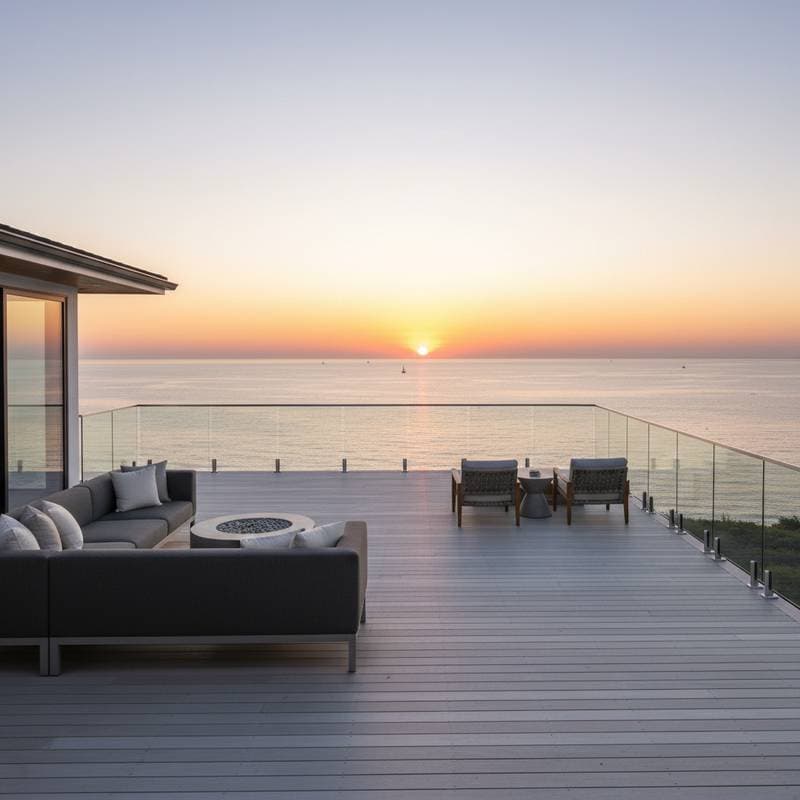
Why Glass Railings Excel on Coastal Decks in 2026
Picture yourself on a deck where the ocean stretches endlessly before you, with no barriers interrupting the horizon. Glass railings make this vision a reality, emerging as the preferred option for coastal properties. Property owners replace traditional wood or metal enclosures with these transparent installations that highlight natural surroundings. These railings enhance aesthetic appeal, boost resale value, and foster secure, contemporary outdoor environments.
This guide explains the advantages of glass railings for seaside residences. Readers gain insights into pricing, varieties, installation considerations, and cost-reduction methods. Pricing for glass deck railings typically ranges from $150 to $600 per linear foot, influenced by design and components. For a standard deck, homeowners face expenses of $7,500 to $18,000. Such investments yield expansive vistas, straightforward upkeep, and a refined finish suitable for contemporary coastal architecture.
Professional contractors experienced in seaside projects offer reliable alternatives to self-installation. They guarantee adherence to safety regulations and resilience against saline environments over time.
Article Overview
- Cost considerations
- Railing types and selections
- Self-installation versus expert services
- Strategies for expense reduction
- Frequently asked questions
Varieties and Selections for Glass Deck Railings
Frameless Glass Railings
Frameless configurations employ robust tempered glass panels fixed via stainless steel clamps or bottom-mounted channels. Vertical supports remain absent, ensuring total transparency.
Ideal for: Contemporary residences or decks prioritizing scenic immersion.
Advantages:
- Full visual access
- Premium design aesthetic
- Reduced upkeep demands
Disadvantages:
- Elevated expense
- Mandatory expert fitting
- Occasional hardware evaluations required
Photo: AleksandarNakic / Getty Images
Framed Glass Railings
Framed setups incorporate aluminum or stainless steel uprights and upper rails to secure glass infills. These provide robust support and adapt to modern or classic motifs.
Ideal for: Owners desiring longevity at a reduced investment.
Advantages:
- Simplified assembly process
- Enhanced structural integrity
- More affordable than frameless alternatives
Disadvantages:
- Minor visual interruptions
- Additional components for cleaning
Photo: onurdongel / Getty Images
Semi-Frameless Glass Railings
Semi-frameless approaches position uprights between panels while eliminating upper rails for streamlined appearance. They offer equilibrium between affordability and openness, gaining favor among coastal deck owners.
Ideal for: Those pursuing refined style below frameless budgets.
Advantages:
- Substantial views at accessible pricing
- Simpler care compared to complete frames
- Versatile customization possibilities
Disadvantages:
- Noticeable support elements
- Potential need for panel adjustments over time
Photo: Ratchapong Anupongpan / Getty Images
Self-Installation Versus Professional Services
Owners with basic woodworking proficiency may handle framed glass railing assembly using appropriate equipment. Panels demand careful handling due to weight, necessitating assistance. Frameless variants generally necessitate specialist knowledge for precise positioning, regulatory adherence, and hazard prevention.
Self-Installation Details
- Complexity: Moderate
- Duration: Two to three days for typical decks
- Required Equipment: Power drill, spirit level, securing clamps, silicone adhesive, protective attire
- Potential Savings: $1,000 to $3,000
Professional Services Details
- Complexity: Expert involvement advised
- Duration: One to two days
- Required Equipment: Specialized panel transport and alignment tools
- Key Benefits: Regulatory conformity and manufacturer warranties
For elevated or saline-exposed decks, engaging certified installers proves prudent. They secure foundations firmly and utilize protective finishes enduring moist, corrosive atmospheres.
Solicit estimates from qualified specialists in glass systems. Evaluate component quality, guarantee terms, and project schedules prior to commitment.
Upkeep and Durability
Properly fitted glass railings require minimal attention. Consistent cleaning preserves shine and counters saline accumulation.
Standard Maintenance Protocol:
- Flush panels with clean water each month
- Clean using gentle detergent and microfiber fabric quarterly
- Examine fittings, fasteners, and anchors for degradation
- Coat surfaces yearly with protectant solutions to simplify future washes
Frameless designs might involve seal replacements or tension adjustments biennially. Stainless elements benefit from inhibitor applications to avert surface damage. Diligent practices extend lifespan to decades, retaining transparency and robustness.
Pitfalls to Sidestep
-
Overlooking Regulatory Standards
Confirm local stipulations on elevations and gaps prior to procurement. Violations invite inspection setbacks or expensive modifications. -
Selecting Inadequate Materials
Seaside exposure mandates marine-grade stainless steel or aluminum fittings. Ordinary metals corrode rapidly in brine. -
Ignoring Water Management
Accumulated moisture at bases accelerates deterioration. Incorporate drainage features like vents or slopes to divert runoff. -
Opting for Substandard Glass
Thinner sheets risk failure under load. Select certified tempered or layered variants meeting structural codes.
Frequently Asked Questions
What is the price range for glass railings on a coastal deck?
Pricing spans $150 to $600 per linear foot, with mid-range projects averaging $7,800.
Does salt air cause glass railings to fog?
Residue accumulation occurs gradually, yet monthly freshwater rinses mitigate this. Hydrophobic treatments further resist adhesion.
How safe are glass railings?
Engineered tempered or layered glass withstands forces and fragments harmlessly upon impact. Correct installation ensures code-compliant protection for decks.
Is retrofitting glass railings feasible on current decks?
Affirmative, provided the framework bears panel mass. Structural upgrades may apply to aged installations.
Steps to Install Your Coastal Glass Railings
Begin by measuring deck perimeters accurately and selecting a style aligned with home architecture. Consult local codes early to avoid delays. Source materials from reputable suppliers offering marine certifications. For optimal results, partner with experienced installers who provide detailed warranties. These railings not only frame stunning ocean panoramas but also deliver long-term security and elegance to your seaside retreat.