
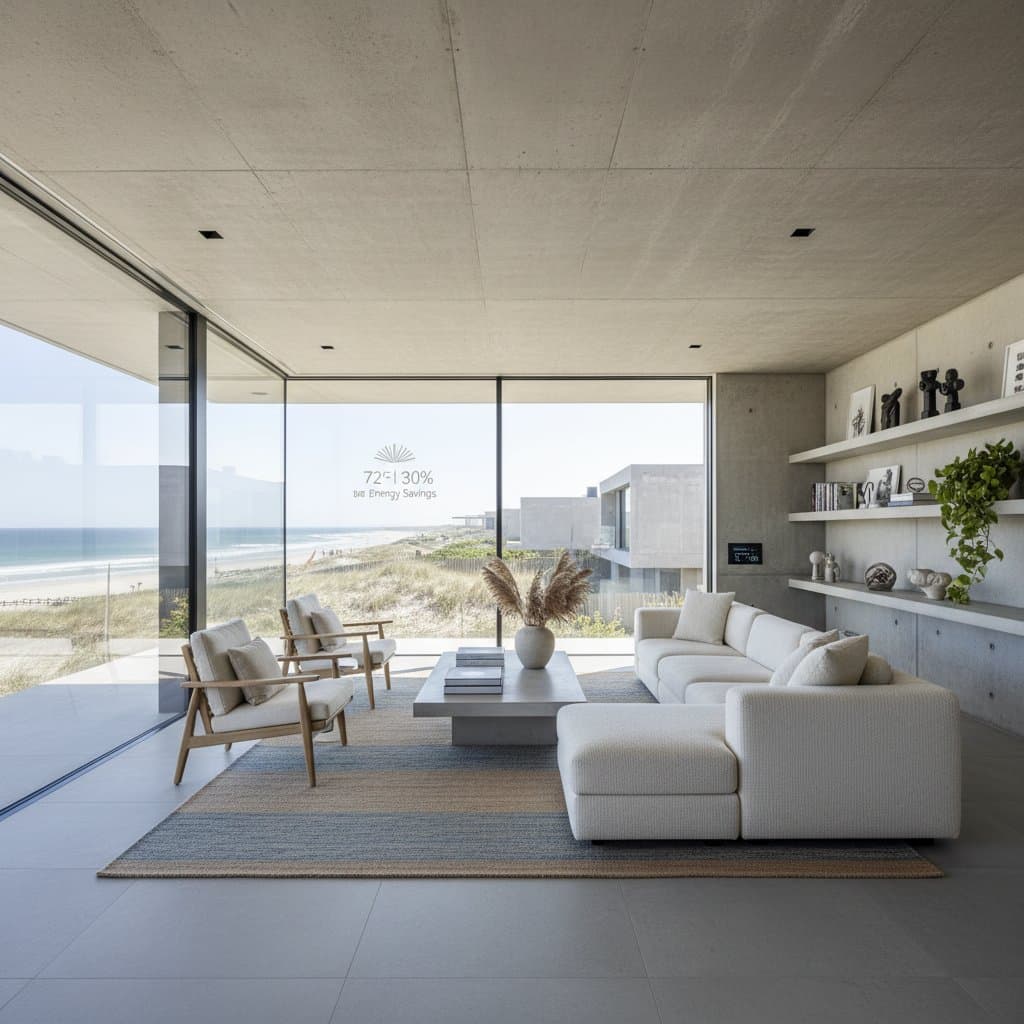
How Concrete Homes Reduce Coastal Cooling Costs by 30 Percent
Coastal residents understand the intensity of sunlight and the rapid rise in indoor temperatures during warm days. Concrete homes address this challenge by remaining cooler without excessive reliance on mechanical cooling, often achieving reductions in air conditioning costs by nearly one-third. These structures leverage thermal mass properties to outperform traditional wood-framed homes, enabling informed decisions that enhance comfort and financial savings.
The Science of Concrete's Cooling Benefits
Concrete provides structural integrity and serves as an effective thermal mass, absorbing heat throughout the day and releasing it gradually overnight. In coastal settings, where daytime warmth contrasts with cooler evenings, this mechanism establishes a natural equilibrium in indoor climates.
Lightweight materials such as wood and drywall react swiftly to temperature fluctuations, heating and cooling rapidly, which increases the workload on heating, ventilation, and air conditioning systems. Concrete moderates these variations, maintaining steadier indoor conditions and lowering cooling energy requirements by 20 to 30 percent relative to standard framing methods.
The following table offers a basic comparison:
| Material Type | Thermal Mass | Heat Absorption | Cooling Energy Use |
|---|---|---|---|
| Wood Frame | Low | Rapid | High |
| Concrete | High | Slow | Low |
This delayed heat transfer ensures that interiors stay comfortable well into the afternoon, postponing the activation of air conditioning units.
Comparing Average Cooling Expenses
Regional energy rates influence costs, yet coastal property owners observe notable disparities in monthly outlays. For a standard midsize residence:
| Home Type | Average Monthly Cooling Cost | Annual Savings Potential |
|---|---|---|
| Wood Frame | $180 | — |
| Concrete | $125 | $660 saved per year |
Over the lifespan of the home, these differences underscore concrete construction as a worthwhile investment.
Enhanced Advantages in Coastal Environments
Coastal areas feature unique diurnal temperature cycles, with warm days moderated by ocean winds and cooler nights. Concrete's thermal lag aligns seamlessly with this pattern, postponing heat ingress so that absorbed warmth dissipates only after external temperatures decline.
Interiors thus avoid peak extremes. Additionally, concrete's density reduces air infiltration, limiting the entry of humid air and easing the burden on dehumidification and cooling equipment, which further trims energy consumption.
Breaking Down Material and Construction Expenses
Concrete builds demand higher upfront investments but recoup through diminished energy use and upkeep. Consider this overview for a 2,000-square-foot coastal property:
| Construction Type | Initial Build Cost per sq. ft. | Energy Efficiency Rating | Cooling Cost Savings Over 10 Years |
|---|---|---|---|
| Wood Frame | $150 - $190 | Moderate | — |
| Concrete Block | $180 - $220 | High | $6,000 - $8,000 |
| Insulated Concrete Form | $200 - $250 | Very High | $8,000 - $10,000 |
Energy reductions, along with insurance reductions and minimal repairs, balance the elevated starting costs.
Key Factors Affecting Cooling Performance
Multiple aspects shape the efficiency gains from concrete coastal homes:
- Wall thickness and the density of the concrete mixture
- Quality of insulation, particularly in roofs and foundations
- Strategic window positioning and glazing to minimize solar heat gain
- Ventilation approaches, incorporating sea breezes and ceiling fans
- Roof color and composition, as lighter options reflect heat effectively
- Local microclimates, including nearness to water bodies or dominant wind directions
Fine-tuning these elements maximizes potential savings.
Strategies to Maximize Cooling Savings
Pair concrete's inherent efficiency with thoughtful design elements. Implement these effective measures:
- Select reflective roofing to lessen solar heat uptake.
- Incorporate deep eaves or external shades to shield against noontime rays.
- Seal gaps meticulously to block humid air entry.
- Integrate ceiling fans to promote air movement prior to air conditioning use.
- Utilize landscaping features like shade trees or vines to temper exterior surfaces.
- Opt for windows with low-emissivity coatings to diminish radiant heat passage.
Such approaches amplify the home's cooling capabilities, potentially cutting overall energy demands by an additional 10 to 15 percent.
Weighing DIY Against Professional Builds
Homeowners with experience may handle minor concrete tasks, such as slabs for patios. However, erecting structural concrete residences requires specialized knowledge to avoid issues like fractures or inadequate insulation.
| Task | DIY Feasibility | Professional Recommended |
|---|---|---|
| Pouring small slabs | Yes | — |
| Structural wall construction | No | Yes |
| Installing insulation layers | Possibly | Yes |
| Finishing and sealing surfaces | Yes | Yes (for optimal outcomes) |
Pitfalls to Sidestep in Construction
- Neglecting waterproofing or vapor barriers in moisture-rich areas
- Overlooking insulation requirements even in temperate zones
- Disregarding window alignments, which may overheat westward exposures
- Applying dark exterior treatments that retain unnecessary warmth
- Engaging contractors lacking expertise in coastal concrete methods
Frequently Asked Questions on Concrete Coastal Homes
Do concrete homes demand greater upkeep in coastal zones?
Typically not. Concrete withstands moisture, pests, and decay more effectively than wood. Periodic applications of sealants or coatings guard against salt damage, resulting in reduced overall maintenance.
Do concrete homes better endure coastal weather events?
Indeed. The weight and rigidity of concrete walls provide superior defense against winds and projectiles. Insurers frequently extend premium discounts for fortified concrete structures in vulnerable areas.
Might a concrete home feel overly chilly or moist internally?
Appropriate insulation and barriers prevent such concerns. Properly constructed concrete homes sustain even temperatures without dampness.
Does concrete construction extend build timelines compared to wood?
The process may extend marginally due to curing phases, yet advancements like insulated concrete forms accelerate completion.
Do concrete homes restrict architectural possibilities?
Far from it. Concrete accommodates molding, pigmentation, and texturing for diverse aesthetics, from modern to traditional.
What elevates the market value of a concrete coastal home?
Attributes like energy savings, resilience, and favorable insurance rates boost resale appeal, particularly amid rising demand for sustainable coastal properties.
Achieving Optimal Comfort in Coastal Concrete Homes
Concrete homes equip coastal dwellers with reliable, efficient living spaces that harmonize with local climates. By embracing these principles, residents secure lasting financial and environmental gains. Consider integrating these insights into future builds for enhanced well-being.