
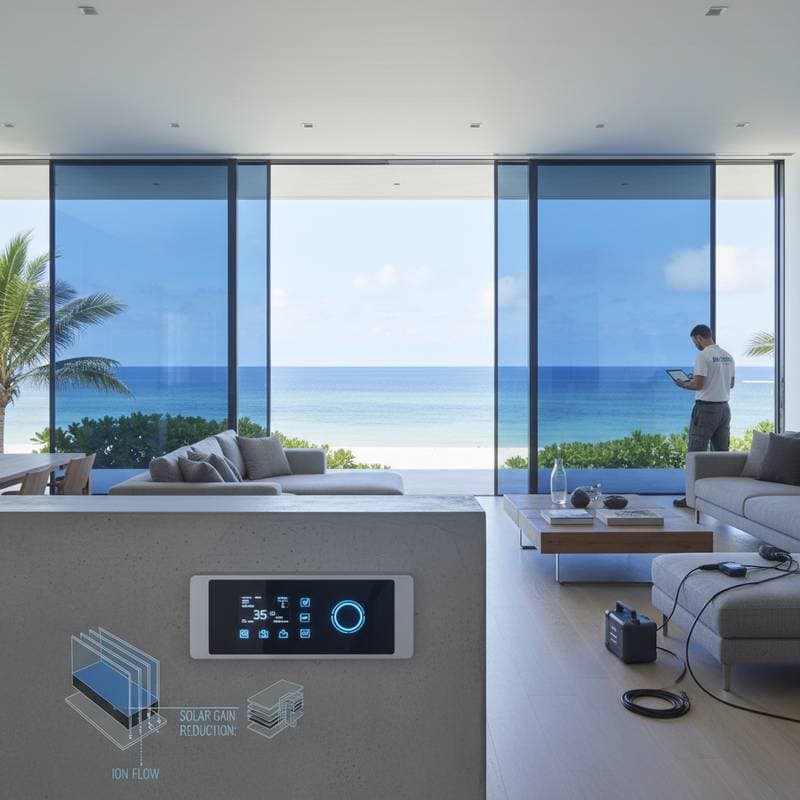
How Smart Glass Reduces Beach House Cooling Costs by 35%
Owning a beach house offers ocean views, fresh breezes, and sunny relaxation. Coastal conditions, however, bring intense heat, glare, and humidity that increase energy expenses. Homeowners often face high costs to maintain cool interiors. Smart glass technology, known as electrochromic windows, provides an effective solution that lowers air conditioning expenses by up to 35%.
This article details the operation of smart glass, its advantages for coastal properties, and key installation factors. Readers gain insights into enhancing home comfort and efficiency through this innovation.
Understanding Smart Glass Technology
Smart glass employs a thin, transparent coating that alters tint upon application of electrical current. The change happens automatically in response to sunlight or through manual control via remote or app.
How It Works
Voltage applied to the electrochromic layer causes ions to shift within the glass, modifying opacity. This enables smooth transitions from clear to tinted states, regulating incoming heat and light.
In tinted mode, the glass blocks infrared heat while permitting visible light. In clear mode, it delivers unobstructed outdoor views like ordinary windows.
Why It Matters for Coastal Homes
Beach houses endure strong sunlight, elevated humidity, and glare from sand and water. Standard windows permit excessive heat entry, overworking air conditioners. Smart glass adapts rapidly to these conditions, sustaining indoor comfort with minimal mechanical cooling.
The Science Behind the Savings
The 35% decrease in air conditioning costs stems from smart glass's control over solar heat gain, the heat transmitted through windows into buildings. In sunny coastal areas, managing this heat significantly lowers energy demands.
Reducing Solar Load
Smart glass halves solar heat gain relative to traditional glass. By filtering infrared rays, it eases the cooling burden on air conditioners. This results in reduced energy consumption and prolonged system durability.
Enhancing Natural Lighting
Blinds or curtains block heat alongside light, but smart glass maintains illumination. Homeowners benefit from daylight without thermal accumulation. This approach also cuts daytime reliance on electric lights, yielding additional savings.
Stabilizing Indoor Temperatures
Automatic tinting minimizes temperature swings. Windows avoid creating hot zones, allowing air conditioners to operate steadily at lower intensities rather than frequent starts and stops. Such stability yields consistent cost reductions.
Installation and Integration
Smart glass installation demands careful planning and expert involvement. Though not a basic replacement, the enduring advantages make it worthwhile.
Choosing the Right Product
Options include:
- Electrochromic glass: Employs electricity for tint adjustments, suiting automated and manual needs.
- Thermochromic glass: Responds to heat without electricity.
- Photochromic glass: Shifts with light levels, akin to photochromic lenses.
Electrochromic glass suits beach houses best, offering versatile control.
Professional Installation
Engage certified specialists in smart glass. They apply seals resistant to coastal moisture and salt. Panels link to low-voltage wiring, requiring precise setup to avoid corrosion.
Integration with Smart Home Systems
Smart glass pairs seamlessly with home automation platforms. Program tint schedules, link to sensors, or synchronize with heating and cooling for peak efficiency.
Cost Considerations and ROI
Initial costs for smart glass exceed those of standard multi-pane windows. Energy reductions, less equipment wear, and improved comfort recoup the outlay over time.
Estimated Costs
Installation averages $100 to $150 per square foot nationwide, varying by type and controls. Coastal settings may raise labor fees for enhanced sealing.
Return on Investment
Utility savings appear in initial seasons. Decreased air conditioning operation and upkeep further balance expenses. Enhanced property appeal adds value.
Disclaimer on Pricing
These figures represent national averages. Local rates depend on site, materials, installer skills, and project scale.
Maintenance and Durability
Properly installed smart glass needs little upkeep. Durability relies on quality components and moisture protection.
Cleaning and Care
Wipe with a soft cloth and mild cleaner, as with regular windows. Steer clear of abrasives that harm the coating. Periodic checks on connections and seals ensure reliability.
Weather Resilience
Coastal versions feature coatings against salt and UV degradation. Robust panels endure winds and dampness without clouding or fading.
Environmental and Lifestyle Benefits
Smart glass extends beyond efficiency to promote sustainability and ease.
Reducing Carbon Emissions
Diminished energy use lowers emissions from electricity production. This fosters a reduced ecological impact long-term.
Protecting Interiors
It filters up to 99% of UV rays, safeguarding furnishings, floors, and art from fading. In homes with large windows, this preserves aesthetics and cuts repair expenses.
Enhancing Privacy and Comfort
Tint levels offer privacy while retaining views. Switch to darker settings for evening seclusion without closing off the space.
Frequently Asked Questions
How does smart glass differ from tinted glass?
Tinted glass maintains constant darkness. Smart glass varies dynamically to manage light and heat per needs.
Can smart glass work during power outages?
Yes, it holds the previous tint or clear state until electricity returns.
Is smart glass suitable for sliding doors or skylights?
Yes, available in diverse forms for doors, skylights, and expansive windows.
How long does smart glass last?
Quality units endure over 20 years with care, handling thousands of cycles.
Can smart glass help reduce glare?
Yes, tinting diminishes reflections from water or sand, boosting indoor clarity.
Does smart glass require special cleaning products?
No, use soap and water or gentle glass cleaners. Avoid ammonia to preserve the layer.
Is smart glass eligible for energy efficiency rebates?
Certain utilities and programs incentivize efficient windows like smart glass. Consult local providers.
Realizing Savings in Your Coastal Retreat
Smart glass elevates beach house living by merging efficiency with enjoyment. Implement this technology to cut costs, protect your space, and savor uninterrupted views. Consult professionals to tailor it to your home's unique demands.