
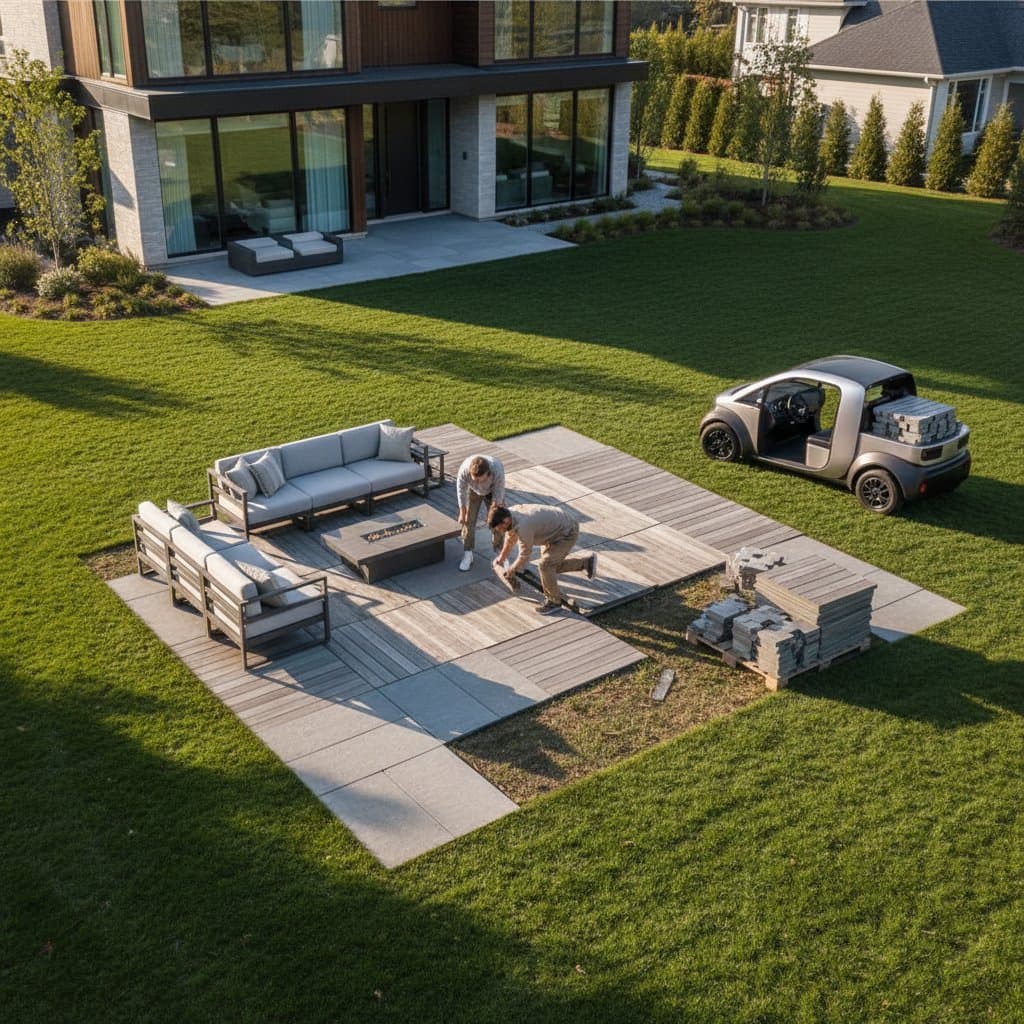
Why Modular Patios Enable Relocation in Hours
Creating an outdoor space that moves with you was once impossible. Traditional patios demand concrete pouring, permanent posts, and days of labor. Modular patios change that entirely. These innovative systems allow installation, removal, or relocation of the entire setup within hours rather than days. Renters, frequent movers, or those who prefer flexible designs find modular patios adaptable, affordable, and stylish.
This guide details how modular patios function, their costs, and reasons they appeal to homeowners seeking freedom in outdoor spaces.
Average Cost of a Modular Patio
The average cost of a modular patio ranges from $18 to $42 per square foot, based on materials and design complexity. For a standard 200-square-foot setup, homeowners typically spend between $3,600 and $8,400. This figure covers modular decking panels, support frames, and fasteners. Premium systems with integrated lighting or drainage may reach $50 per square foot, while basic kits for temporary setups start at $12 per square foot.
Traditional patios average $10,000 to $25,000 for a similar size. Modular options install faster and modify or relocate more easily. Mobility enhances long-term value.
Cost by Project Scope
| Project Type | Typical Size | Cost Range | Installation Time |
|---|---|---|---|
| Small balcony modular deck | 80 sq. ft. | $960 - $2,400 | 2-4 hours |
| Mid-size backyard patio | 200 sq. ft. | $3,600 - $8,400 | 4-8 hours |
| Large entertainment space | 400 sq. ft. | $7,200 - $16,800 | 1-2 days |
Modular patios expand without demolition. Start small and add sections as needs or space evolve.
Cost by Material Type
Materials influence cost, durability, maintenance, and appearance. The following table compares primary options.
| Material Type | Cost per Sq. Ft. | Durability | Maintenance Level | Aesthetic Appeal |
|---|---|---|---|---|
| Composite panels | $20 - $40 | High | Low | Sleek and modern |
| Interlocking wood tiles | $15 - $30 | Medium | Moderate | Warm and natural |
| Recycled plastic decking | $12 - $25 | Medium | Low | Clean and colorful |
| Aluminum frame systems | $25 - $50 | Very high | Very low | Minimalist and durable |
Composite panels lead the market due to strength and minimal upkeep. They resist moisture and fading, suiting coastal areas like San Diego. Wood tiles provide a traditional appearance but need sealing or oiling every few seasons. Recycled plastic panels offer budget and eco benefits. Aluminum systems prioritize portability and longevity.
Labor Costs for Modular Patios
Modular patios feature low labor costs. Systems use interlocking panels for quick assembly, minimizing specialized help. Professional installers charge $5 to $10 per square foot, varying by site conditions. Traditional installations demand $15 to $25 per square foot for excavation, concrete, and curing.
Do-it-yourself kits include pre-cut pieces and locking mechanisms. Complete a small project in one afternoon. This approach makes modular patios accessible for homeowners.
Factors That Influence the Total Cost
Variables affect the overall investment:
- Material selection: Composite or aluminum increases expense but extends lifespan.
- Surface preparation: Uneven ground requires leveling pads or frames.
- Design complexity: Multi-level layouts or lighting raise material and labor needs.
- Location: Shipping or local rates vary costs.
- Accessories: Planters, railings, or furniture modules add expenses.
Review these elements to establish realistic budgets and prevent unexpected charges.
How Modular Patios Enable Fast Relocation
Traditional patios form permanent structures. Modular patios engineer for mobility. Components connect via click-lock or snap-fit systems, disassembling and reassembling without tools or adhesives. Panels rest on adjustable supports above ground, avoiding concrete footings or excavation.
Key features for quick relocation include:
- Pre-manufactured panels: Uniform pieces eliminate cutting or measuring.
- Lightweight materials: Composite and aluminum transport easily without machinery.
- Tool-free assembly: Locking tabs or brackets secure by hand.
- Surface independence: Install over concrete, grass, gravel, or rooftops.
Dismantle, transport, and reassemble a 200-square-foot patio in under a day. This suits renters, movers, or seasonal reconfigurers.
Strategies to Reduce Modular Patio Costs
Plan strategically to build affordably without sacrificing quality. Consider these approaches:
- Start small and expand: Purchase a basic kit, then add panels later.
- Select recycled materials: They cost less and support sustainability.
- Handle installation personally: Manage simple setups without experts.
- Delay accessories: Incorporate lighting or railings in future phases.
- Purchase off-season: Acquire materials during low-demand periods for discounts.
These methods cut initial expenses by 15 to 30 percent while ensuring functionality and style.
DIY Installation Versus Professional Help
Choose based on skills and project size.
| Approach | Pros | Cons | Best For |
|---|---|---|---|
| DIY installation | Labor savings, schedule control, satisfaction | Uneven results, no warranty | Small or medium patios |
| Professional installation | Precise leveling, quick execution, quality finish | Added labor fees | Large, complex, multi-level |
Professionals handle lighting, drainage, or rooftops for safety and durability. Confident individuals manage ground-level projects with basic tools.
Pitfalls to Sidestep in Modular Patio Projects
Modular systems simplify work, yet errors cause issues. Steer clear of:
- Inadequate surface preparation: Uneven bases lead to shifting panels.
- Incompatible components: Source all parts from one manufacturer.
- Overlooking drainage: Water accumulation harms tiles and supports.
- Excessive connector force: This cracks panels or warps joints.
- Maintenance neglect: Clean seasonally, even low-upkeep materials.
Plan thoroughly and adhere to instructions for lasting safety and appeal.
Frequently Asked Questions About Modular Patios
Do modular patios require a permit?
Most do not, as temporary structures. Verify with local authorities for designs with lighting, plumbing, or fixed elements.
How long does installation take?
Small patios require 2 to 4 hours; larger ones a full day. No curing time allows immediate use.
Can modular patios support heavy furniture or hot tubs?
Quality systems with aluminum or reinforced composites handle substantial weight. Consult manufacturer ratings.
What maintenance is necessary?
Sweep and wash occasionally with mild soap. Wood needs periodic oiling; composites and plastics resist wear.
Steps to Launch Your Modular Patio
Select materials suited to your climate and style. Prepare the surface for stability. Assemble panels methodically, starting from one corner. Test for levelness before adding accessories. Enjoy a versatile outdoor area that adapts to your lifestyle.