
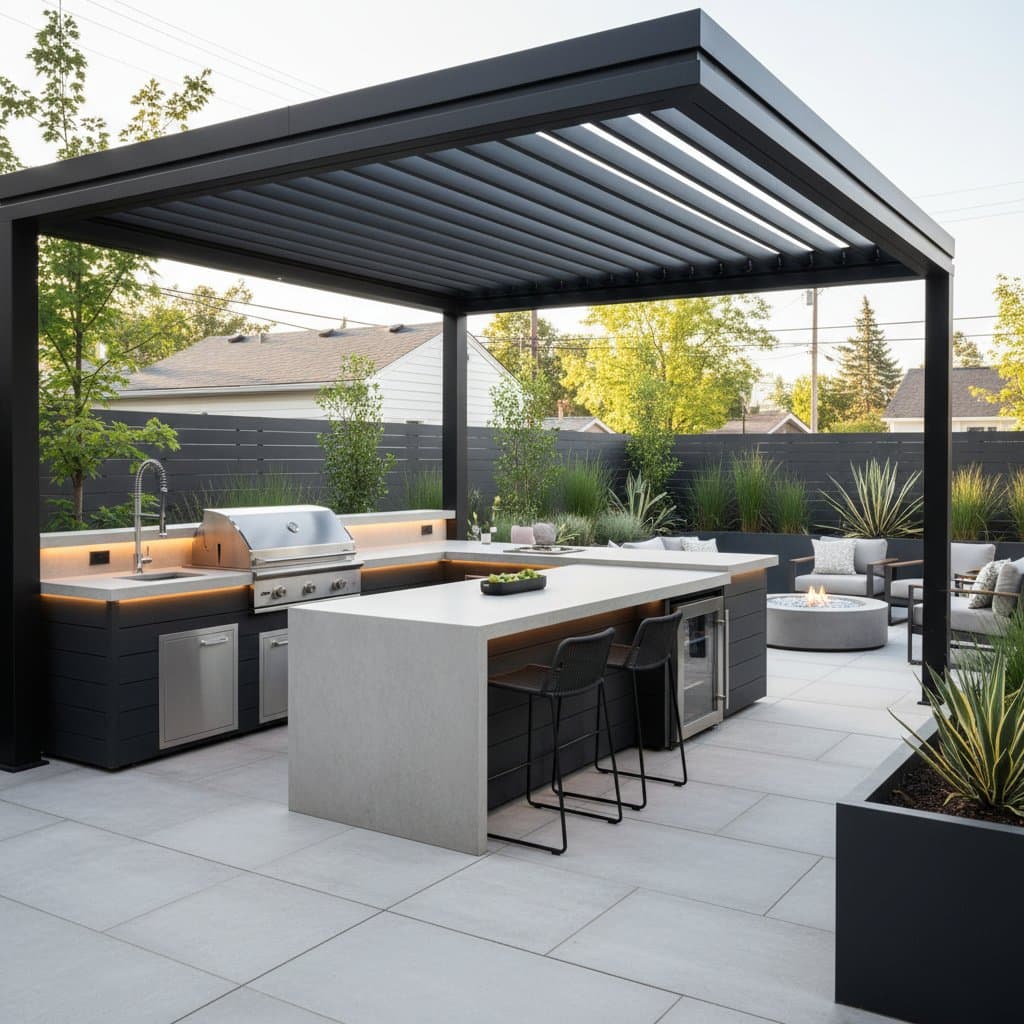
Why Homeowners Prefer Modular Outdoor Kitchens Over Custom Builds
Homeowners envision hosting gatherings around a backyard grill or preparing meals from an outdoor oven. Modular outdoor kitchens make this vision accessible without the extended timelines or elevated expenses associated with custom constructions. These prefabricated setups deliver functionality, elegance, and adaptability, positioning them as the preferred option for modern outdoor living.
Highlights
- Faster installation compared to traditional custom builds
- Lower costs featuring professional-grade materials
- Flexible layouts suited to diverse backyard configurations
- Expandable options for subsequent enhancements
- Stylish finishes comparable to bespoke designs
The backyard serves as an extension of the home, particularly when equipped for dining and entertainment. This article examines the reasons modular outdoor kitchens appeal to homeowners and contrasts them with conventional custom installations.
What Is a Modular Outdoor Kitchen?
A modular outdoor kitchen consists of pre-engineered components including cabinets, appliances, and countertops that interconnect efficiently. Each module fulfills a dedicated role, such as grilling, food preparation, or storage. Manufactured off-site, these units arrive for prompt on-location assembly, reducing the timeline by weeks relative to custom masonry or integrated structures.
Photo suggestion: A contemporary backyard kitchen featuring stainless steel appliances and modular cabinetry.
Key Advantages at a Glance
- Speed: Installation typically completes in several days.
- Cost Control: Efficient prefabrication maintains stable pricing.
- Portability: Certain systems allow disassembly and relocation.
- Customization: Select finishes, appliances, and arrangements to suit the available space.
Modular vs. Custom Outdoor Kitchens
Homeowners frequently evaluate modular solutions against fully custom installations. While both offer merits, modular kitchens excel in terms of practicality and overall value.
| Feature | Modular Outdoor Kitchen | Custom Outdoor Kitchen |
|---|---|---|
| Installation Time | Quick setup, often within days | Extended construction period |
| Cost | Predictable and generally lower | Elevated due to labor and design fees |
| Design Flexibility | Configurable via diverse module choices | Completely tailored but costly |
| Maintenance | Simple module replacement or upgrades | Intricate and expensive repairs |
| Portability | Relocatable or expandable | Fixed in place |
Tip: For those eager to utilize their outdoor area promptly, modular kitchens provide swift results without compromising standards.
Why Homeowners Love Modular Outdoor Kitchens
1. Quick and Hassle-Free Installation
Modular systems arrive pre-assembled for efficient integration, minimizing disruption to the backyard. Coordination with multiple contractors becomes unnecessary, and extended periods for material setting, such as cement, are avoided. Many setups prepare in time for upcoming social events.
2. Budget-Friendly Without Feeling Cheap
Custom projects frequently incur unforeseen expenses from design alterations or specialized workmanship. Modular alternatives ensure transparency with upfront pricing and reduced labor demands. This approach yields savings alongside a refined, expert appearance.
Example: A configuration incorporating a built-in grill, sink, and bar seating costs considerably less than a comparable masonry design while delivering equivalent visual impact.
3. Endless Design Options
Selections span finishes like stone veneer, stucco, or stainless steel. Configurations range from linear to L-shaped or U-shaped, accommodating various yard dimensions. Brands often provide choices in countertops, cabinets, and appliances that harmonize with residential architecture.
Photo suggestion: A coastal-inspired outdoor kitchen with white stone accents and a blue tile backsplash.
4. Expandable for the Future
Lifestyle requirements evolve, and modular architecture accommodates this fluidity. Begin with essential elements like a grill and preparation area, then incorporate additions such as a refrigeration unit or pizza oven. Expansions occur seamlessly without requiring fresh construction.
5. Ideal for Small or Irregular Spaces
Backyards with unconventional shapes or constrained areas benefit from modular adaptability, where custom designs may falter. These systems suit patios, decks, or rooftop platforms, addressing concerns related to weight and spatial limitations.
6. Durable and Weather-Resistant Materials
Construction typically involves powder-coated steel frames, composite panels, and impervious countertops. Such materials endure exposure to sunlight, precipitation, and coastal salinity, proving suitable for regions like San Diego with prolonged outdoor seasons.
Tip: Opt for marine-grade stainless steel or aluminum cabinetry in proximity to seawater to enhance resistance to corrosion.
Cost Breakdown: Modular vs. Custom
The average cost of a modular outdoor kitchen varies by dimensions, materials, and integrated appliances. The following provides a general overview.
| Kitchen Type | Typical Size | Estimated Cost Range |
|---|---|---|
| Compact Modular (Grill + Counter) | Small patio | $4,000 - $8,000 |
| Mid-Size Modular (Grill + Sink + Storage) | Medium yard | $8,000 - $15,000 |
| Custom Masonry Kitchen | Large backyard | $20,000 - $50,000+ |
Modular installations frequently remain under half the expense of equivalent custom versions. This margin enables investments in supplementary features, including lighting, seating, or landscaping elements.
Design Trends in Modular Outdoor Kitchens
Outdoor spaces increasingly mirror indoor sophistication, and modular innovations align with this evolution.
Popular Design Features
- Integrated lighting to enhance atmosphere and visibility
- Smart appliances, including Wi-Fi-connected grills and monitoring devices
- Eco-friendly materials derived from recycled composites
- Outdoor bars and beverage stations for hosting
- Multi-functional islands that integrate grilling, washing, and storage
Photo suggestion: An evening view of a modular kitchen illuminated by LED lights with integrated bar seating.
Pros and Cons Summary
| Pros | Cons |
|---|---|
| Quick installation | Restricted to predefined module dimensions |
| Lower cost | Reduced creative latitude versus custom |
| Easy to upgrade | Professional assembly may be necessary |
| Durable and weather-resistant | Potential mismatch with unique styles |
Steps to Build Your Modular Outdoor Kitchen
To realize an outdoor kitchen, measure the intended area and identify modules aligned with cooking preferences. Consider frequency of use, such as daily grilling or occasional large events, to guide selections. Obtain estimates from trusted providers, review material guarantees, and verify provisions for ventilation and utilities.
Pro Tip: Allocate an additional 20 percent of the budget for enhancements like protective covers, utensils, and illumination.
Upon completion, the modular outdoor kitchen emerges as the focal point for home entertainment. It facilitates everything from evening steak preparation to poolside brunches, blending convenience with allure. This setup adapts to changing needs, demonstrating how intelligent design elevates outdoor experiences to seamless and delightful occasions.