
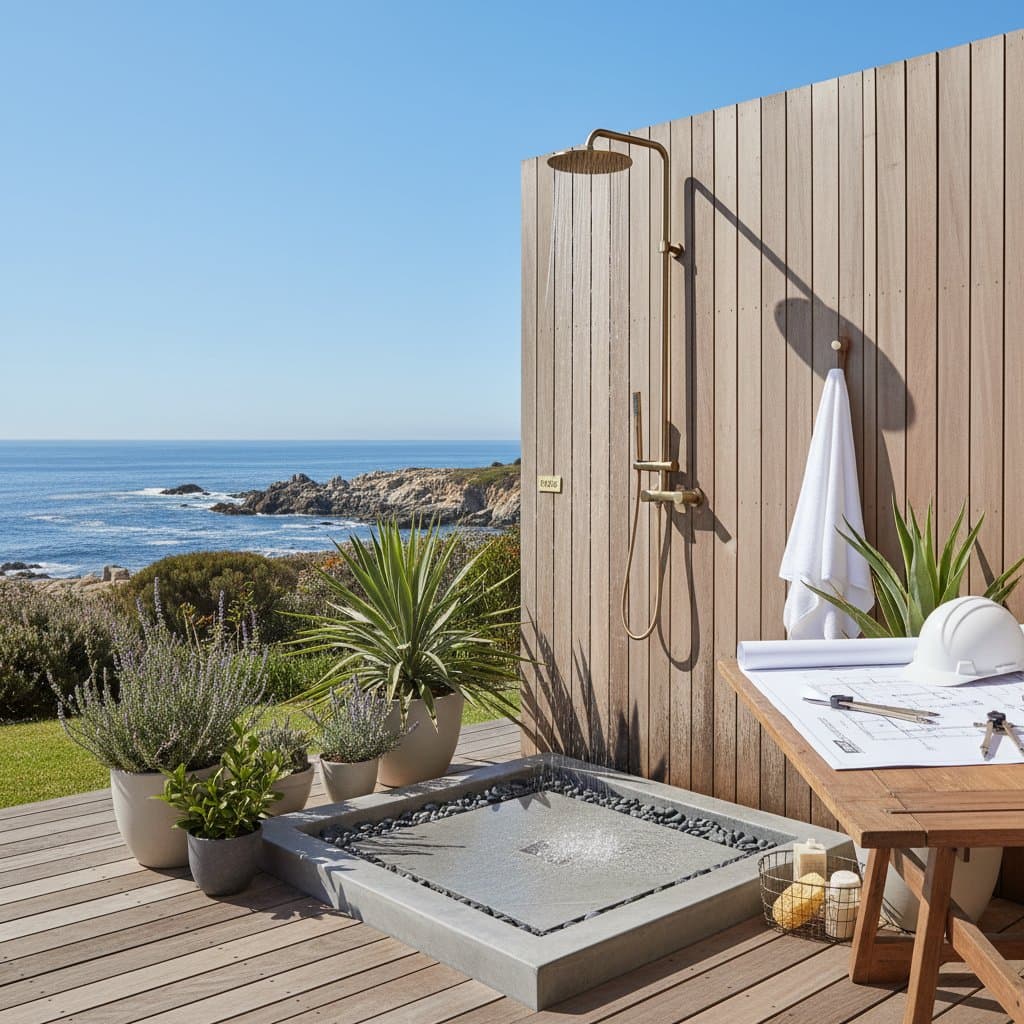
Structural and Efficiency Standards
Coastal outdoor showers must meet strict requirements for durability and resource conservation. Permanent enclosures or deck-mounted units need to resist high wind loads common in these areas. Approved materials include pressure-treated wood, marine-grade stainless steel, and composite decking.
Water conservation rules often limit showerheads to a maximum flow rate of 2.0 gallons per minute. These standards help protect local water supplies while supporting long-term performance in harsh environments.
Permitting and Inspection Process
A plumbing or building permit is typically required when an outdoor shower connects to existing water supply or drainage lines. The approval sequence involves three main steps.
- Submit a site plan that details the shower location, plumbing routes, and drainage method.
- Obtain plumbing and structural approval to confirm all connections satisfy code requirements.
- Schedule a final inspection after construction to verify full compliance.
Freestanding units that rely on gravity-fed tanks or solar bags without permanent connections may avoid permits. Confirm this exception with local building officials before proceeding.
Cost Factors
Several site-specific conditions determine the final price of a compliant installation. Key variables include distance to existing plumbing, soil drainage quality, enclosure type, material resistance to salt air, permit fees, and access for future maintenance.
Money-Saving Strategies
Strategic planning reduces expenses without sacrificing code adherence. Position the shower close to current plumbing lines to limit trenching. Select prefabricated kits that already satisfy local standards. Gravel or paver surfaces often provide adequate drainage and eliminate complex piping. Galvanized fittings can substitute for higher-cost stainless steel when codes allow. Combine the project with other outdoor work such as patio additions to share labor costs.
DIY Versus Professional Installation
| Aspect | DIY Installation | Professional Installation |
|---|---|---|
| Upfront Cost | $500 to $2,000 | $2,000 to $8,000 |
| Permitting Help | You handle paperwork | Contractor manages it |
| Code Compliance Risk | Higher if unfamiliar with codes | Low, professionals ensure compliance |
| Quality and Longevity | Varies by skill level | Consistent and durable |
| Warranty or Guarantee | Rare | Often included |
Experienced homeowners can manage simple cold-water projects. Hot water lines, drainage systems, or complex enclosures warrant a licensed contractor.
Common Mistakes to Avoid
- Skipping permits, which can trigger inspection orders in coastal zones.
- Allowing runoff to enter sand or storm drains in violation of environmental rules.
- Selecting standard hardware that corrodes rapidly in salt air.
- Ignoring setback distances that may require removal or fines.
- Overlooking ventilation needs that promote mold or privacy screening that affects comfort.
Frequently Asked Questions
Do I need a permit for an outdoor shower?
Connection to home plumbing or installation of a permanent drain usually requires a permit. Contact the city building department before any work begins.
Can graywater from an outdoor shower be used for irrigation?
Systems must follow local graywater standards. Soap-laden water requires filtration and cannot reach natural waterways.
How far must an outdoor shower be from the property line?
Most jurisdictions set a minimum setback of 3 to 5 feet. Exact distances depend on municipal rules and lot layout.
Are there specific materials required for coastal outdoor showers?
Codes emphasize corrosion-resistant options such as stainless steel, composite lumber, PVC piping, and weatherproof finishes.
How long does a code-compliant installation take?
Professional work typically requires two to five days after permit approval. Inspection scheduling or trenching can extend timelines.
What type of drainage system is allowed?
Approved options include gravel beds, dry wells, and connections to the sanitary sewer when local rules permit. Direct discharge to storm drains or open sand is generally prohibited.
Can I attach an outdoor shower to my deck?
Attachment is permitted when the deck structure meets wind-load requirements and all penetrations are properly flashed and sealed. A structural review during permitting confirms safety.
Next Steps for Compliance
Review local building department resources, prepare a detailed site plan, and consult a licensed contractor familiar with coastal codes. This approach delivers a safe, durable shower that satisfies regulations from the first use.