
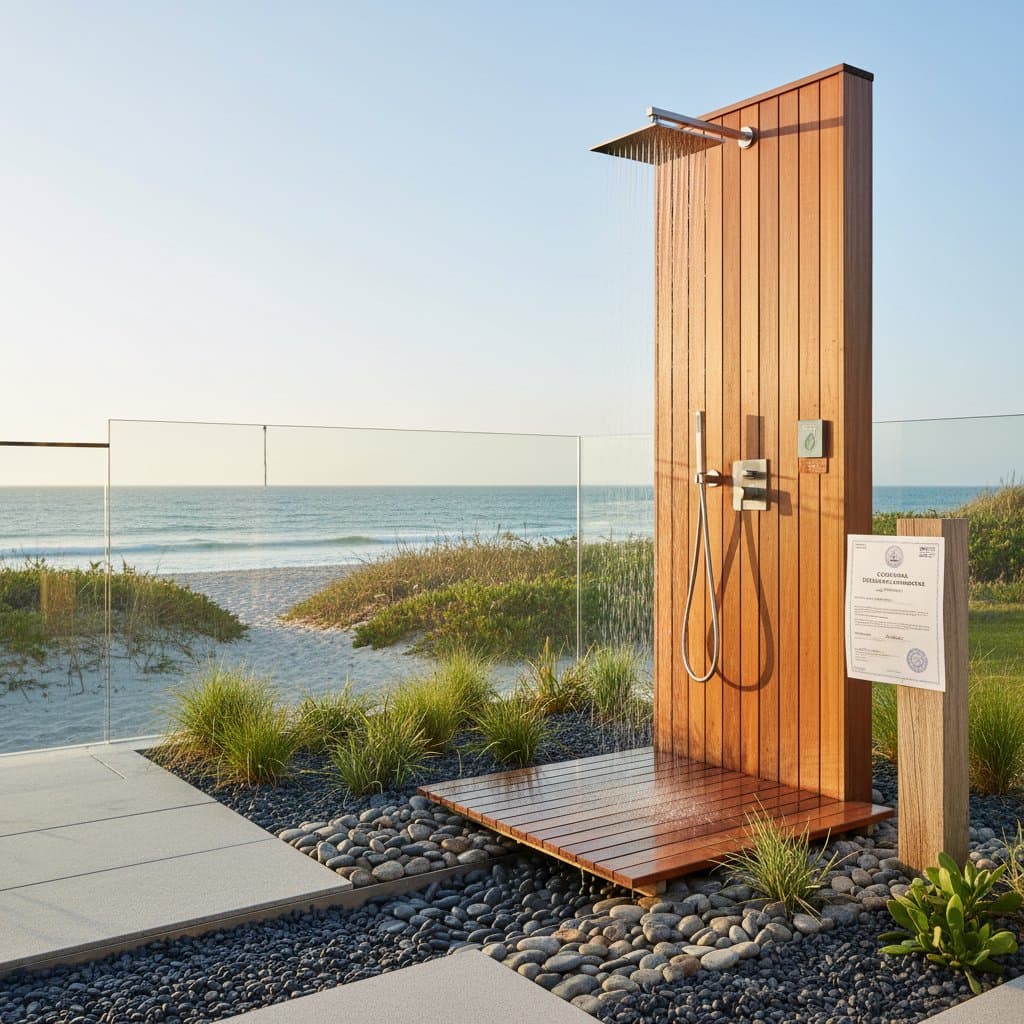
New Drainage Rules Increase Outdoor Shower Permit Requirements
- Assess current property layout against updated coastal drainage standards.
- Identify required permit types based on shower design complexity.
- Calculate total project costs including plumbing, materials, and inspections.
- Select compliant materials and water efficient fixtures early in planning.
- Consult local building officials before starting any installation work.
New coastal building codes effective in 2026 require homeowners to address drainage, water conservation, and environmental protections when adding outdoor showers. These changes affect permit approvals, design choices, and overall expenses for properties near the shoreline.
This guide covers the practical implications of the updates. Readers will find details on permit costs, installation components, shower styles, and cost reduction strategies that maintain compliance.
Cost Factors
Project expenses for a coastal outdoor shower typically range from 1000 to 7000 dollars. The average mid range installation that incorporates proper drainage and salt resistant materials totals around 3800 dollars.
Plumbing and drainage work accounts for 500 to 2500 dollars because closed systems or approved filtration units are now mandatory to avoid runoff into sand or storm drains. Materials add another 300 to 2000 dollars when stainless steel, marine grade fixtures, and rot resistant woods such as cedar or teak are selected.
Permitting and design fees fall between 300 and 1500 dollars. Labor costs range from 800 to 2000 dollars and rise when sites present slope or bluff access challenges.
Four primary variables influence the final price. Proximity to existing plumbing reduces pipe runs. Drainage solutions must incorporate gravel basins or greywater connections. Corrosion resistant fixtures increase material costs by 10 to 20 percent. Properties inside coastal development zones often require extra environmental review.
Shower Styles and Permit Implications
Three main configurations exist, each carrying different permit and cost profiles.
Freestanding Rinse Station
This option suits quick post beach rinses and minimal maintenance. Units connect to an existing hose bib and drain into a gravel bed. Portable versions without permanent plumbing frequently avoid permit requirements.
Advantages include low cost and simple setup. Limitations involve cold water only and reduced durability in exposed locations.
Wall Mounted Plumbed Shower
Homeowners seeking hot water and a fixed structure choose this style. The unit connects to household plumbing and incorporates a code approved drain. A permit is required under the new regulations.
Advantages include comfort and integration with existing architecture. Professional installation is recommended to ensure proper connections.
Enclosed Outdoor Shower Room
Families or those desiring privacy and year round use select this design. Walls, floors, and changing areas increase project scope and trigger full code review.
Advantages include added property value and all season functionality. Higher material and labor expenses apply.
Cost Reduction Strategies
Position the shower near an existing outdoor spigot or laundry area to limit new pipe runs. Choose open air layouts with privacy screens or landscaping instead of full enclosures. Composite decking made from recycled plastic wood blends offers moisture resistance at a lower price than teak.
Bundle the shower permit with other outdoor remodeling work to reduce fees. Install water efficient fixtures to lower utility costs and qualify for available local rebates.
Common Questions
Do I need a permit for a simple outdoor shower?
A hose connected unit that drains into an approved gravel area may not require a permit. Any permanent plumbing or drainage system triggers review under current coastal codes.
Can shower water drain directly into the sand?
Direct discharge into soil or sand is prohibited near coastal zones. Filtered drain systems or connections to existing greywater infrastructure are required.
What materials perform best near the ocean?
Stainless steel, marine grade brass, and naturally rot resistant woods such as cedar and teak provide longest service life. Bare metal and untreated wood should be avoided.
How long does installation take?
A basic rinse station can be completed in one day. A plumbed system with drainage and inspections usually requires three to five days.
Next Steps for Compliance
Review property records, confirm local drainage requirements, and decide between a simple rinse station or a fully plumbed unit. Professional contractors familiar with coastal permitting can manage inspections and material selections. Partial do it yourself approaches remain viable when plumbing and drainage elements meet code standards.