
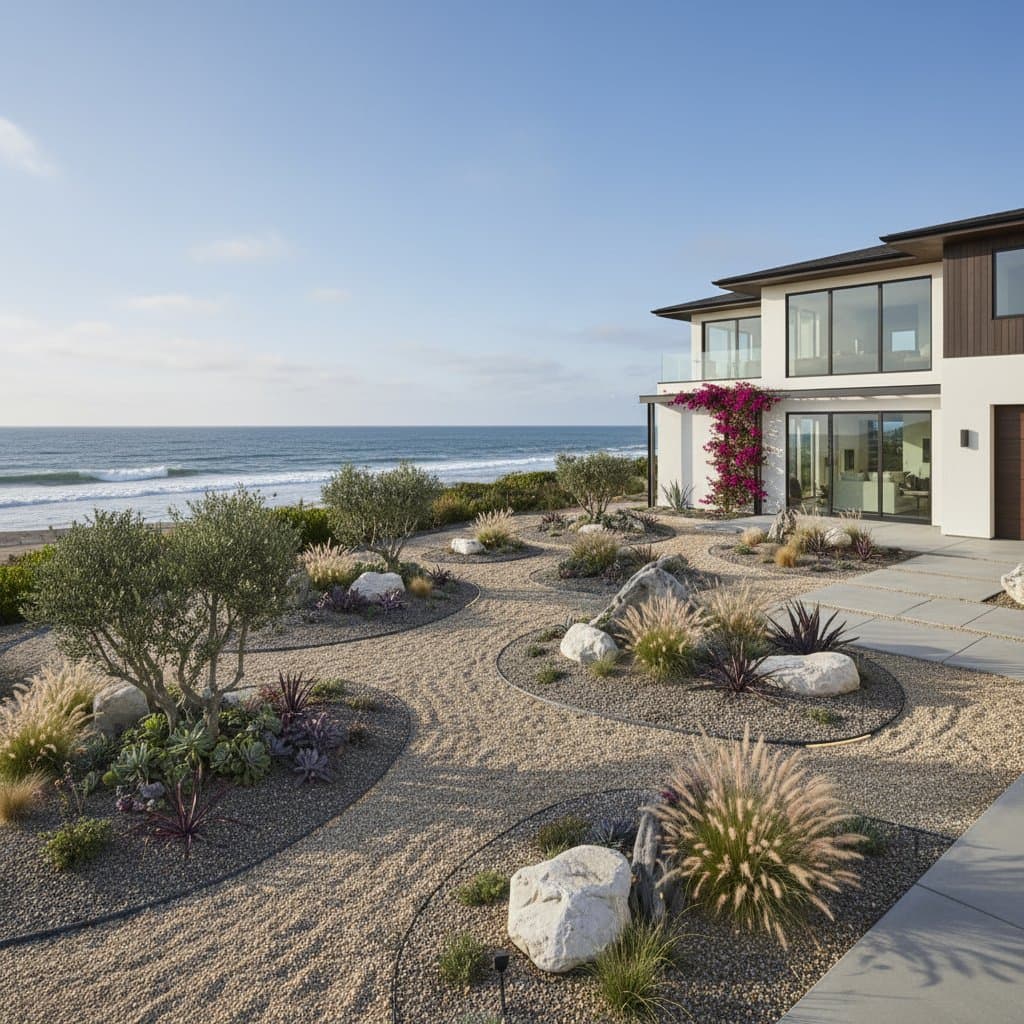
The Rise of Gravel Gardens: Dominating Coastal Yards by 2026
Imagine a coastal yard where sunlight dances across smooth river rocks, accented by resilient drought-tolerant plants that require minimal care. Gravel gardens capture this vision, emerging as the preferred solution for homeowners facing water shortages, erratic weather patterns, and a preference for streamlined outdoor aesthetics. These landscapes not only adapt to challenging seaside environments but also promote sustainability and enduring style.
A gravel garden extends beyond simple stone coverage. It represents a deliberate design approach that conserves water, demands little upkeep, and withstands coastal rigors such as salt exposure and strong winds. Installation expenses range from $1,500 to $12,000, influenced by project scale and features, with most averaging $6,000. Homeowners achieve a refined outdoor area that aligns with contemporary tastes. For expert guidance, consult licensed landscapers experienced in arid-climate installations.
In this article
- Cost factors
- Types and options
- DIY versus professional installation
- Strategies to reduce costs
- Frequently asked questions
Cost factors
The total expense for a gravel garden falls between $1,500 and $12,000, shaped by multiple elements. Gravel selection significantly impacts the budget; options like crushed granite or river rock remain economical at $30 to $60 per ton, whereas premium polished pebbles or colored aggregates can exceed $100 per ton. Labor charges, typically $50 to $100 per hour, cover site preparation, while edging materials such as metal or plastic borders add $5 to $15 per linear foot.
Soil preparation proves essential, particularly in coastal zones where sandy or compacted earth requires amendment. Removing existing grass or sod costs $1 to $2 per square foot, and grading uneven terrain may involve additional equipment rental. In regions with strict environmental rules, permits for projects altering drainage could range from $100 to $500. Post-installation, annual maintenance remains low, limited to occasional raking and gravel top-ups estimated at $200 to $500 yearly.
Types and options
Gravel gardens offer diverse styles, each tailored to specific preferences and site conditions. Selection depends on desired ambiance, plant compatibility, and integration with surrounding architecture.
Mediterranean gravel gardens
This style incorporates robust Mediterranean flora such as lavender, rosemary, and dwarf olive trees amid gravel mulches. It suits exposed, sun-drenched coastal plots by evoking the arid terrains of southern Europe. The combination of aromatic herbs and textural stones fosters a sensory experience, with gravel paths winding through clustered plantings for easy navigation.
Ideal for: Property owners desiring a rustic yet refined aesthetic with inherent drought tolerance. Strategic plant spacing, every 18 to 24 inches, minimizes competition for resources while enhancing visual flow.
Photo: Jacky Parker / Moment / Getty Images
Contemporary minimalist designs
Clean lines characterize this approach, featuring broad expanses of uniform gravel interspersed with sculptural elements like agave or yucca. Ornamental grasses such as blue fescue add subtle movement without overwhelming the space. This design complements sleek modern residences and amplifies unobstructed ocean vistas.
Ideal for: Those pursuing effortless sophistication and architectural harmony. Incorporate geometric patterns in gravel placement to elevate the modern edge, ensuring plants remain focal points rather than fillers.
Photo: Tim Abramowitz / DigitalVision / Getty Images
Coastal native gardens
Emphasizing local ecology, these gardens integrate species like California fescue, Erigeron glaucus (seaside daisy), and Artemisia californica. Gravel serves as a mulch base, reducing soil erosion and retaining moisture in sandy soils. Such plantings support biodiversity by drawing bees, butterflies, and birds to the yard.
Ideal for: Environmentally conscious individuals aiming to harmonize with shoreline ecosystems. Source plants from regional nurseries to guarantee adaptation, planting in clusters to mimic natural drifts and boost pollinator habitats.
Photo: David Madison / Stone / Getty Images
DIY versus professional installation
A gravel garden installation qualifies as a moderate-difficulty endeavor, suitable for DIY on areas smaller than 300 square feet. Begin by marking boundaries with string lines, then excavate 4 to 6 inches deep using a shovel and wheelbarrow for debris removal. Install landscape fabric to suppress weeds, securing it with staples every 12 inches, before layering 2 to 3 inches of gravel with a rake for even distribution.
For expansive or inclined sites, professional involvement ensures optimal outcomes. Experts assess soil drainage, install French drains if needed to manage runoff, and embed low-voltage lighting or subtle irrigation for enhanced functionality. Although professionals increase upfront costs by 40 to 60 percent, their work guarantees structural integrity, erosion control, and adherence to municipal codes, preventing future repairs.
Strategies to reduce costs
- Repurpose on-site materials: Salvage gravel from unused driveways or paths to cut procurement expenses by up to 30 percent.
- Vary gravel particle sizes: Combine coarse and fine types for visual depth, sourcing bulk mixes that cost 20 percent less than uniform premium grades.
- Select indigenous vegetation: Opt for natives that eliminate supplemental watering needs, saving $100 to $300 annually on irrigation systems.
- Phase the project: Complete base preparation first, adding plants and accents in subsequent seasons to distribute payments evenly.
- Source from nearby vendors: Purchase gravel in bulk from quarries within 50 miles to minimize transportation fees, often reducing delivery costs by half.
Frequently asked questions
How can weeds be prevented in a gravel garden?
Lay permeable landscape fabric beneath the gravel layer, ensuring overlaps of at least six inches at seams to block light penetration. Apply a 2-inch gravel depth to further inhibit growth, and perform quarterly inspections to remove any emerging shoots manually or with a weeding tool.
Does a gravel garden invite pests?
The dry, open nature of gravel deters common pests by eliminating damp hiding spots. Maintain vigilance by clearing fallen leaves or plant trimmings promptly, and consider introducing beneficial nematodes for natural insect control if succulents show signs of infestation.
Is irrigation necessary for gravel gardens?
Drought-adapted plants often rely on natural precipitation, but establishing deep roots in the first year benefits from occasional deep watering. Install a low-flow drip system with emitters spaced 12 inches apart, programmed for 30-minute sessions every two weeks during peak dry periods to promote resilience without waste.
Maximizing Benefits in Your Coastal Landscape
Gravel gardens liberate homeowners from routine chores like frequent mowing or excessive irrigation, converting environmental hurdles into opportunities for innovative design. They enhance property value through timeless appeal and resource efficiency. Select a style that resonates with your lifestyle, and maintain it with simple seasonal checks to preserve its coastal allure across changing seasons.