
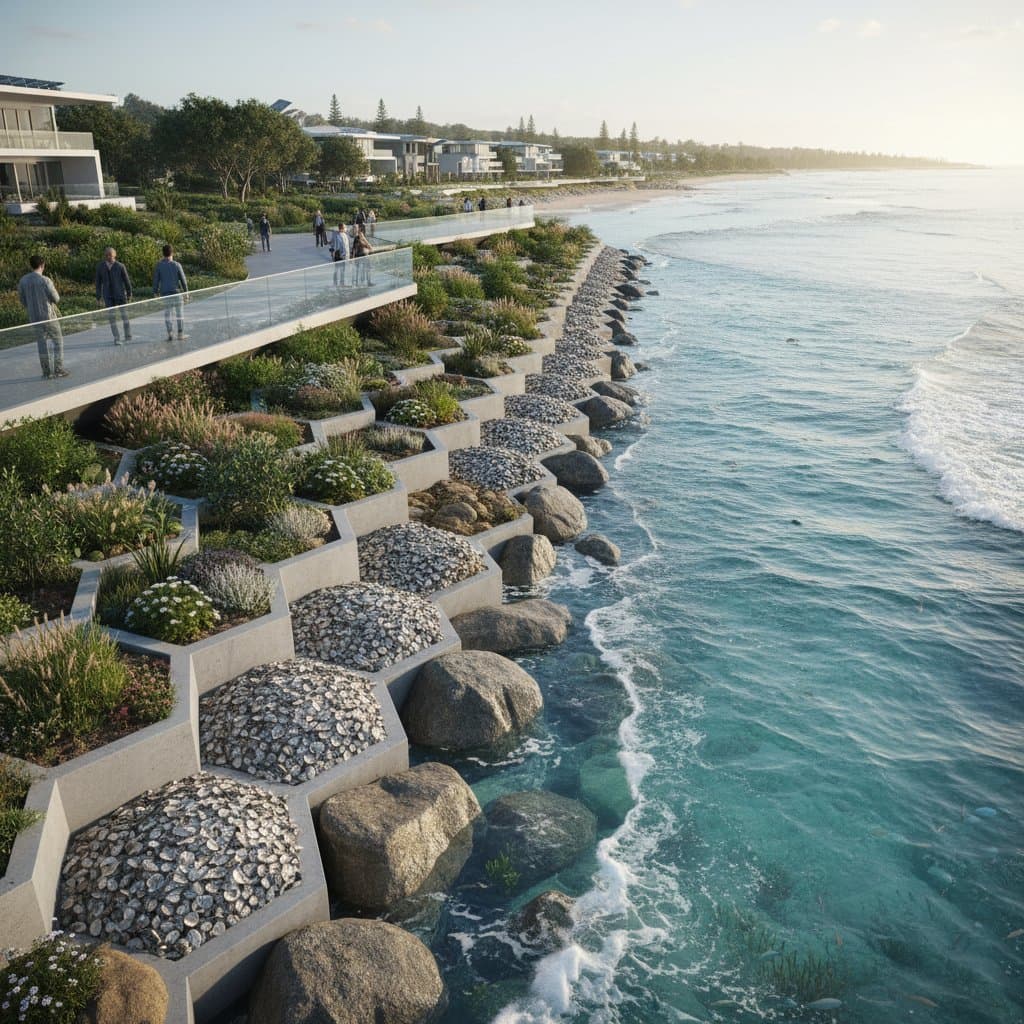
Natural Seawalls: Safeguarding Coasts and Revitalizing Ecosystems
Coastal erosion poses a significant threat to shoreline communities. Traditional concrete seawalls and bulkheads protect property effectively in the short term, yet they accelerate erosion in adjacent areas and damage marine habitats. Natural seawalls, known also as living seawalls, present a sustainable alternative. These structures merge engineering principles with biological elements to secure coastlines and promote the growth of marine life. In regions such as San Diego, where the coast shapes daily life and economic vitality, natural seawalls redefine shoreline protection strategies.
Natural seawalls stabilize vulnerable beaches and create habitats for fish, shellfish, and vegetation. They align with natural processes rather than oppose them, resulting in durable shorelines that enhance biodiversity over time.
How Natural Seawalls Combat Beach Erosion
Waves erode beaches by relentlessly stripping away sand and sediment. Natural seawalls mitigate this by distributing wave energy over textured surfaces and rooted vegetation. The energy dissipates gradually, lessening the scouring effect on beach material.
Comparison of Seawall Types
| Type of Seawall | Materials Used | Environmental Impact | Erosion Control Effectiveness | Typical Lifespan |
|---|---|---|---|---|
| Traditional Concrete | Reinforced concrete | High, disrupts habitat | Strong but increases nearby erosion | 20-40 years |
| Rock Revetment | Large stones, gravel | Moderate | Good energy absorption | 25-50 years |
| Natural or Living Seawall | Concrete panels, shells, plants | Low, supports biodiversity | Excellent with habitat restoration | Grows stronger over time |
Image: Diagram comparing wave energy reduction between concrete and natural seawalls.
Natural seawalls incorporate both rigid and flexible components to form an adaptive buffer against rising sea levels and intense storms. As vegetation takes root and marine organisms colonize the structure, they trap sediment and facilitate beach replenishment.
Key Factors in Design and Cost
Design and cost for natural seawalls vary based on site specifics, material choices, and local conditions. In a typical coastal setting, expect installation costs between $600 and $1,200 per linear foot, influenced by project scale and features.
Major Cost Factors
- Site conditions: Sandy substrates demand specialized anchoring, while rocky terrains simplify foundation work.
- Material selection: Opt for local rocks or recycled oyster shells to minimize transportation expenses.
- Permitting and environmental review: Compliance with regulations may extend timelines and add fees.
- Vegetation type: Select salt-tolerant native species for optimal growth and minimal upkeep.
- Maintenance needs: Initial assessments ensure the system integrates well with the environment.
Example Cost Breakdown
| Component | Approximate Share of Total Cost | Description |
|---|---|---|
| Structural foundation | 30% | Base materials like stone or reinforced concrete |
| Vegetation and habitat modules | 25% | Plants, shells, or textured panels |
| Labor and installation | 35% | Skilled workers and equipment |
| Monitoring and maintenance | 10% | Regular inspections and ecological upkeep |
Image: Coastal engineers planting native grasses along a newly installed seawall.
Upfront expenses align closely with those of conventional seawalls, but reduced repair needs and ecological gains yield substantial savings over decades.
Assessing Return on Investment and Long-Term Benefits
Natural seawalls require thoughtful planning, yet they deliver strong returns through superior protection and environmental enhancements. Property owners experience fewer disruptions from erosion, while ecosystems flourish.
Estimated ROI Comparison
| Seawall Type | Average ROI | Maintenance Frequency | Environmental Benefit |
|---|---|---|---|
| Concrete | 40-50% | High | Low |
| Rock Revetment | 60-70% | Moderate | Moderate |
| Natural Seawall | 80-100% | Low | High |
Adopting natural seawalls boosts community appeal by preserving scenic beaches and attracting eco-tourism. Local economies benefit from increased visitor spending, and property values rise in tandem with healthier coastal environments.
Common Questions About Natural Seawalls
What defines a living seawall?
Living seawalls feature integrated biological elements, such as plants, algae, and encrusting marine species, that actively colonize and strengthen the structure.
Do natural seawalls fit every coastline?
They excel in moderate wave environments, though hybrid designs with added reinforcements accommodate high-energy sites effectively.
How quickly does marine life take hold?
Colonization appears within months, with robust communities forming after one to two seasons of growth.
Is retrofitting possible for existing seawalls?
Retrofitting succeeds through the addition of habitat panels, vegetation trays, or textured overlays to existing concrete surfaces.
Do they match traditional walls in protection?
They provide equivalent or superior defense by resisting undermining and adjusting to environmental shifts like sea level rise.
Sustaining Natural Seawall Performance
After installation, natural seawalls function as dynamic ecosystems that mature with time. Periodic checks identify issues early, such as eroded plantings or debris buildup. Simple interventions, like replanting or surface clearing, preserve the balance between structure and biology.
Coastal communities embracing natural seawalls achieve harmony between defense and conservation. Each installation contributes to resilient networks that shield properties and nurture ocean vitality. Homeowners and planners gain practical tools for enduring shoreline stewardship.