
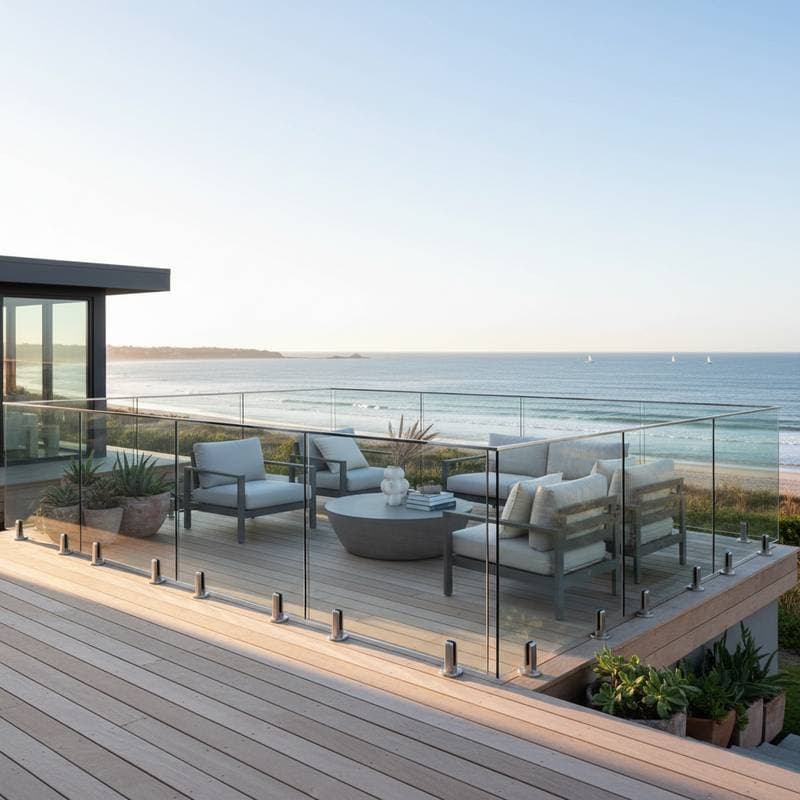
Why Glass Railings Rule Coastal Decks
Coastal homeowners seek ways to maximize their ocean views. Whether a deck faces the Pacific Ocean or a quiet bay, each design element influences the overall experience. Among current coastal deck trends, glass railings stand out as the preferred choice for those who prioritize safety, style, and an uninterrupted link to the natural surroundings.
This guide details the reasons glass railings lead in coastal deck design. It covers selection processes, installation considerations, and maintenance practices. Readers will understand why these clear barriers represent a wise investment for seaside properties.
The Appeal of Glass Railings for Coastal Living
A Clear Connection to the View
Traditional wood or metal railings block sightlines and create shadows that enclose the deck. Glass railings offer an open and expansive feel. Transparent panels permit light to flow through, which enlarges the perceived outdoor area and directs focus toward the landscape.
In coastal settings, this transparency proves invaluable. Property owners enjoy full panoramic ocean vistas while maintaining safety and structural support.
Modern Aesthetics with Timeless Flexibility
Glass railings integrate with diverse architectural styles. They enhance modern coastal homes through crisp lines and also refine traditional structures with added contrast and refinement. The smooth surface complements natural wood decking, composite boards, or stone surfaces.
Property owners value the visual lightness paired with robust strength. This combination achieves equilibrium between sophistication and resilience.
Built to Withstand Coastal Conditions
Oceanfront locations endure ongoing exposure to salt-laden air, humidity, and gusts. Glass railings resist these challenges more effectively than numerous metal or wood options. Tempered safety glass combined with corrosion-resistant stainless steel or aluminum components ensures enduring performance.
Proper care allows glass railings to preserve clarity and integrity over extended periods. Such qualities make them suitable for demanding coastal environments.
Planning Your Glass Railing Project
Establish a Realistic Budget
Costs for glass railing systems fluctuate based on factors such as glass variety, design complexity, and installation approach. Homeowners typically budget from $150 to $600 per linear foot. Frameless configurations often fall at the upper range of this spectrum.
Consult multiple suppliers to identify cost-saving opportunities without compromising quality. Factor in long-term value when evaluating expenses.
Choose Between Framed and Frameless Systems
Two primary glass railing categories exist for consideration:
- Framed Glass Railings: These incorporate posts and top rails, typically constructed from aluminum or stainless steel. The framework provides stability and often reduces expenses relative to frameless alternatives.
- Frameless Glass Railings: These employ concealed anchors or base shoe mounts for a fully transparent appearance. Such designs maximize visibility yet demand thicker glass panels and exacting installation techniques.
Evaluate site-specific needs, such as wind exposure, to select the optimal system.
Select the Right Glass Type
Glass quality varies significantly. For deck use, tempered glass serves as the standard choice due to its heat treatment for enhanced durability. Some opt for laminated glass, which features an interlayer that contains fragments upon breakage.
Finishes include clear glass for optimal views or frosted variants for added privacy near neighboring properties. Consult professionals to match glass specifications with local environmental demands.
Working with Contractors and Installers
Verify Licenses and Insurance
Confirm that contractors possess valid state licenses and comprehensive liability insurance. These measures safeguard against accidents or regulatory issues during construction. Specialists in glass systems grasp the distinct structural and safety demands of coastal sites.
Request documentation upfront to ensure compliance and professionalism.
Request Detailed Bids
Prior to agreements, obtain written bids that specify materials, labor, hardware, and cleanup expenses. Detailed proposals facilitate accurate comparisons and minimize unexpected costs.
Review bids for alignment with project scope and inquire about any ambiguities.
Review Local Building Codes
Coastal areas enforce unique rules for deck builds and railing heights. Regulations often mandate adherence to safety glazing criteria and resistance to specified wind loads. Experienced contractors confirm compliance and secure necessary inspections.
Inquire about code variations early to streamline the planning phase.
Maintenance and Long-Term Care
Cleaning and Upkeep
Glass railings demand minimal routine care yet benefit from regular attention to remain pristine. Salt spray from the coast can deposit residue, so rinse panels with fresh water biweekly. For thorough cleaning, apply a mild soap solution with a soft cloth; steer clear of abrasive tools that might cause scratches.
Inspect hardware seasonally for corrosion or looseness. Secure fittings and replace deteriorated parts to extend system longevity.
Preventing Cloudiness and Mineral Deposits
Hard water in certain regions leads to mineral accumulation that clouds the glass. Protective coatings or sealants repel water and inhibit stains. These treatments simplify ongoing cleaning and lower cumulative maintenance expenses.
Apply such products during initial installation or as a retrofit measure.
Safety and Structural Checks
Conduct annual inspections of the railing. Search for chips, cracks, or panel shifts. Although tempered glass offers high strength, addressing minor issues promptly upholds safety and functionality.
Engage professionals for in-depth evaluations if concerns arise.
Environmental and Lifestyle Benefits
Sustainability
Glass railing systems frequently utilize recyclable materials, appealing to eco-minded residents. The reflective nature of glass boosts natural illumination, which decreases reliance on electric lights during daylight hours.
Such features align with broader goals of resource conservation in coastal developments.
Enhancing Property Value
Glass railings improve exterior allure and impart a premium look that draws potential purchasers. They convey contemporary design, strategic upgrades, and meticulous care. In coastal markets, where outdoor areas command high regard, these installations often yield substantial returns upon sale.
View them as enhancements that blend form with financial prudence.
Comfort and Enjoyment
Glass panels function as effective wind screens, enabling deck use during gusty conditions. They also dampen sounds from traffic or waves, fostering a tranquil outdoor setting.
These attributes extend usable time on the deck year-round.
Frequently Asked Questions
What is the best type of glass for outdoor railings?
Tempered glass ranks as the preferred selection for its strength, thermal processing, and safe fragmentation into harmless granules upon breakage. Laminated glass adds security by retaining shards via an internal layer post-impact.
Both options suit exterior applications when certified for outdoor durability.
How high should a glass railing be on a deck?
Building codes generally specify heights from 36 to 42 inches. Precise measurements depend on regional standards and the deck's ground clearance.
Adhere to local guidelines to ensure compliance and safety.
Can glass railings handle coastal wind and weather?
Yes, correctly installed tempered or laminated panels endure intense coastal winds. Supporting hardware and mounts resist environmental stresses like pressure and vibrations.
Professional engineering confirms resilience in high-exposure zones.
Are glass railings safe for homes with children or pets?
Yes, the continuous panels eliminate climbable gaps and reduce fall hazards. Verify that installations meet residential safety glazing requirements.
Such designs provide reliable protection for family members and animals.
How often should glass railings be cleaned in a coastal area?
Biweekly light rinses suffice to counter salt accumulation. Perform deeper cleans quarterly or as environmental exposure dictates.
Consistent care preserves appearance and performance.
Do glass railings require special permits?
Typically, yes. Municipal building offices mandate permits for structural modifications like railing additions. Contractors assist with applications and regulatory adherence.
Plan for this step to avoid delays.
Can glass railings be installed on existing decks?
Yes, numerous systems accommodate retrofits. Installers assess current deck frameworks to verify support for added weight and secure anchoring.
Feasibility hinges on the original construction's integrity.
Maximizing Your Coastal Deck Experience
Integrate glass railings to transform a standard deck into a seamless extension of the seaside environment. These installations blend practicality with visual appeal, ensuring enduring enjoyment. Consult experts to tailor the project to specific needs and begin reaping the benefits of enhanced outdoor living.