
Why Flexible Decking Thrives in Coastal Areas
Imagine walking barefoot across a deck that gazes out over the ocean, capturing the essence of relaxed seaside living. Coastal environments enchant with their unique appeal. However, homeowners face ongoing battles against salt-laden air, high humidity, and unyielding ultraviolet rays. Conventional decking materials frequently succumb to these forces, developing cracks, warps, or discoloration in short order. Flexible decking emerges as a superior solution.
Homeowners increasingly select flexible decking for coastal renovations due to its exceptional durability, adaptability, and straightforward upkeep, qualities that surpass those of wood and conventional composites. For those updating a waterfront residence or constructing a fresh ocean-side platform, grasping the reasons flexible decking performs well in coastal regions supports informed decisions for enduring investments.
What Is Flexible Decking?
Flexible decking encompasses resilient materials engineered to withstand environmental pressures while preserving form and functionality. Manufacturers typically produce these from PVC, rubber composites, or thermoplastic elastomers. In contrast to inflexible wooden boards, flexible decking accommodates minor bending from applied force, thermal variations, or water exposure.
This inherent pliability proves essential in seaside locations, where moisture levels vary and corrosive salt air attacks standard substances. The design permits boards to adjust organically, preventing fractures or gaps during weather fluctuations.
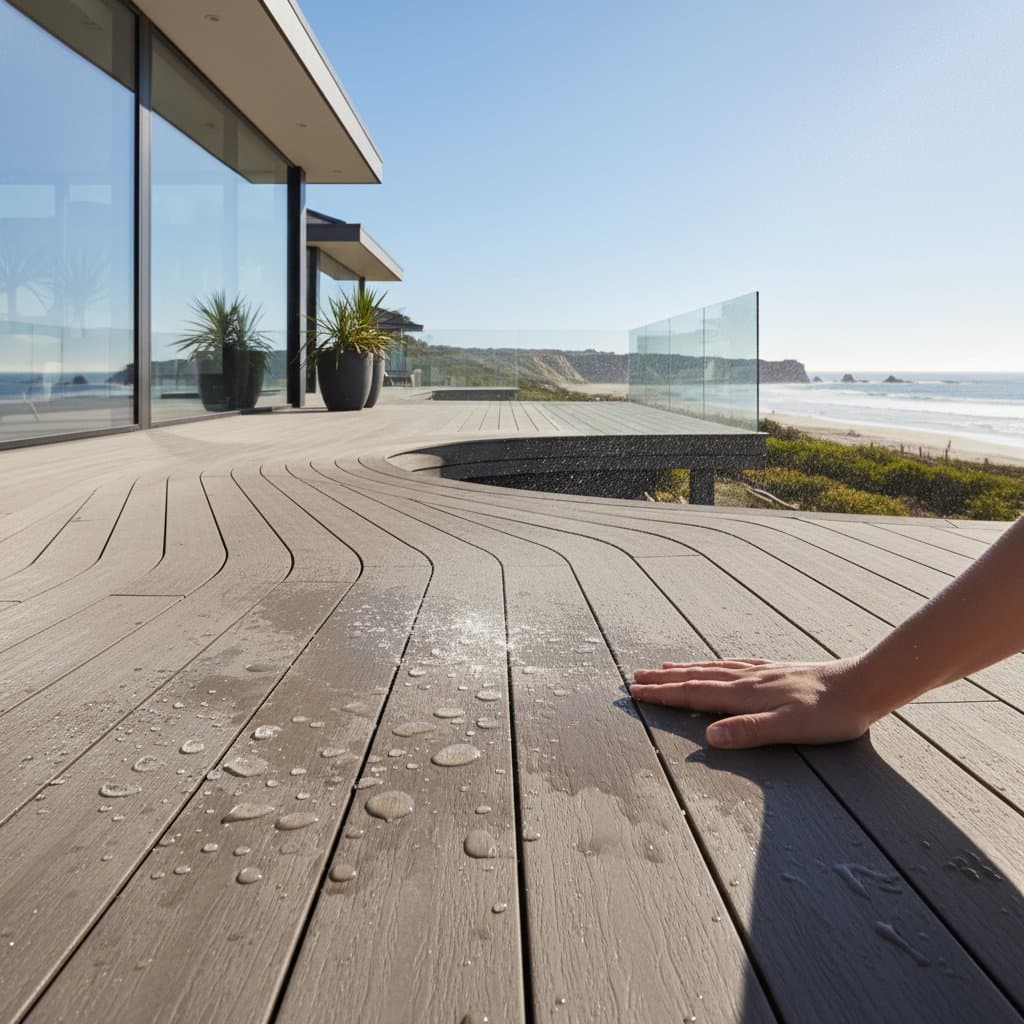
Photo: A coastal deck featuring flexible composite planks that curve smoothly around a pool.
How Flexible Decking Differs from Traditional Options
| Material Type | Durability in Coastal Areas | Maintenance Level | Cost Range per Square Foot | Flexibility |
|---|---|---|---|---|
| Pressure-treated wood | Low | High | $3–$6 | Rigid |
| Composite decking | Moderate | Medium | $5–$10 | Limited |
| PVC or flexible decking | High | Low | $6–$12 | Excellent |
Flexible decking demonstrates superior endurance compared to alternatives, particularly in damp or saline settings. Although the starting price exceeds that of basic wood, diminished ongoing care and extended service life render it financially advantageous in the long term. To maximize value, select products certified for coastal use and factor in installation costs during planning.
The Benefits of Flexible Decking for Coastal Homes
Flexible decking delivers advantages beyond mere toughness. It bolsters safety, aesthetic appeal, and environmental responsibility, establishing it as a prudent selection for properties adjacent to the shore.
1. Comfortable Underfoot
The yielding, padded texture of flexible decking provides a pleasant and temperate feel, even on warm summer days. This quality suits extended periods of barefooted relaxation following ocean swims. Lighter hues and infill options further reduce heat buildup, enhancing usability during peak temperatures.
2. Slip Resistance
Surfaces prone to wetness pose risks, yet flexible decking incorporates embossed, anti-skid patterns for enhanced security among family members, animals, and visitors. Such features prove crucial near swimming pools or piers with frequent water contact. Regular inspections ensure the traction remains effective over time.
3. Low Maintenance
Eliminate the need for yearly refinishing or protective coatings. Flexible decking requires only periodic washing with gentle detergent and water. It repels marks from saline residue, lotions, or marine debris, preserving its pristine appearance through basic care routines.
4. Versatile Design Options
Contemporary flexible decking appears in diverse patterns, including realistic timber textures or modern minimalist profiles. Installation supports arched or undulating layouts that complement seaside terrains. Consult material guides to match finishes with existing architecture for seamless integration.
Photo: A sinuous flexible deck encircling the patio of a seaside cottage.
5. Sustainable and Eco-Friendly Choices
Numerous flexible decking lines incorporate reclaimed plastics or rubber, minimizing landfill contributions while yielding robust panels. This approach appeals to shore-side areas emphasizing conservation. Opt for products with verified recycled content to align with green building standards.
Comparing Flexible Decking to Other Coastal Materials
| Feature | Flexible Decking | Wood | Composite |
|---|---|---|---|
| Moisture Resistance | Excellent | Poor | Good |
| UV Protection | High | Low | Moderate |
| Maintenance | Very Low | High | Medium |
| Comfort | Soft and cool | Can splinter | Firm |
| Lifespan | 20+ years | 5–10 years | 10–15 years |
| Eco-Friendliness | Often recycled | Natural but short-lived | Partially recycled |
Flexible decking prevails in nearly every aspect, particularly where endurance, user comfort, and care demands matter most. For precise comparisons, review manufacturer warranties and local climate data to tailor selections.
Common Questions About Flexible Decking
Is flexible decking expensive?
Initial expenses surpass those of wood yet align with high-end composites. Long-term economies arise from lowered repair needs and prolonged durability, frequently offsetting the premium within five years. Budget for quality brands to avoid hidden costs from inferior products.
Can flexible decking be used around pools or docks?
Yes, its water-repellent and grip-enhancing properties suit submerged or splashed zones. Property owners often specify it for marine-adjacent builds. Ensure substructure elevation prevents standing water accumulation.
Does it get hot in the sun?
Flexible decking maintains lower temperatures than standard composites, thanks to reduced mass and light-reflecting surfaces. Select pale shades to optimize thermal performance. Test samples in direct light before full commitment.
Can I install flexible decking myself?
Individuals with basic carpentry skills can manage installation, as it processes akin to composites. Professional oversight guarantees adequate gaps for expansion and effective runoff, vital for seaside efficacy. Follow supplier guidelines for tools and techniques.
How long does flexible decking last?
Proper setup and routine cleansing enable flexible decking to endure over 20 years without structural decline or aesthetic fade. Harsh exposures may shorten this, so annual checks help sustain performance.
Securing Long-Term Coastal Enjoyment with Flexible Decking
Coastal residences benefit from materials that confront natural elements head-on. Flexible decking instills confidence through its defenses against corrosion, solar degradation, and climatic swings, all while upholding visual and functional standards.
For renovations of shorefront homes or new constructions by the sea, flexible decking merges toughness, ease, and elegance to harmonize with waterfront routines. Envision serene evenings by the Pacific from a platform engineered for permanence. Flexible decking ensures such moments remain untroubled and enduring.