
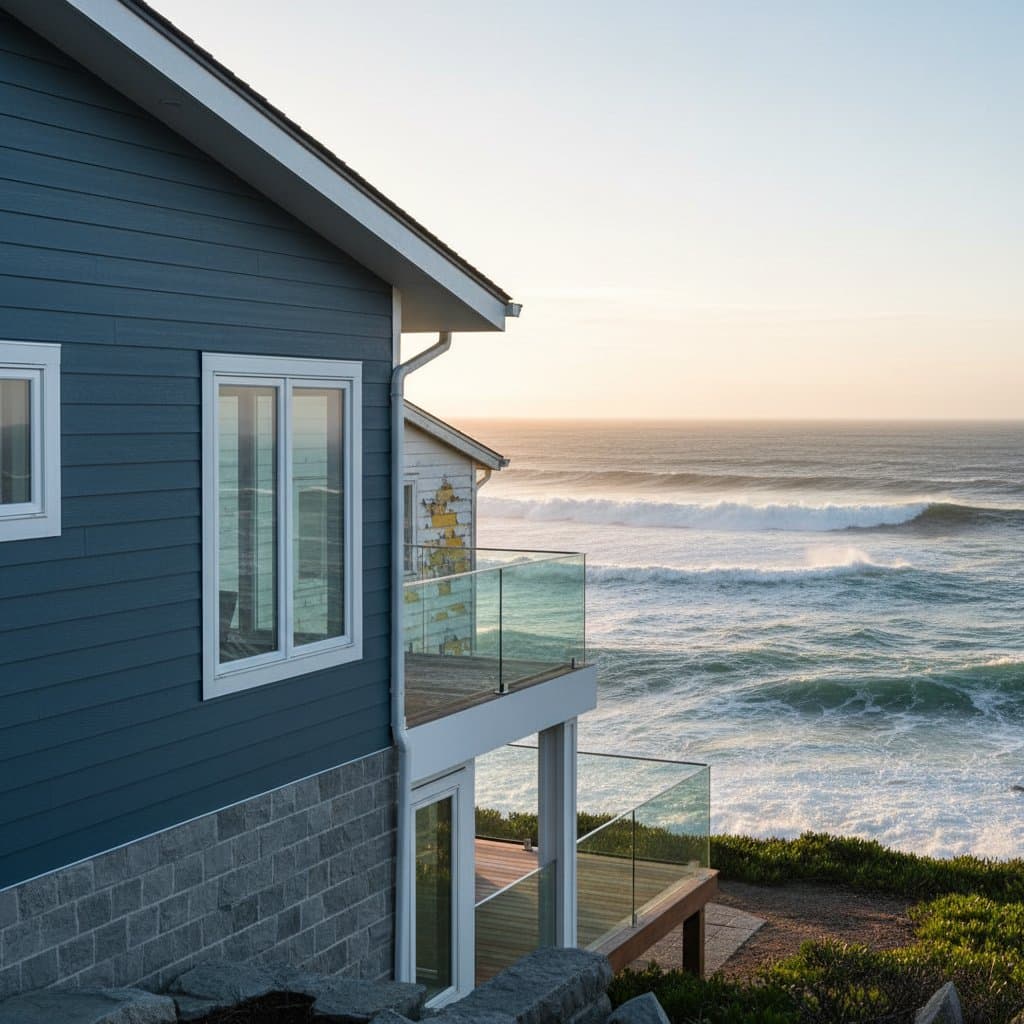
Why Coastal Homes Choose Fiber Cement Over Vinyl Siding
Coastal living provides stunning views and fresh breezes, yet it exposes homes to harsh salt air, high humidity, and fierce winds. These conditions accelerate wear on exterior materials, prompting homeowners to seek siding that endures. Fiber cement siding emerges as the preferred solution, surpassing vinyl in strength, aesthetics, and overall value.
For those considering a remodel or new construction near the shore, this guide details the advantages of fiber cement. It equips you to make informed decisions that safeguard your investment for generations.
Cost Comparison: Fiber Cement Versus Vinyl Siding
Initial expenses influence siding choices, so examine average national costs for materials and installation. The following table outlines key differences.
| Siding Type | Average Installed Cost (per sq. ft.) | Material Cost (per sq. ft.) | Maintenance Frequency | Expected Lifespan |
|---|---|---|---|---|
| Vinyl Siding | $5 to $9 | $2 to $4 | Every 3 to 5 years (cleaning, panel replacement) | 20 to 30 years |
| Fiber Cement Siding | $8 to $14 | $4 to $8 | Every 10 to 15 years (repainting optional) | 40 to 50 years |
Fiber cement demands a greater upfront outlay, yet its extended lifespan and low upkeep yield a lower annual cost. In salty coastal settings, vinyl deteriorates more rapidly, amplifying the financial edge of fiber cement.
Performance Advantages of Fiber Cement in Coastal Conditions
Resistance to Salt and Moisture
Salt-laden coastal air corrodes susceptible surfaces. Vinyl siding, derived from plastic, grows brittle over time, resulting in cracks and deformation. Fiber cement, composed of cement, sand, and cellulose fibers, resists salt penetration. Its solid composition blocks moisture, minimizing swelling or decay risks.
Strength Against Wind and Impact
Ocean storms deliver powerful gusts that strain siding integrity. Vinyl panels frequently break or dislodge under such forces. Fiber cement panels, denser and securely anchored, endure winds up to 130 mph with proper setup. This fortitude reassures homeowners during turbulent weather.
Fire Resistance Benefits
Many coastal regions face wildfire threats. Fiber cement qualifies as non-combustible, earning high fire ratings. Vinyl softens or emits harmful gases under intense heat. Insurers may reduce premiums for fiber cement installations, reflecting its safety profile.
Stability in Varying Temperatures
Coastal climates feature temperature swings and intense sun exposure. Vinyl expands and contracts, forming gaps or distortions. Fiber cement maintains consistent dimensions, retaining paint adhesion and sealing out water effectively.
Project Cost Breakdown for a 2,000-Square-Foot Coastal Home
Consider expenses for a standard home exterior. This table illustrates components for clarity.
| Cost Component | Vinyl Siding | Fiber Cement Siding |
|---|---|---|
| Materials | $4,000 to $8,000 | $8,000 to $16,000 |
| Labor | $6,000 to $10,000 | $8,000 to $12,000 |
| Accessories (trim, flashing) | $1,000 to $2,000 | $1,500 to $3,000 |
| Total Estimated Cost | $11,000 to $20,000 | $17,500 to $31,000 |
Fiber cement's higher starting price pays off through avoided replacements. Owners residing over ten years recoup costs via savings and elevated property worth.
Installation Insights and Labor Expenses
Fiber cement installation calls for expertise due to its weight and cutting needs. Labor comprises 35 to 45 percent of total costs. Teams experienced with brands like James Hardie ensure optimal outcomes. Vinyl setup proceeds quicker with less skill, though shortcuts compromise quality.
Select installers who demonstrate:
- Proficiency in fiber cement applications
- Adherence to manufacturer guidelines on spacing and fasteners
- Use of corrosion-resistant hardware
- Sealing of cut edges against moisture
Such practices maximize the material's durability.
Variables Affecting Overall Project Expenses
Multiple elements adjust siding budgets:
- Regional labor rates, elevated in busy coastal markets
- Architectural details like gables or multi-level designs that extend fitting time
- Removal of prior siding, adding $1 to $2 per square foot
- Required permits and inspections in regulated areas
- Optional enhancements, such as pre-painted finishes
Evaluate these to establish an accurate financial plan.
Feature-by-Feature: Fiber Cement Compared to Vinyl
| Feature | Fiber Cement | Vinyl |
|---|---|---|
| Durability | Withstands warping, cracking from UV and salt | Prone to fading, cracking in harsh exposure |
| Maintenance | Minimal; repaint optional every 10 to 15 years | Frequent cleaning, panel fixes required |
| Appearance | Wood-like textures, broad color options | Basic profiles, can look synthetic |
| Fire Resistance | Non-combustible | Melts, produces toxins in heat |
| Environmental Impact | Natural components, recyclable | Petroleum-derived, higher emissions |
| Resale Value | Strong ROI from premium status | Average; often updated for sales |
Coastal professionals favor fiber cement for its superior attributes in marine settings.
Strategies to Reduce Fiber Cement Expenses
Mitigate initial costs through these approaches:
- Obtain bids from several contractors to gauge rates and reliability.
- Schedule work in slower seasons for potential discounts.
- Opt for primed boards and apply paint post-installation.
- Combine with other exterior upgrades to consolidate labor.
- Perform routine care, like yearly rinsing, to extend life.
These tactics lower outlays by 10 to 20 percent while upholding standards.
Weighing DIY Against Professional Installation
DIY Limitations
Full fiber cement projects suit professionals, given the material's heft and dust hazards from cutting. Novices require specialized tools and precautions. Simpler jobs, like painting, remain feasible for DIY.
Advantages of Experts
Certified installers provide:
- Precise nailing and spacing for warranty validity
- Effective flashing to shield openings
- Seamless, professional finish
Vinyl offers more DIY potential, but coastal demands favor pro installation for fiber cement reliability.
Pitfalls to Sidestep in Siding Projects
Overlook details at your peril. Steer clear of:
- Omitting housewrap or barriers for moisture control
- Leaving joints unsealed, inviting salt intrusion
- Selecting non-galvanized fasteners that rust
- Delaying repaints, which erode protection
- Pairing with subpar trim that mismatches durability
Address these upfront to avoid expensive fixes.
Frequently Asked Questions on Coastal Fiber Cement Siding
Is a Permit Required for Siding Replacement?
Local codes often mandate permits for exterior changes, particularly in coastal zones with wind and fire rules. Consult your building department early.
How Long Does Fiber Cement Last in Salt Air?
With correct installation and care, it endures 40 to 50 years amid humidity and salt. Vinyl seldom exceeds 25 years in comparable conditions.
What Maintenance Is Needed?
Annual gentle washing with soap and water suffices, alongside caulk inspections. Repaint every 10 to 15 years to refresh if needed.
Does It Boost Resale Value?
Absolutely. As a durable upgrade, it recoups 70 to 80 percent of costs, appealing to buyers seeking low-maintenance exteriors.
Is Fiber Cement Eco-Friendly?
It utilizes natural elements like sand and fibers, promoting longevity over frequent replacements. Vinyl's plastic origins contribute more to environmental strain.
What Styles Are Available?
Fiber cement offers lap siding, shingles, vertical panels, and trim in various textures that emulate wood or stone, ensuring versatile design matches.
Sustaining Your Coastal Siding Investment
Protect your fiber cement siding through proactive habits. Conduct yearly inspections for loose fasteners or caulk wear, especially after storms. Apply a quality exterior paint suited for marine environments to shield against UV rays. These measures preserve its appearance and performance, securing decades of worry-free coastal living.