
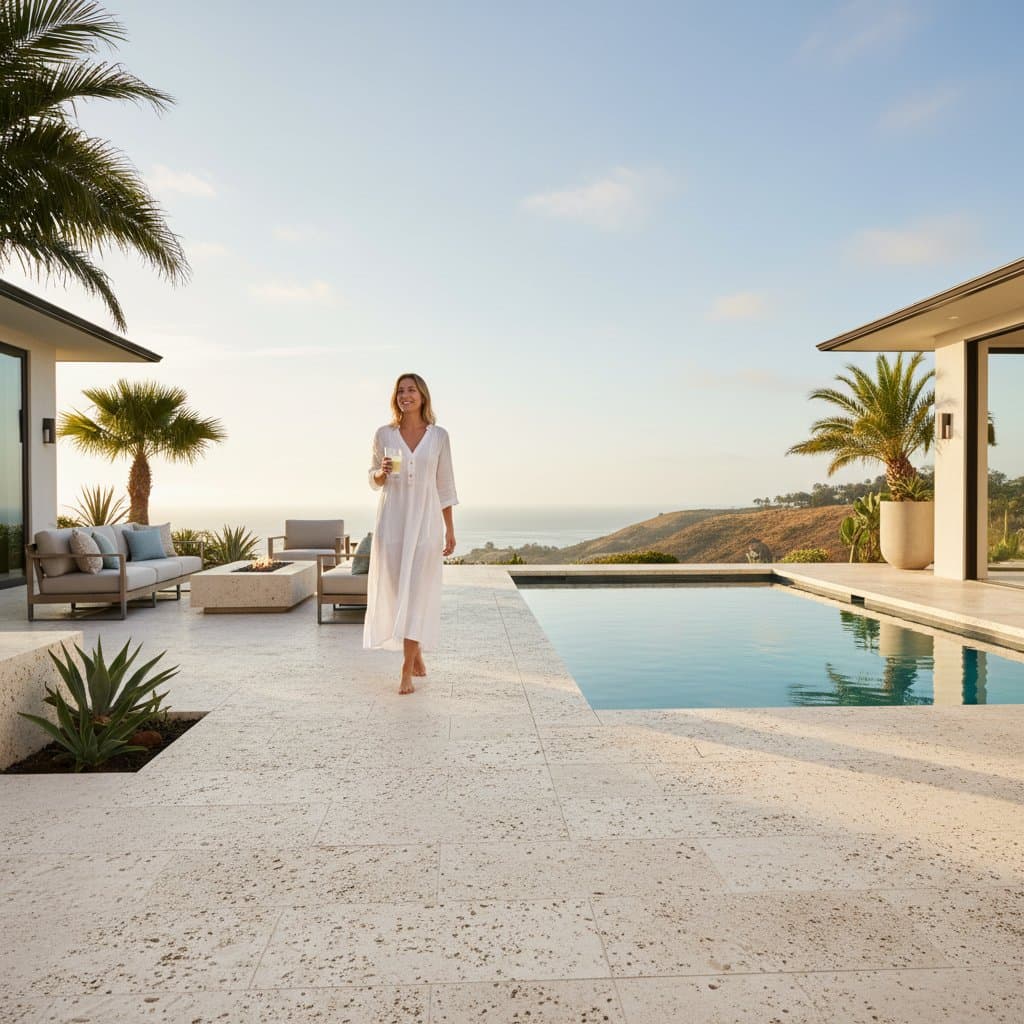
Nine Reasons Coral Stone Patios Excel Over Pavers for Comfort and Style
Outdoor spaces demand surfaces that balance aesthetics with practicality, especially in sun-drenched regions. Homeowners often select paver patios for their visual charm, yet these materials frequently become uncomfortably hot. Stepping barefoot on a sun-baked patio highlights this issue clearly.
Coral stone, derived from fossilized coral and limestone, delivers exceptional beauty, strength, and inherent cooling properties. This natural option ensures a pleasant surface temperature on the warmest days and introduces a refined coastal aesthetic suited to Southern California's environment.
The following sections detail nine advantages of coral stone patios over conventional pavers, covering thermal performance, design flexibility, and practical considerations. These qualities position coral stone as the superior choice for creating inviting backyard areas.
[Image: Coral stone patio surrounding a pool with tropical plants and lounge chairs]
Thermal Performance and User Comfort
1. Inherent Heat Reflection
Coral stone's primary advantage lies in its ability to remain cool under direct sunlight. The material's porous composition includes microscopic air voids that inhibit heat retention. In contrast, concrete and brick pavers absorb solar energy and release it slowly, creating hot spots.
This reflective quality allows barefoot navigation across the surface without irritation, even at midday. Additionally, it moderates the ambient temperature of nearby areas, enhancing overall outdoor usability.
Select lighter shades of coral stone to maximize reflectivity and minimize visual glare.
[Image: Bare feet walking comfortably on a light coral stone patio]
2. Gentle, Secure Surface Texture
The subtle texture of coral stone provides a soft yet firm footing, distinct from the rigid feel of many pavers. This natural grip reduces slip risks, particularly in moist conditions around pools or pathways.
Installation with minimal grout lines further promotes safety and ease of movement. The result is an organic surface that encourages relaxation rather than evoking utilitarian hardness.
Strength and Practical Resilience
3. Exceptional Longevity
Despite its lightweight appearance, coral stone withstands substantial loads from furniture, barbecues, and regular use. Its dense fossil matrix resists cracking under pressure, unlike pavers that may displace or fracture as soil shifts.
Properly laid coral stone installations endure for generations, delivering sustained performance with little intervention. This durability translates to reliable comfort over extended periods.
4. Tolerance for Harsh Environmental Factors
In saline or humid settings, such as near coastlines or swimming pools, coral stone performs reliably. It repels salt accumulation, water ingress, and wear from exposure, avoiding the discoloration common in concrete pavers.
The stone's inherent makeup aligns with these conditions, promoting stability without frequent interventions. Over time, this reduces the need for costly fixes.
Apply a sealant every few years to bolster protection against chlorine and maintain vibrancy.
5. Simplified Upkeep Routines
Coral stone cleans efficiently due to its open structure, which sheds dirt and water readily. A simple hose-down or gentle pressure application removes most residues, bypassing the weed-prone joints of paver systems.
Routine care involves basic sweeping to clear debris and occasional rinsing to sustain appearance. Steer clear of abrasive chemicals to protect the stone's subtle patina.
[Image: Coral stone patio being lightly rinsed with water]
Visual and Layout Versatility
6. Enduring Coastal Aesthetic
Coral stone embodies seaside tranquility through its neutral palette of beiges, ivories, and creams. Unique fossil imprints add organic detail, elevating patios beyond the uniformity of produced pavers.
Sunlight interacts softly with the surface, illuminating spaces without harsh contrasts. This versatility suits diverse styles, from classic to sleek modern setups.
7. Adaptable Installation Patterns
Available in tiles, slabs, and custom cuts, coral stone supports varied designs tailored to specific architectures. It suits expansive patios, deck surrounds, pathways, and structural elements like walls.
Consider these arrangements:
-
French pattern, blending rectangles and squares for sophistication.
-
Random layout, mimicking natural stone flows in gardens.
-
Linear alignment, offering crisp edges for contemporary vibes.
Each configuration preserves cooling benefits while customizing the look.
8. Seamless Integration with Complementary Elements
Coral stone harmonizes with wood decking, metallic hardware, and transparent barriers. Pair it with durable woods like teak or polished metals to achieve unified, welcoming exteriors.
Unlike the stark presence of pavers, coral stone introduces subtle warmth and depth. Incorporate vegetation or aquatic accents to accentuate its textures.
[Image: Coral stone patio integrated with wooden pergola and greenery]
Sustainability and Added Value
9. Environmentally Responsible Material
Sourced naturally with limited refinement, coral stone outpaces manufactured alternatives in ecological impact. Its pale hues limit urban heat buildup, fostering milder local conditions.
Reputable providers adhere to sustainable quarrying practices, appealing to those prioritizing green selections. Opting for coral stone supports durable, planet-friendly enhancements to living areas.
Key Considerations for Coral Stone Installation
Ensure effective water management by incorporating a slight incline for drainage, leveraging the stone's permeability. Engage skilled contractors familiar with leveling and jointing techniques to secure stability.
Examine material samples under varying light to assess true hues. Although initial expenses exceed basic pavers, the extended service life and user satisfaction offset costs.
Common Queries on Coral Stone
Does coral stone become slick in wet conditions?
Its inherent roughness ensures reliable footing, outperforming smoother paver finishes near water.
What is the price range for coral stone versus pavers?
Expect $8 to $15 per square foot, varying by grade; long-term savings arise from reduced upkeep.
Can it support substantial outdoor loads?
The material's solidity accommodates heavy items like seating and cooking stations without issue.
Will sun exposure cause color loss?
Natural pigments hold steady longer than artificial ones; periodic sealing sustains original tones.
Maximizing Comfort on Your Coral Stone Surface
A well-designed coral stone patio invites extended enjoyment in Southern California's climate. By prioritizing heat management and aesthetic harmony, this material elevates everyday outdoor experiences into luxurious escapes.