
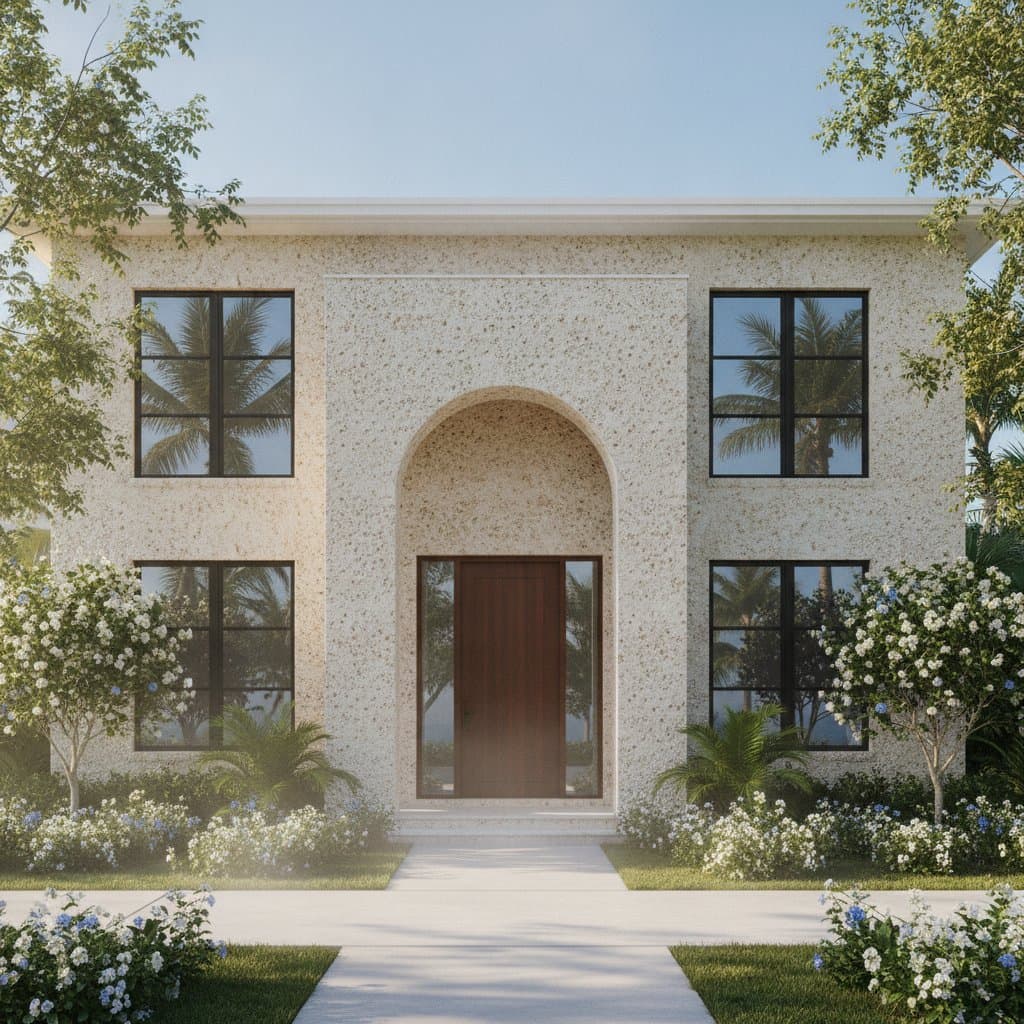
Why Coral Stone Facades Are Florida's Top Choice
Florida homeowners know that the coastal climate demands more from a home exterior. Intense sun, humidity, and salty air require materials that prove both durable and attractive. Coral stone meets these demands consistently.
This guide covers what makes coral stone unique. It addresses performance in coastal settings, costs, maintenance needs, and design options.
Understanding Coral Stone
What Is Coral Stone
Coral stone forms as a natural limestone from ancient coral and marine fossils. It appears in coastal regions with a texture marked by small fossilized shells. The light, porous surface creates a soft look suited to tropical environments.
Each piece varies in color, texture, and fossil patterns because it is a natural product. Common shades include cream, beige, ivory, and soft gold. These tones reflect light and help keep homes cooler.
Why It Suits Florida's Environment
The Florida coast brings warmth, bright light, and salt-laden air. Wood warps, metal rusts, and synthetic siding fades under these conditions. Coral stone performs differently. Its porosity allows moisture to escape rather than remain trapped. This trait reduces damage from humidity and salt.
The stone reflects sunlight instead of absorbing it. Exterior walls stay cooler. Surface temperatures drop. Energy efficiency improves.
Advantages of Coral Stone Facades
Excellent Durability in Coastal Conditions
Coral stone resists weathering from high humidity, salt spray, and strong sunlight. It holds color and texture without chipping or peeling. Proper installation supports decades of service with minimal care.
Low Maintenance Requirements
Coral stone needs little ongoing attention. It requires no painting, staining, or sealing in most cases. Occasional rinsing with fresh water and gentle scrubbing removes salt and dust. Beachfront owners value this simplicity.
Natural Beauty and Timeless Appeal
The fossilized surface connects the home to its coastal setting. Light colors pair with modern or traditional styles. White trim, wood accents, and tropical plants complement the material well.
Sustainable and Eco-Friendly Choice
Responsible suppliers source coral stone from land quarries. This practice protects ocean ecosystems. The material needs no chemical finishes. It supports sustainable building practices.
Adds Value and Prestige
A coral stone facade signals quality. Homes with this material often stand out in coastal neighborhoods. Longevity reduces maintenance expenses and supports resale value.
Design Applications for Coral Stone
Full Facades
A complete coral stone facade suits Mediterranean, Key West, and Caribbean styles. It unifies indoor and outdoor spaces in Florida homes.
Accent Walls and Entryways
Selective use highlights entries or walls. Columns or porch surrounds add texture without dominating the design. These elements balance glass and metal features.
Blending With Other Coastal Materials
Coral stone works with several materials:
- Teak or cedar wood for warmth
- White stucco for bright contrast
- Terracotta tiles for Mediterranean style
- Glass railings for modern appeal
Installing a Coral Stone Facade
Step 1: Selecting the Right Supplier
Choose suppliers that verify sustainable sourcing. Request samples to check color and quality. Ask for installation and maintenance guidelines.
Step 2: Hiring an Experienced Contractor
Select contractors skilled in natural stone work. Verify references, licenses, and insurance. Careful handling prevents damage to the relatively soft stone.
Step 3: Preparing the Surface
Clean and waterproof the wall first. Use cement-based mortar to secure panels. Fill joints with grout for a uniform result.
Step 4: Finishing and Sealing
A breathable sealer adds stain resistance. Discuss this option with the installer based on exposure levels.
Step 5: Inspecting and Maintaining
Check alignment after installation. Inspect for damage after storms. Rinse regularly with a garden hose.
Cost Considerations
Material and Installation Costs
Material costs range from 15 to 30 dollars per square foot. Installation adds 20 to 40 dollars per square foot. Prices depend on thickness, design, and labor. Obtain multiple quotes.
Long-Term Value
Initial costs exceed those of stucco or siding. Reduced repainting and repairs offset the difference over time. Coastal homes retain value with this facade.
Maintaining Coral Stone Facades
Routine Cleaning
Rinse with fresh water to clear salt and dust. Use a soft brush for stubborn spots. Skip harsh chemicals.
Preventing Mold and Mildew
Improve drainage and airflow in shaded areas. A mild detergent solution removes light discoloration.
Sealing and Repairs
Reapply sealer every few years if used. Professionals can repair small chips to match surrounding stone.
Comparing Coral Stone to Other Facade Materials
Coral Stone vs. Stucco
Stucco costs less but needs frequent upkeep. It cracks and peels in salt air. Coral stone maintains appearance with less effort.
Coral Stone vs. Brick
Brick offers durability yet appears uniform and heavy. Coral stone provides a lighter, natural texture suited to bright coastal light.
Coral Stone vs. Manufactured Stone Veneer
Manufactured veneers often fade under ultraviolet exposure. Coral stone retains color through its natural composition.
Frequently Asked Questions
What makes coral stone different from regular limestone
Coral stone contains fossilized coral and shells. These create unique patterns absent in standard limestone. Lighter color also improves heat reflection.
Is coral stone safe for the environment
Land-based quarries make it an environmentally sound option. Minimal processing occurs. Live reefs remain untouched.
How long does a coral stone facade last
Proper installation supports several decades of service. Moisture and salt resistance aid performance near the coast.
Does coral stone require sealing
Sealing remains optional. A breathable product eases cleaning when applied. Installers assess site exposure.
Can coral stone be used indoors
Interior accent walls, fireplaces, and bathrooms benefit from its calm texture.
Will the color of coral stone fade over time
Color mellows slightly with age. Regular cleaning preserves brightness.
Is coral stone slippery when wet
Natural texture provides traction. It suits pool decks and walkways.
Next Steps for Homeowners
Coral stone delivers beauty, durability, and lasting value. Florida residents gain comfort and style through this choice. Trusted suppliers and skilled installers ensure success. Simple care routines protect the investment for years.