
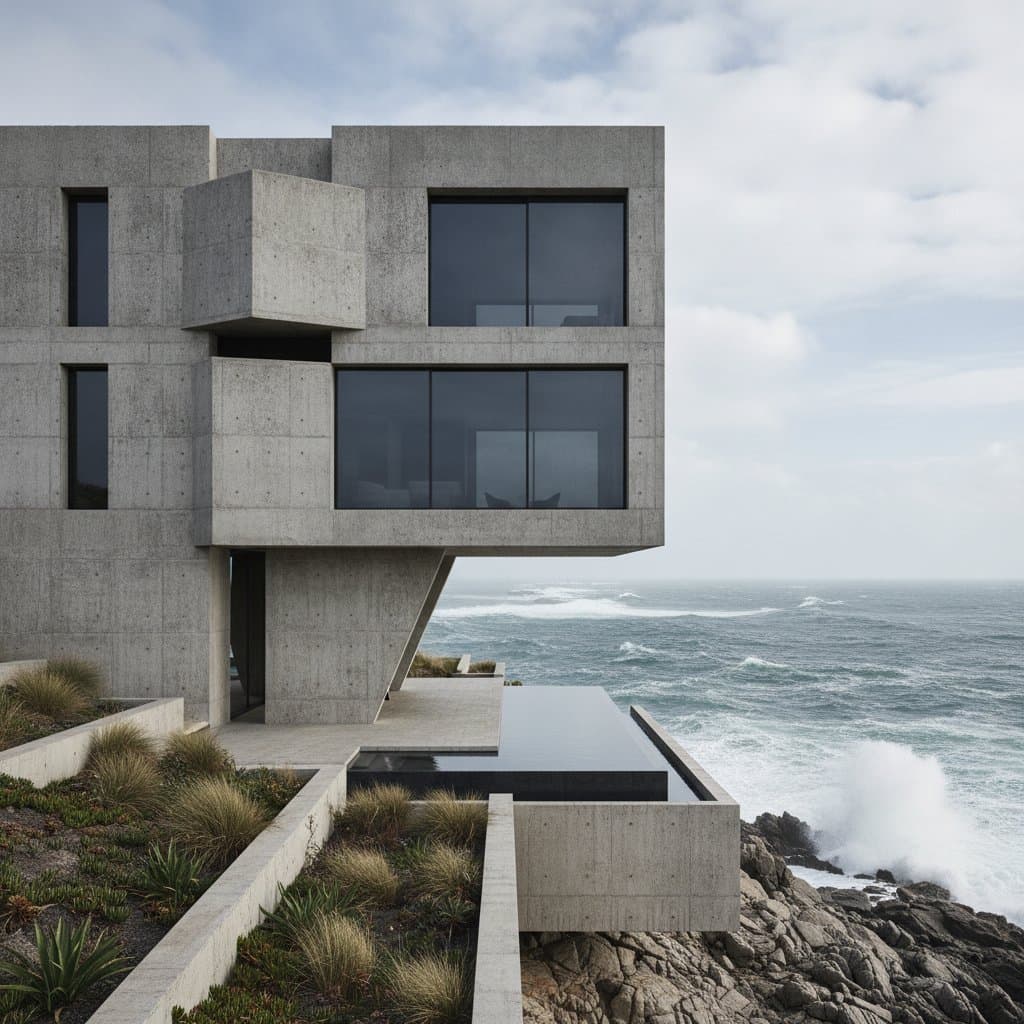
Why Brutalist Concrete Homes Excel on the Coast
Brutalist concrete homes attract fresh interest in coastal design. Their raw texture, solid forms, and durability suit seaside settings where salt, wind, and moisture test most materials. These structures function as resilient living spaces rather than mere statements.
Performance Advantages in Salt Air
Coastal conditions include constant salt spray and high humidity. Concrete resists these factors better than wood or steel because it avoids rapid corrosion when properly sealed. Homeowners gain decades of service with limited upkeep.
Specific Material Benefits
- Salt resistance improves when concrete receives a penetrating sealer every five to seven years.
- Maintenance stays low because unfinished surfaces need only periodic washing.
- Thermal mass moderates indoor temperatures by absorbing daytime heat and releasing it after sunset.
- Thick walls reduce wind pressure on the structure during storms.
Visual Integration with Shoreline Settings
Bold geometry and exposed surfaces define Brutalist style. On the coast these traits create contrast with natural curves while still harmonizing through muted tones. Large glass openings allow light to animate the concrete texture throughout the day.
Core Design Choices
- Exposed concrete reveals aggregate texture and formwork marks.
- Angular volumes echo cliff edges and rock outcrops.
- Open plans and terraces extend living space toward the water.
- A restrained palette of grays and beiges matches sand and sea.
Investment and Lifecycle Costs
Initial construction costs exceed those of wood framing. Long-term savings appear through fewer repairs and lower energy use. The following comparison illustrates typical coastal performance.
| Construction Type | Cost per Square Foot | Maintenance Frequency | Lifespan |
|---|---|---|---|
| Wood Frame | $200 to $300 | Annual inspections and painting | 30 to 50 years |
| Steel Frame | $250 to $400 | Coating renewal every decade | 50 to 70 years |
| Concrete | $300 to $450 | Sealing every five to seven years | 75 years or more |
Energy savings from thermal mass further improve operating economics over time.
Functional Advantages for Daily Living
Concrete construction delivers measurable comfort benefits beyond appearance. Dense walls limit sound transmission from waves and wind. The same mass stabilizes interior temperatures, which reduces heating and cooling loads when combined with adequate insulation.
Moisture resistance also lowers mold risk. Recycled aggregates can be included in the mix, and local sourcing cuts transportation impacts. These features support both resilience and environmental goals.
Practical Design Steps
Successful projects follow several coordinated tactics. Generous glazing offsets the visual weight of concrete. Proper drainage and elevation protect against flooding. Courtyards carved into the plan create sheltered outdoor rooms. Warm secondary materials such as wood or stone soften interior surfaces. Regional sand or stone added to the mix ties the building to its immediate setting.
Answers to Frequent Owner Questions
| Question | Response |
|---|---|
| Does concrete stay comfortable near the ocean? | Thermal mass keeps rooms cooler by day and warmer at night. |
| How much upkeep does the exterior require? | Occasional cleaning and resealing replace frequent painting or metal treatment. |
| Can these homes meet sustainability targets? | Recycled content and passive performance support certification programs. |
| Do interiors feel stark? | Layered lighting, textiles, and wood finishes produce inviting rooms. |
| How do they perform in storms? | Solid walls and low profiles resist wind loads and water intrusion. |
Ownership Experience Over Time
Residents report steady indoor conditions and minimal seasonal adjustments. Textured walls record changing light while the structure remains quiet inside. Attention shifts naturally to the surrounding landscape rather than to ongoing repairs. This combination of durability and calm supports long-term satisfaction for coastal homeowners.