
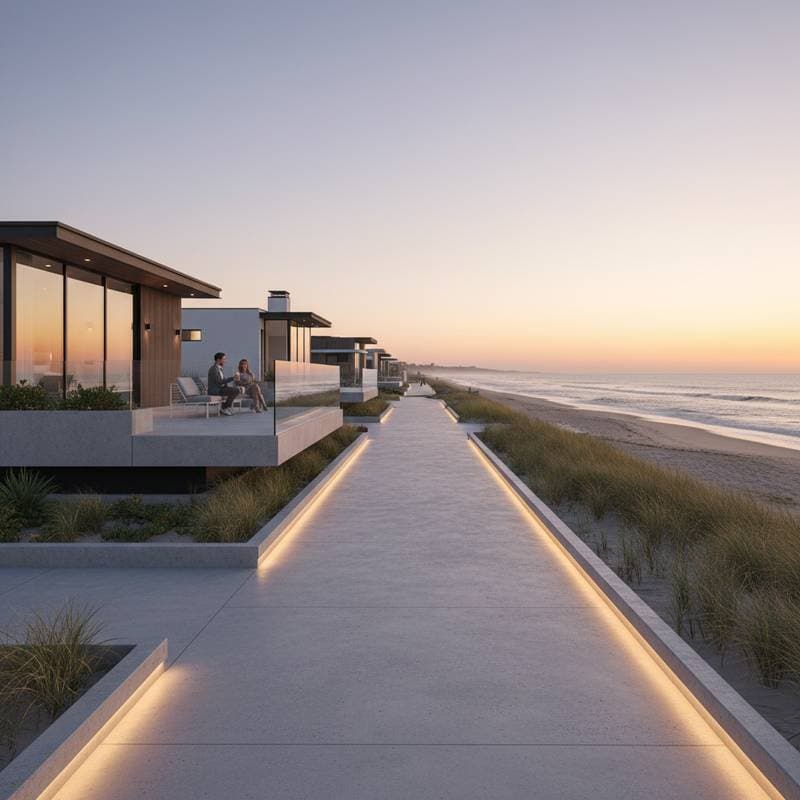
Why Concrete Boardwalks Outperform Wood for Beachfront Properties
Beachfront living centers on embracing the outdoors, capturing coastal vistas, and fostering a deep connection with nature. For numerous homeowners, a boardwalk or deck forms the heart of this experience. While wood and composite decks have long dominated seaside pathways, a notable transition occurs today. Concrete boardwalks emerge as the preferred option in coastal areas, delivering superior durability, reduced upkeep, and a refined appearance that aligns with contemporary beach residences.
This guide details the reasons homeowners select concrete boardwalks over conventional beach decks, examines their resilience in marine settings, and outlines key factors for installation.
Reasons Homeowners Prefer Concrete to Wood or Composite
Concrete boardwalks serve as more than mere utilities; they represent enduring investments in property worth and security. The following sections highlight their key advantages.
Resilience in Marine Conditions
Exposure to salt-laden air, elevated moisture levels, and mobile sands rapidly deteriorates substances such as wood or composite. Concrete, when formulated correctly and protected with sealants, withstands these severe elements with scant intervention. It repels decay, pest infestation, and degradation from saline contact. Such qualities render it essential for waterfront estates where environmental stress persists unrelentingly.
Reduced Upkeep Relative to Conventional Decks
Wooden decks demand consistent applications of stain, sealant, and substitutions for distorted planks. Composite alternatives provide partial ease yet succumb to discoloration or abrasions eventually. In contrast, concrete requires merely periodic washing and reapplication of protective coatings. A straightforward wash using water and a gentle cleanser preserves its pristine condition throughout the seasons. Consequently, owners incur lower ongoing expenses and gain additional leisure for savoring their seaside haven.
Extended Service Life and Robust Construction
A expertly placed concrete boardwalk endures for generations with negligible structural decline. Its firm composition averts irregular subsidence and supports substantial weight from patio furnishings, pedestrian movement, and lightweight conveyances such as golf carts. This attribute ensures practicality and longevity, appealing to those who prioritize dependability in their coastal investments.
Versatility in Design and Visual Charm
Concrete once evoked images of monotonous gray expanses, yet advanced surfacing methods have reshaped this view. Today's concrete boardwalks emulate wooden slats, stone formations, or tiled surfaces, while permitting extensive personalization in hue and grain.
Ornamental Treatments and Imprinted Designs
Imprinted concrete duplicates organic textures with remarkable fidelity, often deceiving observers at first glance. Favored selections encompass driftwood motifs, coastal pebble impressions, or glossy polished exteriors that capture sunlight elegantly. Subdued pigmentation options integrate harmoniously with residential facades or adjacent shorelines.
Tailored Configurations and Arrangements
Concrete pours conform to diverse geometries and landscapes, suiting irregular beachfront terrains. Whether the path meanders amid sand hills or links varied exterior zones, concrete molds effortlessly to the site. This adaptability fosters innovative layouts that amplify rather than overshadow the natural surroundings.
Harmonious Blend with Contemporary Structures
Modern seaside dwellings emphasize streamlined profiles and understated elegance. Concrete enhances this style seamlessly. Its polished expanse promotes fluid transitions between interior and exterior realms, particularly alongside coordinated terrace or swimming area encasements.
Financial and Setup Factors
Although concrete boardwalks may involve greater initial outlay than wood or composite decks, their sustained economies frequently surpass the preliminary investment.
Grasping Setup Expenses
The typical expense for a concrete boardwalk varies by depth, surfacing, and pattern intricacy. Across the nation, rates per square foot span from reasonable for basic poured variants to elevated for embellished or imprinted versions. Obtain several estimates and verify that the specialist possesses expertise in shoreline projects, as saline influences necessitate particular protective applications.
Sustained Worth and Investment Return
The resilience of concrete translates to infrequent fixes and renewals. Property owners recoup expenditures via diminished servicing charges and elevated real estate appeal. Prospective purchasers regard concrete routes as upscale elements indicative of superior craftsmanship and intentional planning.
Essential Building Recommendations
- Engage a certified specialist experienced in nautical or shoreline settings.
- Incorporate rust-proof supports, such as epoxy-coated steel rods.
- Facilitate adequate water runoff to avoid accumulations that accelerate wear.
- Utilize premium sealants formulated for saline and dampness resistance.
These measures safeguard the boardwalk's integrity and allure over extended periods.
Environmental Benefits of Concrete Boardwalks
Concrete frequently escapes notice in ecological dialogues, but contemporary recipes and placement practices elevate its green credentials. Sourcing aggregates nearby and integrating reclaimed substances cuts transport-related emissions, while its protracted usability curtails the need for repeated substitutions relative to timber. The light-reflecting quality also mitigates thermal uptake, rendering exterior areas more temperate.
Positioned atop firm ground with effective drainage conduits, concrete boardwalks integrate gracefully with indigenous marine habitats. They curb land erosion and furnish secure, grippy routes for inhabitants and guests alike.
Common Inquiries
How does a concrete boardwalk differ from a concrete terrace?
A concrete boardwalk functions as a slender, linear corridor linking exterior domains, whereas a terrace constitutes a broader expanse for lounging or leisure. Both employ comparable components but fulfill distinct purposes.
Do concrete boardwalks become hazardous when moist?
Current concrete formulations and treatments incorporate textures for grip. Anti-slip coatings or roughened surfaces mitigate risks, even in damp conditions.
What duration can a beachside concrete boardwalk sustain?
Under optimal placement and protection, a concrete boardwalk persists for multiple decades. Scheduled maintenance and sealant refreshes every few years uphold its vigor and visage.
Is it possible to tint concrete to align with residential exteriors?
Affirmative. Embedded colorants, dyes, and topical shades offer broad selections. These enable coordination or accentuation with the home's color scheme for unified aesthetics.
Steps to Install Your Coastal Pathway
Transitioning to a concrete boardwalk elevates both functionality and enjoyment of beachfront spaces. Consult local experts to tailor the project to your site's unique demands. With thoughtful planning, this durable feature enhances daily living while preserving the timeless allure of seaside existence.