
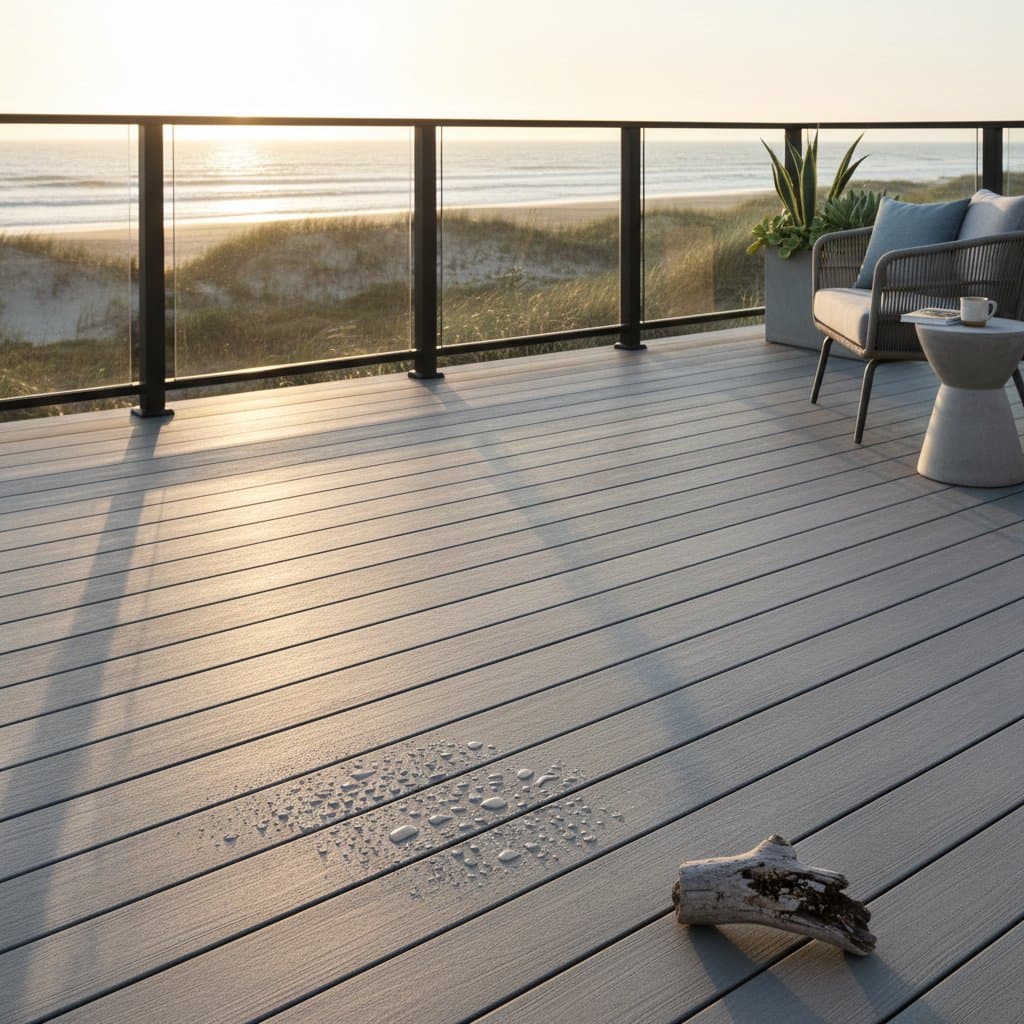
Why Fiber Composite Decking Outlasts Wood in Coastal Areas
Homeowners in coastal regions often face a tough choice when selecting deck materials. The humid air, salt exposure, and intense sun can wear out traditional wood decks quickly. Fiber composite decking has become a preferred alternative because it resists moisture, rot, and fading far better than natural wood. In coastal cities like San Diego, this material provides both durability and style for long lasting outdoor spaces.
What Makes Fiber Composite Decking Different
Fiber composite decking is made from a blend of recycled wood fibers and polymer resins. The result is a dense, nonporous surface that resists water absorption and structural decay. While wood expands and contracts with moisture, composite boards remain stable, reducing the risk of warping or cracking.
Comparison Table: Fiber Composite vs. Wood Decking
| Feature | Fiber Composite Decking | Traditional Wood Decking |
|---|---|---|
| Moisture Resistance | Highly resistant to water and humidity | Prone to swelling and rot |
| Maintenance | Low, occasional cleaning | High, requires staining and sealing |
| Lifespan | 25 years or more with minimal care | 10 to 15 years with regular upkeep |
| Color Retention | UV stable pigments prevent fading | Fades and grays over time |
| Cost Over Time | Lower due to minimal maintenance | Higher due to frequent repairs |
Why Coastal Conditions Challenge Wood Decks
Coastal climates combine moisture, salt, and direct sunlight. These elements cause wood fibers to break down faster than in inland environments. Even pressure treated lumber can warp or splinter after continuous exposure to salty air. Mold and mildew growth are also common, creating slippery surfaces that require frequent cleaning.
Composite decking, by contrast, does not absorb moisture. Its sealed outer shell keeps salt and debris from penetrating the surface. This makes it ideal for decks near the ocean or bay where conditions are harsh year round.
Long Term Value and Maintenance
While fiber composite decking can cost more upfront, its long term value often surpasses wood. Homeowners save on staining, sealing, and board replacements. Cleaning typically involves soap, water, and a gentle scrub, with no need for sanding or refinishing. Many composite boards also come with textured finishes that mimic natural wood grain, giving a high end look without the ongoing effort.
Key Maintenance Advantages
- No annual sealing or painting required
- Resistant to termites and wood boring insects
- Will not splinter, crack, or peel
- Color and texture remain consistent for decades
Eco Friendly and Sustainable Choice
Fiber composite decking uses recycled materials, reducing waste and the demand for virgin lumber. Many brands manufacture boards from reclaimed sawdust and plastic film, creating a low maintenance product with a smaller environmental footprint. For homeowners seeking sustainable upgrades, composite decking matches both performance and eco conscious design goals.
Choosing Deck Materials for Oceanfront Homes
For coastal homeowners, choosing the right decking material means fewer repairs and more time enjoying ocean views. Fiber composite decking provides a reliable solution that stands up to salt, humidity, and sun exposure without losing its beauty. With minimal upkeep and lasting durability, it keeps outdoor spaces looking new for years. Investing in composite materials ensures your coastal deck remains sturdy, safe, and stylish through every season.