
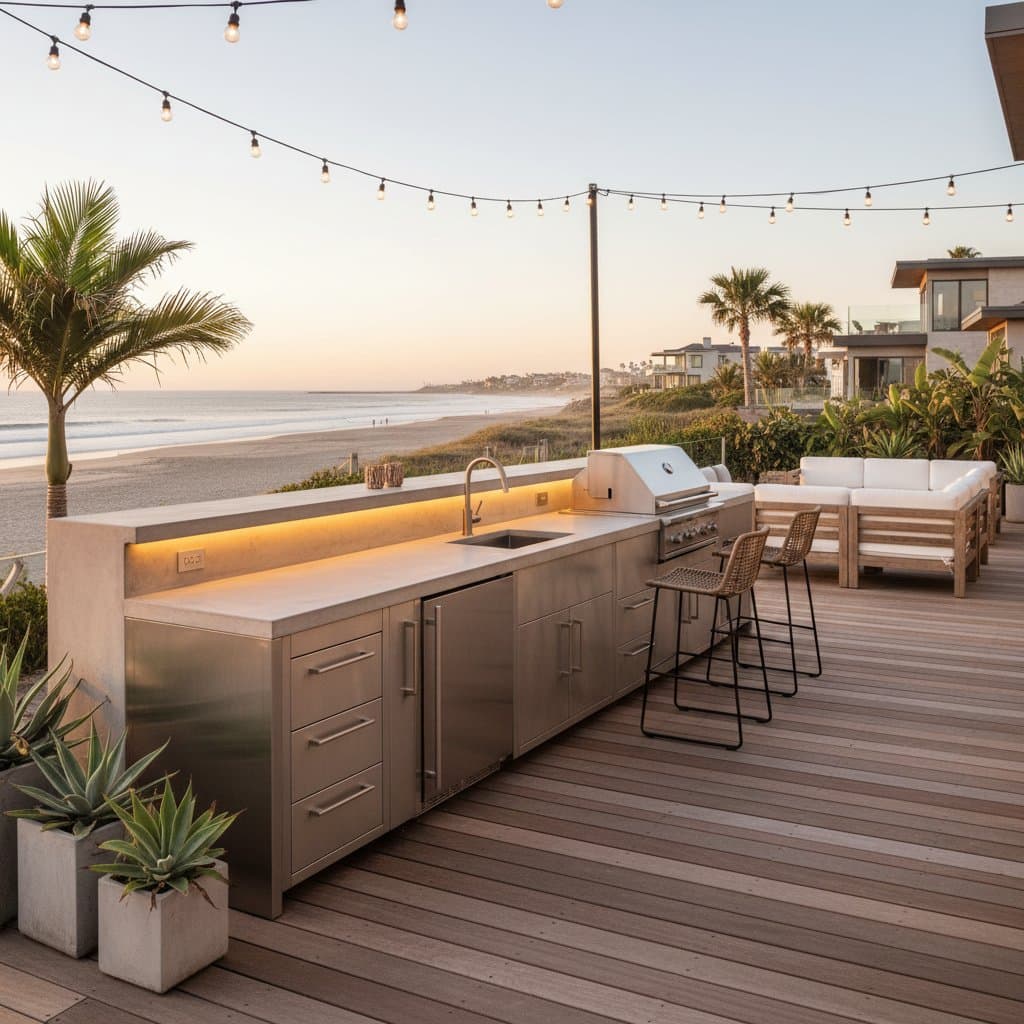
Why Coastal Homes Choose Plug-and-Play Outdoor Kitchens
Coastal homeowners are increasingly turning to plug-and-play outdoor kitchens as the centerpiece of their outdoor living spaces. These modular systems combine convenience, durability, and style. They create fully functional cooking zones without the complexity or long timelines of traditional construction. For properties near the ocean, where salty air and shifting weather can challenge materials, the benefits of pre-engineered outdoor kitchens stand out clearly.
The Appeal of Plug-and-Play Outdoor Kitchens
A plug-and-play outdoor kitchen is a preassembled or modular cooking station that arrives ready to install. It typically includes built-in components such as grills, refrigeration, sinks, and storage. All elements connect easily to existing utilities. The main appeal lies in its simplicity. Homeowners can enjoy a complete outdoor kitchen in days rather than months, with far less disruption and fewer permitting complications.
These kitchens suit coastal living particularly well. Building conditions in these areas can slow traditional construction. Salt air corrodes metal, moisture affects masonry, and high humidity can shorten the life of natural materials. Plug-and-play systems use corrosion-resistant components and marine-grade finishes that hold up in these conditions. They represent a smart long-term investment.
Average Cost of Plug-and-Play Outdoor Kitchens
The average cost of a plug-and-play outdoor kitchen ranges from $6,000 to $15,000. Price depends on size, materials, and included appliances. High-end modular setups with premium finishes and multiple cooking zones can reach $20,000 or more. Compact island models start closer to $4,000.
| Kitchen Type | Typical Size | Estimated Cost Range | Installation Time |
|---|---|---|---|
| Compact Island | 5-6 feet | $4,000 - $7,000 | 1-2 days |
| Mid-Range Modular | 7-10 feet | $8,000 - $12,000 | 2-4 days |
| Premium Setup | 10+ feet | $15,000 - $20,000+ | 3-5 days |
Compared to a custom-built outdoor kitchen that can cost $20,000 to $50,000 and take several weeks to complete, modular options deliver a major time and cost advantage.
Material Choices for Coastal Durability
Material selection is critical near the coast. The right materials resist corrosion and fading. They ensure the investment lasts for years.
| Material | Cost per Linear Foot | Durability | Maintenance |
|---|---|---|---|
| Marine-Grade Stainless Steel | $400 - $600 | Excellent | Low |
| High-Density Polyethylene (HDPE) | $300 - $450 | Very Good | Very Low |
| Powder-Coated Aluminum | $250 - $400 | Good | Low |
| Concrete Composite | $350 - $500 | Excellent | Moderate |
Marine-grade stainless steel remains the top performer for coastal climates due to its rust resistance and sleek look. HDPE cabinets offer another strong choice. They provide a weatherproof solution that resists moisture and UV exposure.
Labor and Installation Costs
Since plug-and-play kitchens arrive preassembled, labor costs stay significantly lower than traditional builds. Homeowners typically spend $500 to $1,500 for professional installation. This covers connections for gas, water, and electricity. Some models support DIY setup. This further reduces expenses when basic handyman skills and existing utility lines are available.
Factors That Influence Total Cost
Several factors determine the final price.
- Appliance upgrades such as smokers or dual-fuel grills
- Utility access, especially if new plumbing or gas lines are needed
- Countertop materials like granite or solid surface composites
- Lighting and accessories including outdoor-rated fixtures and seating
- Delivery and site preparation, particularly for uneven coastal terrain
How to Save Money on Your Outdoor Kitchen
- Choose modular units that can expand later rather than a full custom build now.
- Use existing utility connections to avoid trenching or new gas lines.
- Opt for prefabricated countertops instead of natural stone.
- Install appliances yourself if they use standard electrical outlets.
- Select weather-resistant materials to minimize future replacement costs.
Frequently Asked Questions About Plug-and-Play Outdoor Kitchens
Do I need a permit for a modular outdoor kitchen?
Permits are typically required only if new utility lines are installed. If the system connects to existing outlets and uses portable components, a permit may not be necessary.
How long does installation take?
Most plug-and-play kitchens become fully functional within two to five days. The exact time depends on complexity and site preparation.
What materials hold up best near saltwater?
Marine-grade stainless steel, HDPE cabinetry, and composite countertops rank as top choices for corrosion resistance and low maintenance.
Can modular kitchens be customized?
Yes. Many manufacturers offer interchangeable modules. This allows additions such as storage, bar seating, or refrigeration at a later date.
How do I maintain my outdoor kitchen?
Rinse surfaces with fresh water monthly. Apply protective coatings to metal. Use covers when not in use to extend lifespan.
Planning Your Coastal Outdoor Kitchen
Start by assessing available space and existing utilities. Select materials proven for salt air exposure. Add modules gradually to match your cooking needs and budget. This approach delivers a durable, functional space that enhances seaside living for years.