
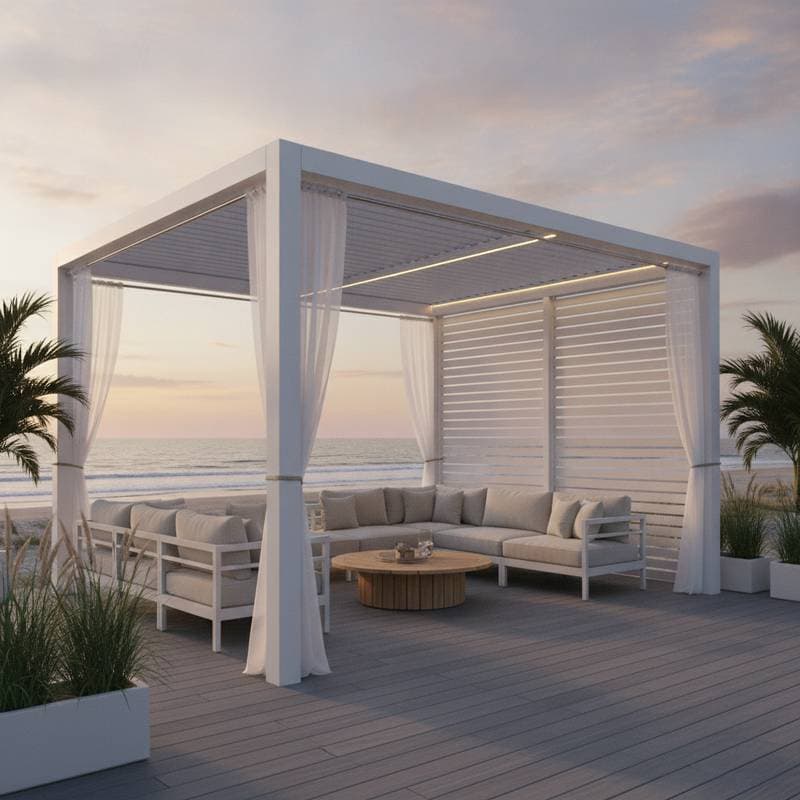
9 Reasons Snap-Together Pavilions Suit Coastal Homes
Living by the coast means enjoying sunshine, ocean breezes, and relaxed outdoor living. Coastal conditions like salty air, wind, and humidity can make outdoor structures challenging to maintain. Snap-together pavilions address these issues with modular designs that assemble quickly and resist corrosion.
These structures combine the appeal of a permanent pavilion with the flexibility of a kit. Homeowners can install them without extended construction timelines. The following sections explain how these pavilions perform in seaside environments and support daily use.
[Image: Coastal home backyard with a modern snap-together pavilion overlooking the ocean]
Weather-Ready Design
1. Built to Handle Salt, Wind, and Moisture
Salt in the air corrodes metal while humidity warps wood and weakens fasteners. Snap-together pavilions use powder-coated aluminum, galvanized steel, or composite materials that resist rust and decay. The modular pieces lock tightly together and reduce gaps where moisture collects.
Routine cleaning keeps surfaces in good condition over time. Rinse the structure with fresh water once a month to remove salt residue.
[Image: Close-up of rust-resistant aluminum pavilion components]
2. Engineered for Coastal Winds
Strong gusts test the stability of any outdoor structure. Quality kits include reinforced beams, interlocking joints, and anchoring systems. Select models that provide ground anchors, heavy-duty connectors, and aerodynamic roof panels.
These elements keep the pavilion secure while preserving an open appearance that suits ocean views.
3. UV-Resistant Roofing and Materials
Constant sun exposure fades colors and weakens surfaces. Reliable pavilions apply UV-resistant coatings to frames and roof panels. Polycarbonate or treated metal roofs block glare yet admit natural light.
Light-colored roof finishes reflect heat and maintain cooler temperatures beneath the structure.
Effortless Installation and Flexibility
4. Quick Assembly Without Heavy Construction
Traditional pavilions require permits, professional crews, and long build times. Snap-together kits arrive with pre-cut and labeled parts. Most models assemble in a weekend using basic tools and the supplied instructions.
The process requires no specialized skills and limits disruption to the property.
[Image: Homeowners assembling a modular pavilion in their coastal backyard]
5. Portable and Reconfigurable Design
Modular construction allows the pavilion to be disassembled and moved if plans change. Extensions and accessories such as side curtains, lighting kits, and adjustable louvers expand options over time.
Owners can adapt the space from an open lounge to a semi-enclosed dining area as needs evolve.
6. Cost-Effective Luxury
Custom-built pavilions often exceed several thousand dollars before labor costs. Prefabricated kits range from one thousand to five thousand dollars depending on size and materials. Finishes include wood-look aluminum, modern metal, and bamboo-inspired surfaces.
A stable base of pavers or concrete improves longevity and reduces shifting.
Stylish Coastal Aesthetics
7. Designs That Complement the Coast
Coastal architecture favors light colors and open layouts. Snap-together pavilions appear in white, sand, and driftwood gray. Slatted roofs and tapering posts add visual interest without overpowering the setting.
[Image: Modern white pavilion beside a pool with coastal landscaping]
8. Expanding Outdoor Living Space
A pavilion defines an outdoor room that functions as a shaded dining area, lounge, or reading nook. Proper lighting and weather-resistant furnishings support use throughout the year.
The added space increases daily enjoyment of the property.
9. Enhancing Property Appeal
Durable outdoor structures attract buyers who value low maintenance. A well-placed pavilion adds architectural balance and practical amenities. Native plants such as succulents and grasses soften the edges and reinforce the coastal setting.
Extra Tips for Coastal Pavilion Care
Simple habits preserve appearance and strength. Clean metal parts with mild soap and water on a regular schedule. Inspect fasteners twice each year and tighten as required. Keep vegetation trimmed near the base to limit moisture accumulation.
Frequently Asked Questions
How long do snap-together pavilions last near the coast?
Proper care allows many units to remain serviceable for more than ten years. Aluminum and composite panels resist corrosion better than untreated wood.
Do I need a permit for a modular pavilion?
Local regulations vary. Confirm requirements with the city or homeowners association before installation.
Can I assemble a pavilion myself?
Most kits support DIY assembly with standard tools. Larger models benefit from an additional helper during anchoring.
Are these structures safe in high winds?
Correct anchoring enables pavilions to handle typical coastal conditions. Follow all manufacturer guidelines for the chosen model.
What is the best base for a pavilion near the ocean?
A concrete pad or stone paver base supplies stability and promotes drainage.
Creating Your Ideal Outdoor Retreat
A snap-together pavilion delivers shade, durability, and adaptability suited to coastal conditions. It extends living space without permanent construction and maintains its appearance with basic care. Homeowners gain a functional area for meals, relaxation, and gatherings that integrates naturally with the surrounding environment.