
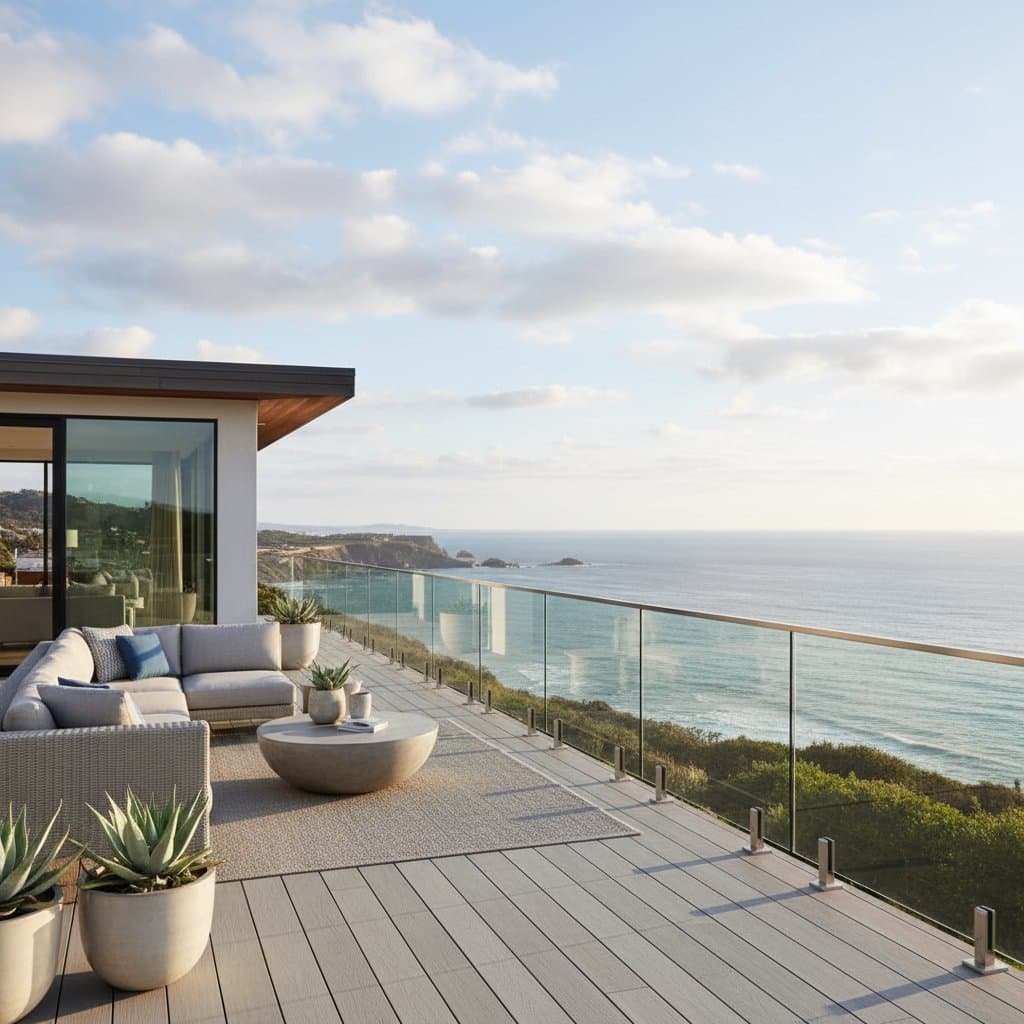
Why Coastal Decks Ditch Wood for Glass in 2026
Imagine standing on your deck as the sun dips below the horizon. The ocean stretches endlessly before you. A salty breeze brushes your face, and the view remains unbroken and crystal clear through sleek glass railings. Many homeowners along the coast now seek this experience: a deck that captures the view without constant upkeep. Wood, once the standard for seaside decks, loses ground to glass as the modern favorite.
This article explores why coastal decks trade wood for glass. It covers costs, installation methods, and decision-making factors. Readers gain insights on durability, safety, maintenance, and design options. The average cost for glass deck railings ranges from $250 to $600 per linear foot, depending on style and installation method. For a professional approach, obtain quotes from top-rated contractors to compare pricing and ensure code compliance.
In this article
- Cost factors
- Types and options
- DIY versus professional installation
- Key factors to consider
- Ways to save
- Maintenance and longevity
- FAQs
- Steps to upgrade your deck
Cost factors
Glass deck railings represent an investment in beauty and longevity. Homeowners typically spend $15,000 to $30,000 for a complete installation on a mid-sized coastal deck. The primary cost drivers include the following elements.
Glass type and thickness
Tempered glass panels cost between $150 and $300 per linear foot. Laminated or tinted options reach $400 or more. Thicker glass provides added strength and wind resistance, essential for oceanfront properties.
Framing and hardware
Frameless systems with hidden clamps or embedded channels cost more than post-mounted styles. Stainless steel or aluminum supports range from $50 to $150 per linear foot, based on finish quality and corrosion resistance.
Labor and permits
Professional installation runs $75 to $150 per hour. Coastal cities often require permits for structural changes, adding $200 to $800 to the total.
Site conditions
Uneven ground, multiple deck levels, or high wind exposure demand reinforced posts or specialty anchors. Such conditions increase expenses by 10 to 20 percent.
Although glass railings cost more upfront than wood or cable alternatives, they offer long-term savings through minimal maintenance and no need for repainting or sealing.
Types and options
Glass deck railings appear in several styles, each with distinct benefits. Selection depends on the desired view, budget, and maintenance preferences.
Frameless glass railings
Frameless systems employ thick tempered glass panels secured at the base with hidden channels or clamps. This design delivers a clean, uninterrupted view that extends the deck toward the horizon.
Best for: Panoramic coastal views and modern architecture.
Pros: Maximum visibility, sleek style, corrosion resistance.
Cons: Higher cost, heavier panels that require professional installation.
Photo: Douglas Rissing / Getty Images
Post-mounted glass railings
This option pairs glass panels with visible posts of stainless steel or aluminum. It balances transparency and structure for enhanced aesthetics and stability.
Best for: Properties with strong coastal winds or multi-level decks.
Pros: Simpler installation, lower cost, customizable panel spacing.
Cons: Posts interrupt the view slightly, more visible hardware.
Photo: John Keeble / Getty Images
Framed glass systems
Framed railings hold glass panels within full metal frames. They provide traditional safety with a contemporary edge, suitable for defined boundaries and consistent design.
Best for: Family decks or rental properties requiring added security.
Pros: Strong and secure, easier to clean, lower replacement costs.
Cons: Reduced visibility, potential for faster salt residue accumulation.
Photo: Avalon_Studio / Getty Images
DIY versus professional installation
Installing glass railings appears straightforward, yet coastal conditions demand precision. DIY suits small sections or balcony updates, but large decks benefit from expert involvement.
DIY feasibility: Moderate to difficult. Accurate measurements, glass-handling tools, and local code knowledge prove necessary. Improper work risks safety issues or expensive fixes.
Professional installation: Ideal for full decks or coastal wind zones. Experts handle building codes, load requirements, and sealing to combat salt corrosion.
Timeframe:
- DIY: Two to four weekends, based on deck size.
- Professional: Two to five days, including inspection and cleanup.
Tip: Verify that glass meets safety standards, such as tempered or laminated certification, particularly for elevated decks.
Key factors to consider
Maintenance requirements
Glass railings require low maintenance, though not zero effort. Coastal air deposits salt spots, so rinse panels every few weeks with mild detergent and fresh water. For stubborn buildup, apply vinegar or a glass-safe cleaner. Steer clear of abrasive pads to prevent surface scratches.
Safety and durability
Tempered glass withstands strong winds and impacts. Upon breakage, it shatters into small, blunt pieces rather than sharp shards. Laminated glass enhances safety in high-traffic areas, as a plastic film retains fragments.
Climate and corrosion
Saltwater rapidly deteriorates wood and metal, but glass resists corrosion effectively. Pair it with stainless steel fasteners and powder-coated aluminum posts for extended durability. Select marine-grade materials to ensure performance over time.
Style and home value
Glass railings modernize properties instantly. They permit natural light to flow freely and visually expand outdoor spaces. Coastal buyers view this upgrade as a sign of quality craftsmanship, potentially increasing resale value.
Ways to save
Glass deck railings involve significant expense, yet strategic choices control costs. Implement these approaches to optimize your budget.
-
Combine materials
Install glass panels only on view-facing sides. Use cable or composite railings elsewhere to maintain openness without full perimeter costs. -
Select semi-frameless systems
These feature minimal posts and thinner glass, reducing material and labor expenses by 15 to 25 percent. -
Schedule offseason work
Contractors often reduce rates during cooler months with lower demand. Savings of 5 to 10 percent become possible by avoiding peak season. -
Reuse existing deck framing
If the current structure remains sound, mount glass panels on the base to eliminate demolition and rebuilding fees. -
Maintain regularly
Address salt buildup and corrosion promptly to prevent future replacement costs.
Maintenance and longevity
A properly installed glass deck railing endures 25 to 50 years with routine care. Regular rinsing and periodic fastener tightening maintain security. Annual gasket inspections ensure seals protect against moisture and wind.
Refrain from harsh chemicals that cloud glass or corrode metal components. In areas near breaking surf, apply a hydrophobic coating to repel saltwater and simplify cleaning.
FAQs
What advantages does glass offer over wood for coastal decks?
Wood warps and fades from constant salt exposure, whereas glass retains clarity and form. No staining or sealing proves necessary, and it manages wind and moisture without decay.
Do glass railings become hot in sunlight?
Glass does not retain heat like metal. It may feel warm but stays comfortable to the touch under direct sun.
Are glass railings safe for children and pets?
Yes, tempered or laminated glass adheres to strict safety standards. Solid panels eliminate gaps that could allow children or pets to slip through.
Is installation possible on an existing wood deck?
Yes, provided the structure proves stable and supports the weight. Reinforce posts or joists as needed for heavier systems.
How frequently should ocean-side glass railings receive cleaning?
Rinse every two to three weeks to clear salt spray. Perform a thorough cleaning monthly to keep panels pristine and preserve hardware.
Steps to upgrade your deck
Transitioning from wood to glass on a coastal deck transcends mere design. It enhances lifestyle by prioritizing views and easing upkeep.
Evaluate your deck's condition first. Review local building codes next. Then, gather quotes from licensed installers. For those seeking an uninterrupted ocean vista and relief from sanding or staining, glass railings provide elegance and resilience.