
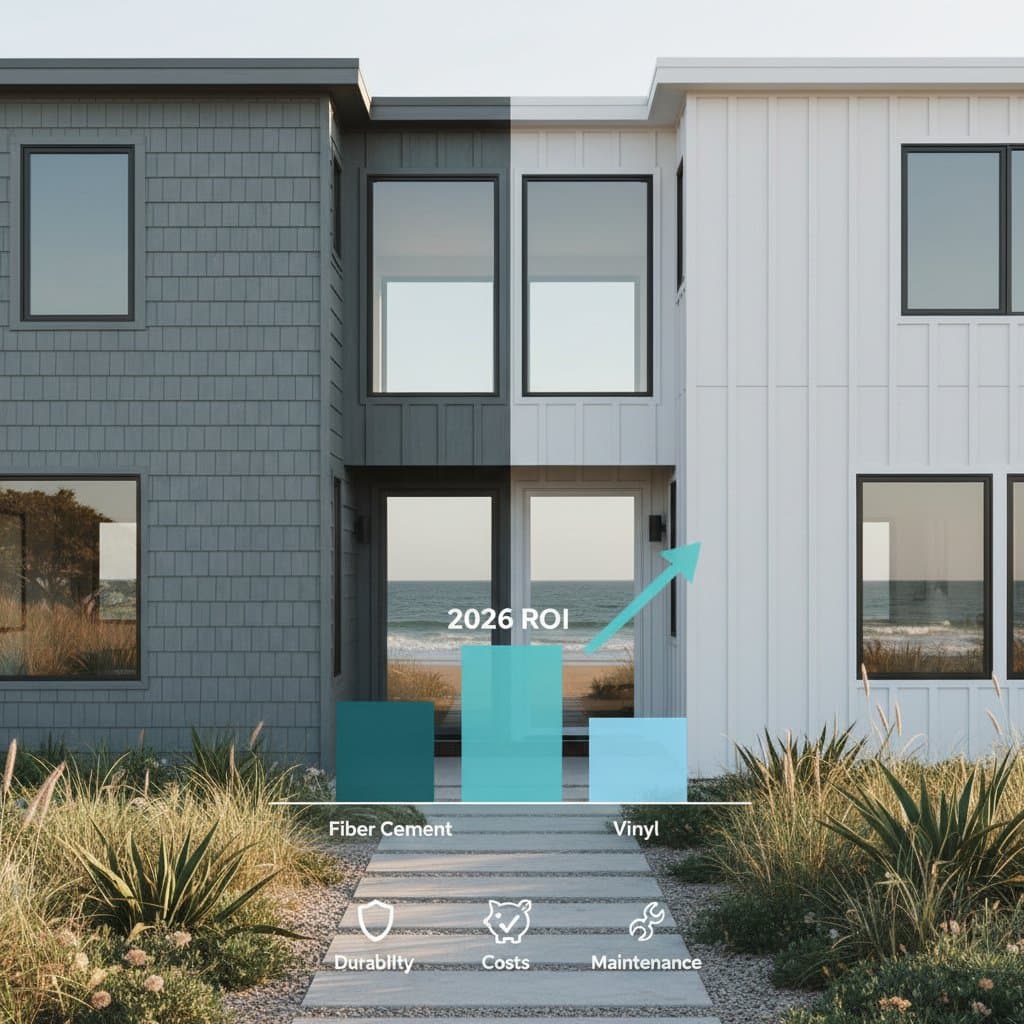
Fiber Cement vs. Vinyl: Coastal ROI Forecast to 2026
Coastal homeowners face unique challenges from salt air, intense sunlight, and persistent moisture. These elements test the resilience of exterior siding, which serves as the primary barrier against environmental wear. Selecting between fiber cement and vinyl siding affects not only aesthetic appeal but also the property's enduring financial value, particularly in renovations for beachfront residences or seaside rentals.
This analysis examines projected return on investment (ROI) for both materials in coastal settings through 2026. It covers cost estimates, performance comparisons, maintenance requirements, and professional installation advice. Fiber cement siding emerges as the superior choice for sustained ROI in harsh coastal conditions, whereas vinyl offers affordability and rapid deployment.
For expert installation, obtain estimates from qualified contractors experienced in coastal projects.
Cost Considerations
Siding replacement expenses fluctuate based on property dimensions, architectural features, and regional labor charges, yet material selection drives the primary variance.
Fiber cement siding installation ranges from $7,500 to $20,000 for typical coastal properties, with an average of $12,500. This figure encompasses materials, labor, and surface treatments. Options such as textured profiles or custom accents elevate the total.
Vinyl siding costs between $5,000 and $14,000, averaging $8,000 for complete exterior coverage. Its lightweight construction and interlocking design facilitate efficient, cost-effective application.
Several elements impact the overall expenditure:
- Material Quality: Opt for thicker vinyl sheets or high-density fiber cement planks to enhance durability, though at added expense.
- Labor Demands: Fiber cement necessitates specialized cutting tools and joint sealing, extending installation time.
- Environmental Exposure: Oceanfront locations demand supplementary vapor barriers and rust-proof hardware.
- Finishing Options: Fiber cement requires on-site painting after priming, unlike pre-colored vinyl.
- Regulatory Fees: Siding projects typically incur permit costs of $150 to $400.
- Property Specifics: Multi-level structures or intricate detailing amplify labor and equipment needs.
In coastal markets, fiber cement siding achieves 65 to 80 percent ROI, surpassing vinyl's 55 to 70 percent. The material's resistance to salt corrosion preserves visual integrity, safeguarding investment returns in humid, saline environments.
Vinyl Siding Overview
Vinyl siding consists of polyvinyl chloride (PVC) resin, offered in diverse hues and profiles like horizontal lap, shingle, or vertical board styles.
Ideal For: Property owners seeking economical solutions, reduced upkeep, and swift completion.
Advantages:
- Affordable pricing and simple care routines
- UV-stabilized coatings suitable for sun-drenched coastal areas
- Straightforward cleaning using gentle soap solutions
- Potential overlay on prior siding to cut preparation work
Disadvantages:
- Susceptibility to fractures under extreme temperatures or gusts
- Post-installation color alterations prove challenging
- Risk of deformation or staining in salt-saturated atmospheres without adequate airflow
Image Credit: Susan Vineyard / Getty Images
Key Influences on ROI
Several aspects determine the financial outcomes of siding choices in coastal zones.
- Longevity: Fiber cement withstands saline conditions effectively, backed by warranties reaching 50 years. Vinyl endures 20 to 40 years, contingent on grade and site factors.
- Market Attractiveness: Coastal purchasers favor fiber cement's authentic texture, particularly in upscale districts.
- Thermal Performance: Pair either with foam insulation; fiber cement's mass aids in moderating interior climates more effectively.
- Upkeep Requirements: Vinyl demands occasional rinsing, while fiber cement benefits from periodic recoating. Diligent care sustains value for both.
- Risk Mitigation: Fiber cement's non-combustible nature may reduce insurance rates in fire-prone coastal areas.
Fiber cement preserves exterior allure and market worth superiorly over decades, justifying initial outlays through enhanced resilience.
Essential Maintenance for Coastal Siding
Proactive care counters the corrosive effects of salt, dampness, and ultraviolet rays on both materials.
Fiber Cement Care:
- Flush surfaces biannually with a hose to clear salt deposits and debris.
- Examine sealant lines yearly; reapply to seal potential entry points.
- Refresh paint upon signs of dullness or powdering to uphold weatherproofing.
Vinyl Care:
- Scrub quarterly with a soft-bristle brush and diluted cleaner.
- Secure any displaced sections following severe weather events.
- Steer clear of high-pressure cleaning methods that might drive moisture underneath.
Consistent attention ensures aesthetic vitality, structural soundness, and optimal ROI preservation.
Coastal Regional Insights
Areas like San Diego contend with elevated humidity, temperature swings, and unrelenting solar radiation. Such dynamics underscore fiber cement's advantages, as its solid makeup minimizes swelling or shrinking that leads to seams or distortions.
Vinyl thrives in setups with robust ventilation and protective sheathing. For properties exposed to sea spray or proximate to shorelines, select fortified or backed variants to mitigate corrosive impacts.
Adhere to local ordinances, which might mandate specific wind tolerances or damp-proofing standards. Consult municipal authorities prior to commencing work to ensure compliance.
Projected ROI in Coastal Markets to 2026
Drawing from ongoing durability assessments and sales patterns, fiber cement siding projects 65 to 80 percent ROI in seaside locales through 2026. Vinyl holds steady at 55 to 70 percent.
This disparity stems from performance variances rather than aesthetics alone. Coastal buyers prioritize enduring weatherproofing and ease of maintenance, tilting preference toward fiber cement. Properties featuring it frequently command elevated valuations owing to recognized robustness.
Vinyl suits investment holdings or vacation retreats emphasizing prompt execution and light ongoing efforts. Its economical profile enables swift recoupment, despite marginally lower extended yields.
Frequently Asked Questions
How durable is fiber cement siding in coastal settings?
With correct placement and care, it endures 40 to 50 years. Focus on joint integrity and timely repainting to block water penetration.
Does vinyl siding withstand saline environments?
It does, provided routine flushing removes salt residues that foster discoloration or fragility. Premium formulations with stabilizers excel near waterways.
Steps to Select and Install Coastal Siding
Evaluate your priorities: long-term value favors fiber cement, while immediate savings point to vinyl. Measure your home's exposure level and consult certified installers for site-specific recommendations.
Budget for quality materials and professional labor to maximize returns. Schedule inspections post-installation to verify secure adhesion and sealing. These measures secure your coastal property's appeal and financial performance well into 2026 and beyond.