
Solar Shingles Reduce Coastal Energy Bills by 85%
Coastal homeowners face rising energy costs and frequent outages from storms. Solar shingles address these challenges by integrating power generation directly into the roof. These innovative tiles can lower grid reliance by up to 85 percent, providing substantial savings and enhanced reliability.
Solar shingles merge advanced technology with traditional roofing. They generate clean electricity while offering protection against harsh coastal conditions. Homeowners gain both aesthetic appeal and financial benefits from this dual-purpose solution.
Key Advantages
- Solar shingles serve as both roofing material and electricity producer.
- They reduce grid dependence by up to 85 percent in coastal settings.
- Designs integrate smoothly with various architectural styles.
- Materials withstand wind, salt exposure, and moisture effectively.
- Available incentives offset initial installation expenses.
Coastal properties benefit from the resilience and efficiency of solar shingles. These systems support energy independence without compromising visual harmony.
Understanding Solar Shingles
Solar shingles, or photovoltaic roof tiles, combine protective roofing with solar energy capture. Embedded solar cells in each tile absorb sunlight and convert it into usable electricity for the home.
These shingles install as part of the roof structure, unlike add-on panels. They resemble conventional asphalt or composite tiles, ensuring a uniform appearance. Power production occurs seamlessly whenever sunlight is available.
Primary Benefits
- Visual Integration: Shingles preserve the roof's sleek profile without visible protrusions.
- Multifunctional Design: They shield the home while producing energy.
- Robust Construction: Select models resist corrosion from salt air and withstand high winds.
- High Output: Systems offset a significant portion of household electricity needs.
Photo: A coastal residence featuring a dark, integrated roof surface that captures sunlight effectively.
Reducing Grid Reliance in Coastal Areas
Coastal regions experience variable energy prices and disruptions from weather events. Solar shingles mitigate these issues by enabling homes to produce most of their power on-site. Homeowners can meet up to 85 percent of annual energy requirements through this approach.
Operational Mechanism
- Sunlight Conversion: Tiles absorb solar energy and transform it into direct current electricity.
- Energy Storage: Surplus power charges home batteries for use during low-light periods.
- Performance Tracking: Integrated software monitors consumption and adjusts output for optimal results.
This setup ensures continuous power availability, even during grid failures. Coastal locations with abundant sunlight maximize the effectiveness of these systems.
Investment Costs and Financial Returns
Installation costs for solar shingles vary based on roof dimensions, system capacity, and manufacturer. A standard home installation ranges from $20,000 to $45,000. Federal tax credits, state rebates, and utility programs reduce the net expense considerably.
| Project Scale | Cost Range | Energy Coverage | Return Timeline |
|---|---|---|---|
| Small (under 1,000 sq. ft.) | $18,000 - $25,000 | 60% - 70% | 10 - 12 years |
| Medium (1,000 - 2,500 sq. ft.) | $25,000 - $38,000 | 70% - 85% | 8 - 10 years |
| Large (over 2,500 sq. ft.) | $38,000 - $45,000+ | 80% - 90% | 7 - 9 years |
Practical Advice: Allocate 15 percent of the budget for potential electrical system upgrades, particularly in homes with outdated wiring.
Savings accumulate through lower utility payments over time. Many owners see their energy expenses decrease by more than half within the first year.
Solar Shingles Compared to Traditional Panels
| Aspect | Solar Shingles | Solar Panels |
|---|---|---|
| Visual Design | Integrated and unobtrusive | Elevated and prominent |
| Setup Method | Replaces existing roof | Added to current surface |
| Weather Resistance | Built-in protection against coastal elements | Often needs additional safeguards |
| Upkeep Needs | Low | Regular cleaning and checks |
| Initial Expense | Elevated | More affordable |
| Durability Span | 25 - 30 years | 25 - 30 years |
In marine environments, solar shingles excel due to their corrosion resistance and streamlined installation. They enhance property value while enduring local climate demands.
Photo: Detailed view of solar shingles installed alongside standard tiles, reflecting light uniformly.
Step-by-Step Installation Guide
Professional installation of solar shingles involves precise planning and execution. The process ensures compatibility with the home's structure and energy requirements.
- Initial Assessment: Experts examine roof pitch, orientation, and condition to design the system.
- Product Choice: Select tiles that align with desired aesthetics and efficiency targets.
- Infrastructure Preparation: Set up inverters, wiring, and battery storage if included.
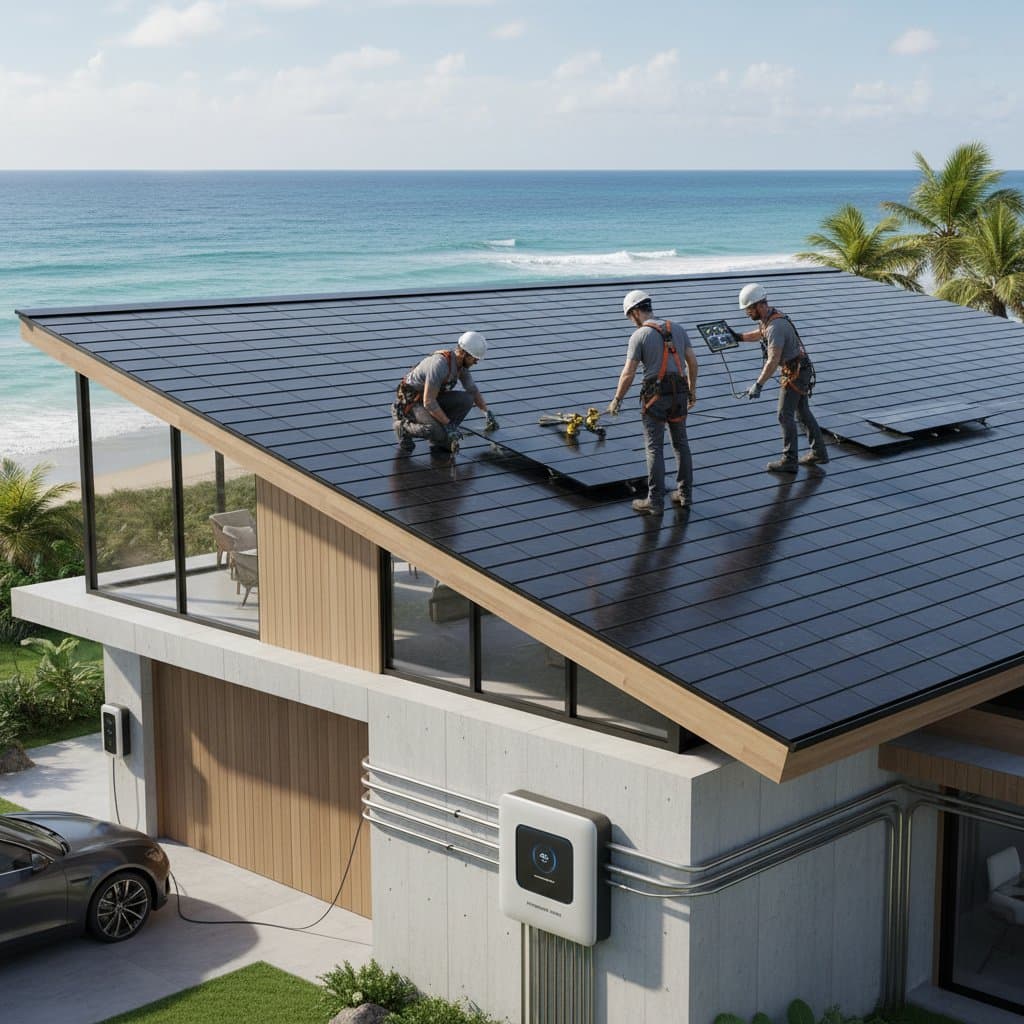
- Tile Placement: Remove old roofing and secure new solar tiles in an interlocking pattern.
- Final Testing: Verify connections and activate the system for immediate operation.
Completion typically requires three to five days, influenced by roof size and conditions.
Photo: Professional securing solar shingles on a seaside home during installation.
Upkeep and Expected Lifespan
Solar shingles demand minimal maintenance to sustain performance. Periodic rinsing removes accumulated salt or debris, and annual inspections by specialists prevent issues.
These tiles endure for 25 to 30 years, comparable to high-quality roofing. Regular care extends their service life and maintains energy output.
Practical Advice: Maintain clearance around the roof by pruning overhanging branches to avoid shading.
Broader Impacts on Environment and Daily Life
Solar shingles lower reliance on grid power by up to 85 percent, decreasing dependence on fossil fuels. This shift supports cleaner air and reduced emissions in coastal ecosystems.
Homes equipped with these systems remain operational during power interruptions, providing security amid storms. Owners enjoy uninterrupted routines, from lighting to appliances, enhancing overall comfort.
Common Questions Addressed
What level of sunlight is required?
Coastal areas generally provide sufficient daily sunlight for effective operation. Optimal results occur on south-facing roofs, though east or west orientations still deliver reliable performance.
Are they suitable for older homes?
Installation is feasible, provided the roof structure supports the weight. Conduct a structural review to identify any necessary reinforcements.
Will utility bills disappear entirely?
Bills persist at reduced levels for grid backup access. Net metering credits often further minimize costs based on excess energy produced.
Achieving Reliable Home Power
Solar shingles empower coastal residents with sustainable energy solutions. They deliver long-term financial relief and operational independence. Consider consulting local experts to explore options tailored to your property.