
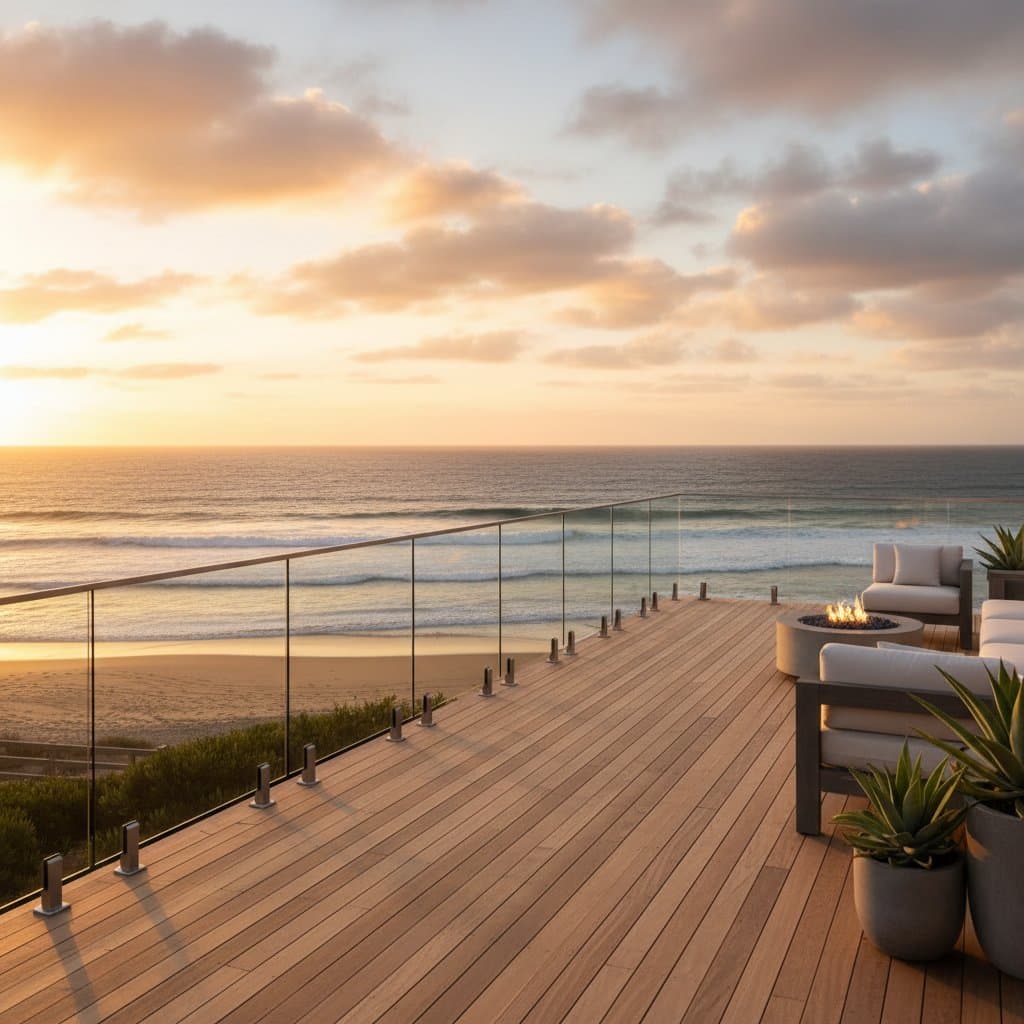
Why Coastal Decks Are Switching to Glass Railings in 2025
Coastal homeowners increasingly favor glass railings over traditional wood or metal options for oceanfront decks. These railings maintain clear sightlines to the sea, withstand harsh marine conditions, and deliver a contemporary look that enhances any seaside property. For those considering a deck renovation or new construction, evaluating the expenses, upkeep, and visual advantages of glass railings ensures a worthwhile upgrade.
Average Cost of Glass Deck Railings
The average cost of glass deck railings falls between $180 and $320 per linear foot, with a national midpoint of $250 per linear foot that includes professional installation. Frameless designs command premium prices due to their seamless appearance, whereas framed or post-supported versions offer more budget-friendly alternatives. A standard 200-square-foot coastal deck might need 60 linear feet of railing, resulting in total expenses from $10,800 to $19,200 for materials and labor.
Cost Breakdown by System Type
| Railing Type | Average Cost per Linear Foot | Description |
|---|---|---|
| Framed Glass | $180 - $240 | Relies on aluminum or stainless steel posts for straightforward installation |
| Semi-Frameless | $220 - $270 | Features few vertical supports for a streamlined profile |
| Frameless Glass | $280 - $320 | Eliminates visible posts to provide seamless vistas |
Labor and Installation Costs
Labor typically comprises 25 to 40 percent of the overall project budget. Experienced installers charge $50 to $120 per linear foot, influenced by factors such as glass thickness, mounting method, and project intricacy. Frameless setups demand exact alignment and custom fittings, which extend installation duration and elevate expenses. If the existing deck requires structural upgrades to bear the glass panels' weight, add $500 to $1,500 for reinforcements.
Factors That Influence Total Cost
Multiple elements shape the final investment in glass railings. Opt for tempered or laminated glass to boost durability and safety, though it raises material costs. Select aluminum framing for economy or stainless steel for superior resistance to salty coastal air. Surface mounting simplifies the process compared to side or fascia attachments, potentially lowering fees. Higher decks or irregular shapes complicate the work, while coastal permits and inspections may mandate certified components, adding to the tally.
Why Glass Railings Dominate Coastal Deck Trends
Wood and metal railings succumb rapidly to salt-laden air, humidity, and intense sunlight, leading to frequent repairs or replacements. Glass railings endure these challenges with ease, demanding little beyond routine wiping. They elevate living spaces by framing ocean panoramas without interruption, resist environmental wear, and integrate seamlessly with modern or traditional coastal architecture. Additionally, they shield against winds while preserving an open feel, and their upkeep involves simple cleaning rather than ongoing treatments.
Comparative Durability
| Material | Lifespan | Maintenance | Coastal Suitability |
|---|---|---|---|
| Wood | 10 - 15 years | High | Poor |
| Aluminum | 20 - 25 years | Moderate | Good |
| Stainless Steel | 25+ years | Moderate | Excellent |
| Glass | 25+ years | Low | Excellent |
Strategies to Reduce Costs on Glass Railings
Glass railings represent a high-end selection, yet targeted choices can temper the financial impact. Select framed or semi-frameless configurations to avoid the expense of full frameless systems. Adhere to minimum heights of 36 inches where building codes permit, rather than exceeding to 42 inches. Incorporate hybrid elements, like pairing glass with cable infills in less visible areas. Source standard panel dimensions to sidestep custom fabrication fees, and coordinate with broader deck overhauls to minimize separate labor charges.
DIY Installation Versus Professional Services
Kits for do-it-yourself glass railings begin at $120 per linear foot, appealing to those with construction experience. Success hinges on accurate measurements and cuts, as errors risk structural integrity and warranty invalidation. For optimal safety and compliance, especially in wind-prone coastal settings, professional installation remains the recommended path.
Pitfalls to Sidestep in Glass Railing Projects
Coastal winds necessitate robust glass thickness and anchoring to prevent instability. Always specify marine-grade metals to avert rapid deterioration from saltwater exposure. Regular rinsing removes salt deposits that otherwise cloud the glass surface. Secure necessary approvals upfront, as some areas insist on detailed engineering plans for transparent barriers.
Frequently Asked Questions About Glass Deck Railings
Do glass railings accumulate dirt rapidly?
Marine spray and airborne particles may settle on the surface, yet monthly washes with mild soap and water restore transparency. Applying hydrophobic treatments minimizes adhesion and simplifies upkeep.
Are glass railings secure for families with children or pets?
These systems employ tempered or laminated glass engineered for impact resistance. In the event of breakage, fragments remain blunt and non-hazardous.
What is the expected longevity of glass railings in ocean proximity?
Well-installed units endure 25 years or longer, supported by corrosion-proof framing that outlasts alternatives in saline conditions.
Is it possible to customize glass panels for added privacy?
Frosted, tinted, or textured options balance seclusion and illumination, incurring a 10 to 15 percent upcharge for specialized processing.
Do glass panels influence deck surface temperatures?
They reflect solar rays effectively and avoid heat retention associated with metals. Ensuring ventilation beneath and beside the panels mitigates any warmth accumulation.
Maximizing the Benefits of Your Glass-Railed Deck
Once installed, your glass railings transform the deck into a prime vantage for coastal living. Regular inspections confirm secure fittings amid shifting sands and tides. Pair the setup with weather-resistant furnishings to fully capitalize on the enhanced views and enduring quality, creating a resilient outdoor retreat for years ahead.