
Why Cross-Laminated Timber Outshines Concrete for Coastal Homes
Coastal environments provide exceptional beauty and serenity, yet they require construction materials capable of enduring salt-laden air, persistent moisture, and fluctuating weather patterns. Cross-Laminated Timber, known as CLT, emerges as a superior alternative to concrete for sustainable coastal residences. This material excels in structural integrity, energy efficiency, and ecological benefits, positioning it as an optimal choice for construction in regions such as San Diego. CLT merges aesthetic harmony with coastal surroundings and advanced engineering principles.
Understanding CLT in Coastal Construction
CLT represents an innovative mass timber product formed by stacking lumber boards in perpendicular layers and pressing them together with adhesives. The resulting panels achieve compressive strength comparable to concrete, but at a fraction of the weight. Construction professionals value CLT for its prefabrication potential, which facilitates straightforward transportation and rapid on-site installation. In coastal projects, these attributes translate to compressed timelines and reduced labor expenses.
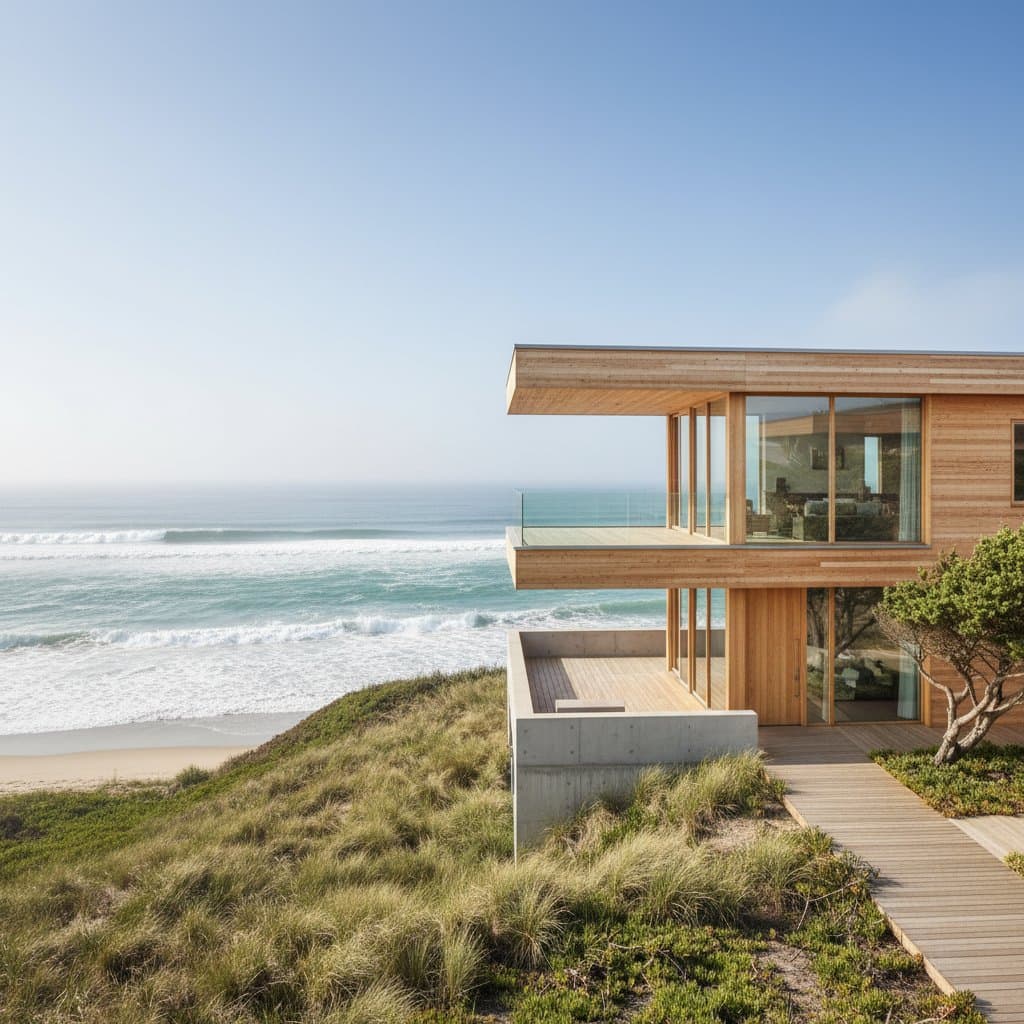
Image: Modern coastal home built with CLT panels and large glass openings overlooking the ocean
Concrete has served as the conventional benchmark for coastal builds owing to its proven longevity. However, CLT's engineered composition resists warping, ensures dimensional stability, and accommodates subtle ground shifts more effectively. Furthermore, it imparts a welcoming, organic texture that aligns seamlessly with the laid-back essence of seaside living.
Comparing CLT and Concrete for Coastal Homes
| Feature | CLT (Cross-Laminated Timber) | Concrete |
|---|---|---|
| Weight | Lightweight, eases foundation requirements | Heavy, necessitates extensive foundational support |
| Thermal Performance | Superior insulation properties lower energy expenses | Inadequate natural insulation requires supplementary layers |
| Moisture Resistance | Specialized sealants and treatments safeguard against water ingress | Prone to cracking and moisture penetration over time |
| Carbon Footprint | Sequester carbon dioxide, derived from renewable forests | Generates substantial emissions during cement manufacturing |
| Construction Speed | Prefabricated elements enable swift assembly | Prolonged curing periods and setup processes |
| Aesthetic Appeal | Warm, natural grain enhances visual interest | Stark, utilitarian finish |
This side-by-side analysis highlights CLT's distinct advantages. Concrete offers reliability and ubiquity, but CLT provides an integrated solution encompassing functionality, eco-friendliness, and visual allure that concrete cannot replicate.
Image: CLT wall panels being installed on a coastal home foundation
Environmental and Economic Advantages
Homeowners along the coast prioritize materials that support long-term ecological health. CLT originates from sustainably harvested forests, functioning as a renewable resource that actively sequesters carbon. Specifically, one cubic meter of CLT retains approximately one metric ton of carbon dioxide, advancing broader climate objectives.
From an economic perspective, projects using CLT often achieve savings of up to 20 percent in overall construction duration and expenses. The prefabrication process mitigates disruptions from unpredictable weather, a common concern in seaside areas. Additionally, ongoing maintenance proves more economical, as CLT avoids the corrosion and surface deterioration that plague reinforced concrete structures.
Image: Timber-clad coastal home surrounded by native vegetation
Performance in Coastal Climates
Exposure to saline atmospheres and elevated humidity tests the limits of conventional building materials. Concrete frequently suffers micro-fractures that permit salt infiltration to the embedded steel reinforcement, hastening rust and structural compromise. In contrast, CLT panels receive applications of high-performance coatings that deflect moisture and inhibit fungal growth. With meticulous detailing, such constructions endure for decades with routine upkeep.
Timber's innate thermal regulation further enhances occupant well-being. CLT assemblies moderate indoor temperatures and humidity levels, fostering cooler interiors during warm seasons and retaining heat in milder periods. These properties diminish dependence on HVAC systems, thereby curtailing utility costs.
Design Flexibility and Aesthetic Appeal
Designers value CLT for its adaptability in creating innovative layouts. The material supports expansive interiors, expansive glazing, and protruding outdoor features that capture panoramic sea vistas. Exposed wood surfaces contribute texture and coziness, harmonizing sleek geometries with organic elements. Unlike the rigidity of concrete, CLT permits accurate milling and customization, accommodating site-specific architectural visions.
Image: Open-plan living room with exposed CLT ceilings and ocean view windows
Steps to Build a Resilient Coastal Residence with CLT
Individuals contemplating a seaside property will find CLT an compelling option for integrating durability, livability, and elegance. Initiate the process by engaging contractors experienced in mass timber techniques and soliciting plans optimized for regional environmental demands. Emphasize the selection of durable surface treatments, effective airflow systems, and upkeep protocols designed for saline conditions.
Opting for CLT extends beyond mere material selection. It embodies a dedication to ecological stewardship, diminished ecological strain, and lasting seaside allure. As preferences evolve toward options that embody accountability and sophistication, CLT emerges as the vanguard of seaside building practices.