
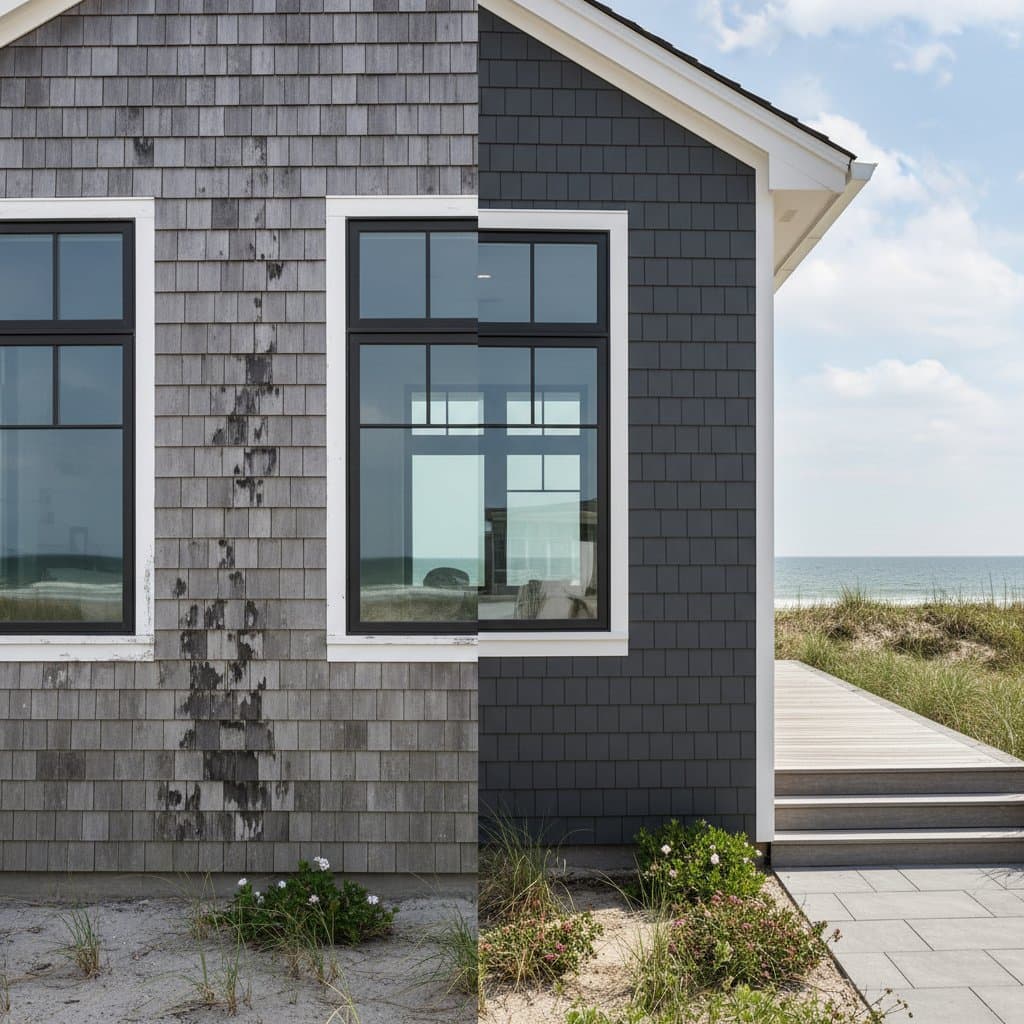
Understanding Cedar Siding's Challenges in Coastal Settings
Picture a serene beach house with cedar siding that initially captures the essence of coastal elegance through its rich, golden tones. Over time, exposure to relentless sun, salt-laden winds, and persistent moisture transforms this appeal into a maintenance nightmare. Homeowners often discover that the very environment they cherish erodes the siding's integrity far sooner than anticipated.
Cedar siding originates from natural wood, prized for its aesthetic warmth and texture. In inland areas, it performs adequately with periodic care. However, coastal conditions introduce unique stressors: ultraviolet radiation breaks down the wood's lignin, causing discoloration; salt crystals embed in the grain, promoting corrosion; and fluctuating humidity levels lead to expansion and contraction, resulting in cracks and warping. Without rigorous intervention, such as annual sealing and staining, the siding loses its protective oils within two to five years, inviting mold, mildew, and insect damage.
This vulnerability not only diminishes curb appeal but also compromises structural integrity. For beach property owners, the cycle of repairs becomes a significant burden, often exceeding initial installation expenses over a decade.
The Superior Durability of Fiber Cement Siding
Fiber cement siding represents an engineered solution designed to confront coastal adversities head-on. Composed of Portland cement, sand, and reinforcing cellulose fibers, this material achieves a balance of strength and versatility without the frailties of wood. Manufacturers produce it in panels, planks, or shingles that replicate wood's visual charm while outperforming it in resilience.
Key attributes make fiber cement ideal for seaside homes. It repels moisture absorption, preventing the swelling and rot that plague cedar. Ultraviolet inhibitors in its formulation maintain color vibrancy, resisting the bleaching effects of prolonged sun exposure. The non-combustible nature of the material enhances fire safety, a critical consideration in dry coastal regions prone to wildfires. Additionally, its low thermal expansion ensures stability against temperature swings, reducing the risk of gaps or buckling.
Installation involves securing panels over a weather-resistant barrier, with joints sealed to block water infiltration. Once in place, fiber cement demands far less attention than wood alternatives. Annual inspections focus on caulking integrity and gentle cleaning with a low-pressure rinse, extending its service life to 30 to 50 years or more.
Homeowners appreciate the customization options: select from smooth surfaces for contemporary designs or textured profiles that echo cedar's rustic grain. This adaptability allows preservation of traditional beach aesthetics without sacrificing performance.
Photo: P. Kijsanayothin / Getty Images
Evaluating Installation Costs and Long-Term Value
Budgeting for siding replacement requires consideration of both upfront and ongoing expenses. Fiber cement installation for a typical 1,500-square-foot coastal home ranges from $9,000 to $18,000, with an average of $12,000. Factors influencing this include home size, roof pitch, and access challenges common in elevated beach properties.
Cedar siding presents a comparable initial outlay of $7 to $14 per square foot installed, totaling $10,500 to $21,000 for the same home. However, maintenance escalates these figures: expect $2,000 to $4,000 every three to five years for stripping, sanding, and refinishing to combat environmental wear.
Break down the primary cost components for fiber cement:
- Materials: Basic lap siding costs $2 to $5 per square foot; premium shakes or scallops add $1 to $3 more.
- Labor: Expect $3 to $6 per square foot, higher for multi-story structures or custom milling.
- Finishes: Prefinished options at $1 to $2 extra per square foot provide factory-applied coatings that endure 15 to 25 years.
- Preparation and Compliance: Site prep, including old siding removal, runs $1,000 to $3,000; coastal permits for impact-resistant installations may add $500 to $1,500.
Over 20 years, fiber cement's total ownership cost proves 30 to 50 percent lower than cedar's, factoring in reduced labor for upkeep and fewer replacements. Obtain at least three detailed bids from certified contractors to identify savings opportunities and verify warranties, often spanning 30 years for material defects and 15 years for fading.
Strategies for Cost-Effective Implementation
Achieving a durable coastal exterior need not strain finances. Implement these targeted approaches to optimize value:
- Opt for Prefinished Products: These arrive ready to install, avoiding on-site painting labor and ensuring uniform coverage that withstands salt abrasion.
- Hybrid Material Selection: Apply fiber cement to sun- and wind-exposed elevations while reserving cedar for protected soffits or gables, blending durability with selective aesthetics.
- Solicit Competitive Bids: Contact local specialists familiar with marine climates; variations of 20 percent or more occur based on supplier relationships and seasonal demand.
- Time Installations Strategically: Schedule during off-peak periods, such as late fall or early spring, when contractors discount rates by 10 to 15 percent to maintain workflow.
- Enhance with Preventive Measures: Invest in quality flashing and sealants during installation; these extend performance and avert premature repairs.
- Explore Incentives: Check for regional rebates on energy-efficient or sustainable building materials, potentially offsetting 5 to 10 percent of costs.
These tactics enable homeowners to secure robust protection while aligning expenditures with practical needs.
Frequently Asked Questions
How does ocean proximity affect fiber cement siding longevity?
Proximity to the sea intensifies salt and humidity exposure, yet fiber cement endures 30 to 50 years with correct installation. Warranties typically cover fading and cracking for 15 to 30 years in such environments.
What treatments extend cedar siding's life in coastal areas?
Apply marine-grade sealants with UV blockers and fungicides annually. Despite these efforts, reapplication every one to two years remains necessary, and full replacement often occurs within 10 to 15 years.
How do fiber cement and cedar compare environmentally?
Cedar draws from renewable forests but requires frequent chemical treatments. Fiber cement minimizes waste through longevity and recyclable components; prioritize FSC-certified sources for either to support sustainability.
Can fiber cement match cedar's insulation properties?
It offers similar thermal performance when paired with foam-backed underlayment. For enhanced energy efficiency, integrate rigid insulation boards during installation to reduce heating and cooling demands in variable coastal weather.
Protecting Your Beach Home Investment
Selecting the right siding safeguards not only aesthetics but also equity in a high-value coastal property. Fiber cement empowers homeowners to embrace seaside living without the constant battle against nature's toll. By prioritizing durability, you ensure a residence that remains inviting and resilient, season after season.