
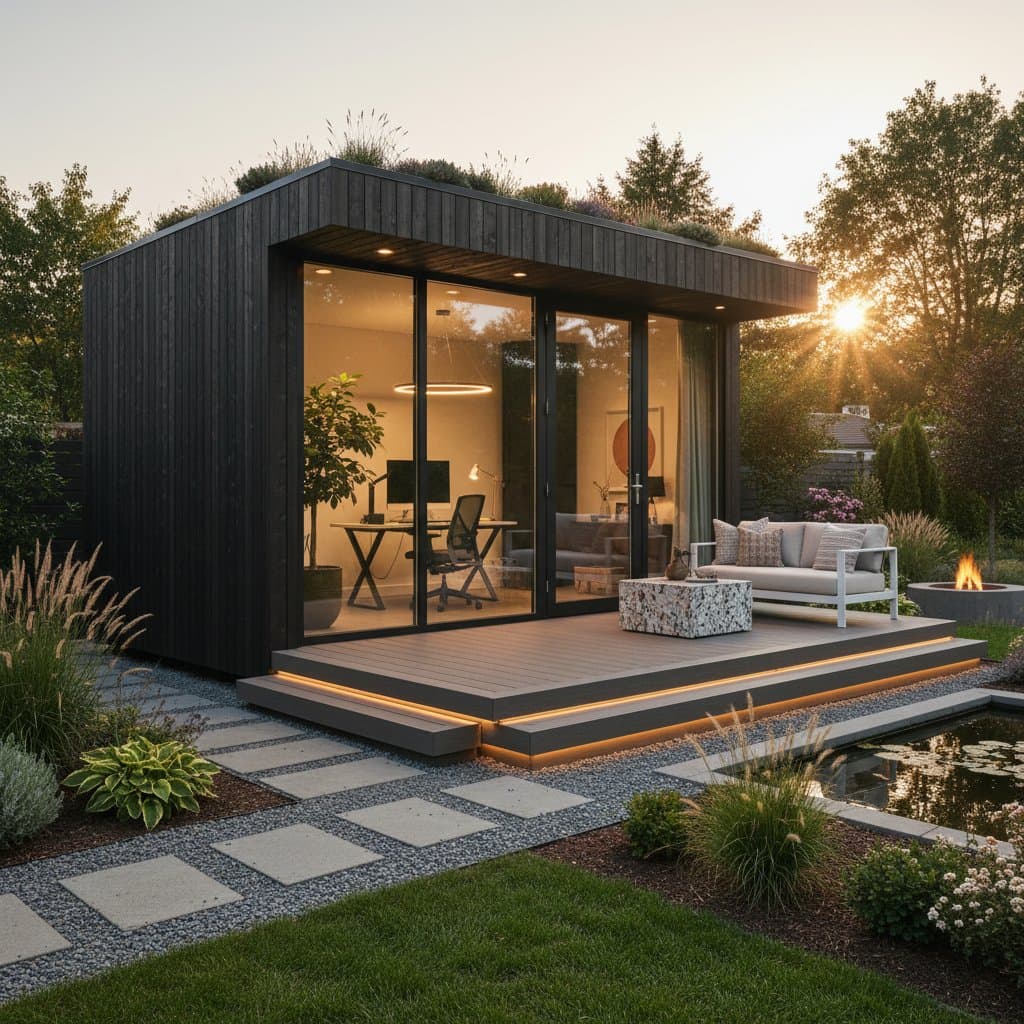
Building Your Modular Room Budget
Establishing a realistic budget before selecting a unit proves essential for project success. Consider the components that influence the final expenditure to make informed decisions.
Primary Cost Components
- Dimensions and Configuration: Units below 150 square feet typically offer the lowest prices. Expanded sizes or bespoke arrangements elevate costs proportionally.
- Material Choices and Finishes: Basic options maintain expenses near $15,000, whereas luxury elements such as solid hardwood flooring or upscale exterior cladding add to the total.
- Site Readiness: Although modular installations demand less preparation, expenses may arise for terrain leveling or minor concrete pouring.
- Utility Integrations: Incorporating electrical systems, water lines, or climate control necessitates additional connection charges from licensed professionals.
Strategies for Cost Control
- Select prefabricated standard designs over bespoke creations to minimize expenses.
- Integrate modular flooring and partitioning systems that facilitate straightforward assembly.
- Evaluate access routes meticulously to prevent supplementary fees for specialized delivery equipment like cranes.
- Solicit quotes from several reputable producers to identify competitive pricing.
Through deliberate planning, individuals can adhere closely to the $15,000 threshold while securing a versatile and inviting area.
Advantages of Modular Outdoor Living Rooms
Modular rooms excel in enhancing outdoor environments, fostering fluid connections between indoor residences and exterior yards to repurpose underutilized areas into assets of leisure and utility.
Rapid Setup with Limited Interference
Conventional additions impose prolonged disturbances, including persistent noise, airborne particles, and restricted home access over months. Modular deployments, conversely, conclude within days post-delivery, as factory-based construction eliminates much of the on-site turmoil.
Versatile Applications
These structures accommodate diverse functions, such as:
- Dedicated workspaces for remote professionals
- Overnight quarters for guests
- Dedicated areas for artistic pursuits or mechanical hobbies
- Relaxed patios adjacent to recreational water features
- Exercise zones equipped for physical activities
Should requirements evolve, relocation or adaptation occurs with minimal structural alterations.
Eco-Conscious Building Practices
Factory prefabrication substantially curtails waste compared to field-based methods. Leading producers incorporate recycled components, superior thermal barriers, and options for renewable integrations like photovoltaic arrays or responsibly sourced timber, promoting reduced environmental footprints.
Enduring Property Enhancement
Incorporating a modular room elevates a home's practicality and aesthetic allure. Although it may not boost resale value to the extent of fixed extensions, it augments daily comfort and appeals to prospective purchasers desiring adaptable exterior amenities.
Planning Your Modular Room Initiative
1. Specify Objectives and Scale
Determine the intended application to guide size selection. For instance, a compact professional nook might suffice with 100 square feet, whereas accommodating overnight visitors could demand 200 square feet or greater. Articulate precise needs to align features with expectations.
2. Evaluate Providers
Identify firms renowned for craftsmanship and customer support. Examine technical details, guarantee terms, and user testimonials. Established entities disclose comprehensive pricing and setup protocols transparently.
3. Verify Compliance with Regulations
Prior to commitment, ascertain alignment with municipal zoning ordinances and permitting stipulations. Jurisdictions may impose limits on dimensions, elevations, or boundary offsets. Producers often aid in paperwork, yet direct consultation with local authorities remains advisable.
4. Optimize Site Conditions
Remove obstructions and ensure even ground levels for placement. Soil analysis may indicate the need for stabilized bases like gravel beds or shallow concrete footings to support weight and facilitate water runoff, safeguarding against long-term settling.
5. Coordinate Transport and Assembly
With preparation complete, transport arrives via heavy-duty vehicles, positioned by compact lifting apparatus. Finalization encompasses securing anchors, weatherproofing joints, and linking essential services or accents.
6. Equip and Customize
Post-installation, introduce furnishings, illumination, and accents that harmonize with existing interiors. Modular designs readily conform to contemporary minimalism or pastoral charm, extending your home's cohesive aesthetic.
Modular Rooms Versus Traditional Additions
| Feature | Modular Room | Traditional Addition |
|---|---|---|
| Cost Range | $15,000 to $40,000 | $80,000 to $150,000+ |
| Timeline | Days to weeks | Multiple months |
| Permit Process | Generally streamlined | Involves detailed reviews |
| Daily Impact | Low | Substantial |
| Adaptability | Relocatable and multifunctional | Fixed installation |
| Ecological Footprint | Reduced waste generation | Elevated material discard |
| Personalization | Balanced options at lower cost | Broad but expense-intensive |
This overview underscores the rising popularity of modular solutions, which prioritize velocity, versatility, and value in ways traditional approaches seldom achieve.
Frequently Asked Questions
What Components Are Standard in a $15K Modular Room?
Basic packages encompass the structural frame, thermal insulation, base covering, overhead protection, and glazing. Certain variants include preliminary wiring, though utility tie-ins often require certified technicians. Review inclusions meticulously prior to acquisition.
Are Building Permits Necessary for Modular Rooms?
Permits apply in most locales, particularly for units with power or water provisions. Local variations exist, so engage your municipal office early in planning.
To What Extent Can Modular Rooms Be Tailored?
Customization abounds, with add-ons like expansive vistas, specialized exteriors, or integrated storage. Such enhancements raise costs, yet foundational units integrate seamlessly with residential motifs.
What Is the Expected Durability of Modular Rooms?
Proper care yields service lives spanning decades. Select premium substances and ensure meticulous setup; conduct periodic assessments of bases, coverings, and barriers against elemental degradation.
Do Modular Rooms Promote Energy Savings?
Contemporary designs leverage sealed assemblies and insulating layers for superior retention. Augment efficiency via double-glazed panes, low-consumption bulbs, or supplementary renewables.
Is Relocation of Modular Rooms Feasible?
Designs often support disassembly and redeployment. Professionals handle transport to alternate sites upon residential transitions or spatial rearrangements.
How Do Modular Rooms Withstand Climatic Variations?
Robust constructions resist precipitation, gusts, and thermal shifts. Prioritize resilient facades, such as preserved lumber, synthetic panels, or durable alloys, for optimal performance across seasons.
Integrating Your Modular Room Seamlessly
To fully leverage your investment, align the new addition with your lifestyle through thoughtful integrations. Connect it via pathways or shared utilities for effortless access, and incorporate smart controls for lighting and climate to enhance usability. Regular upkeep, including seasonal cleanings and seal inspections, preserves its condition and extends enjoyment for years ahead.