
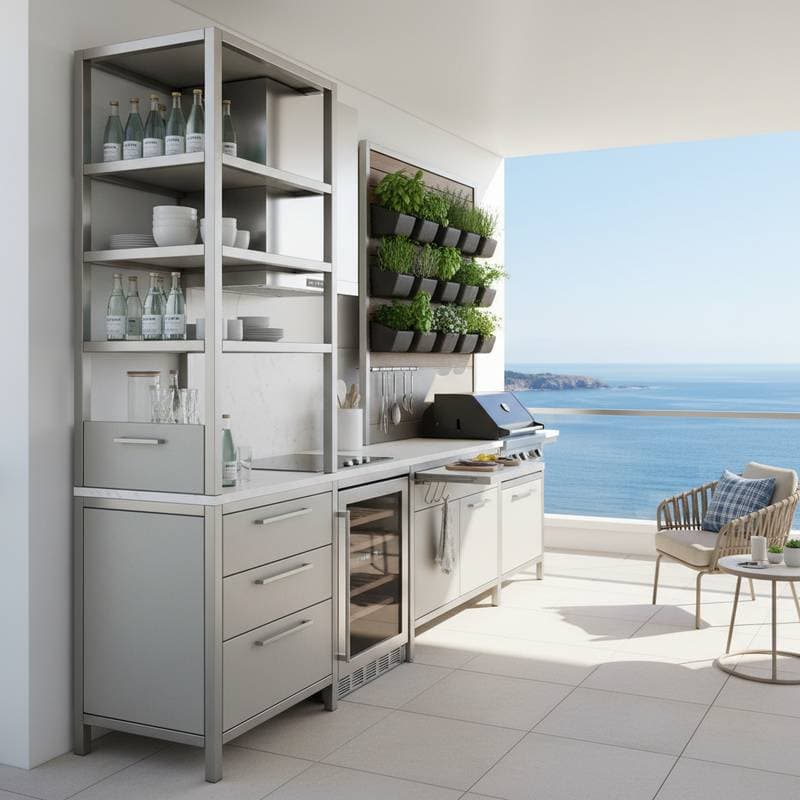
9 Vertical Outdoor Kitchen Ideas for Space-Saving Coastal Cooking
Outdoor kitchens rank among the top home improvements for those who enjoy hosting al fresco gatherings. Limited patio or backyard dimensions often pose challenges, yet the desire persists for dedicated areas to grill, prepare meals, and serve guests without encroaching on relaxation or gardening zones. Vertical outdoor kitchens address this by emphasizing upward expansion over horizontal sprawl, enabling comprehensive cooking setups in confined areas.
This approach proves particularly valuable in coastal regions, where outdoor space commands high value. Proximity to the water typically demands efficient use of every available inch. Vertical configurations integrate intelligent storage with refined visuals, fostering an airy and orderly environment suitable for balconies, rooftops, or modest patios.
The following nine ideas illustrate how to elevate outdoor cooking through vertical elements. These suggestions preserve the relaxed coastal essence while optimizing utility. Stacked appliances and wall-integrated features encourage a shift from sprawling layouts to streamlined, upward-focused designs.## Design Ideas for Vertical Outdoor Kitchens
4. Vertical Herb and Spice Gardens
Vertical herb gardens conserve space while delivering fresh ingredients nearby. Employ wall-mounted planters, stacked containers, or tiered shelves. Varieties like basil, rosemary, and mint flourish in such setups and contribute aromatic elements to the area.
Provide partial shade or self-watering systems if direct sun exposure proves intense. These measures sustain plant health and lessen upkeep demands.
Pro Tip: Route a drip irrigation system behind planters to automate watering on warm days.
5. Layered Lighting for Height and Mood
Strategic lighting accentuates vertical contours and establishes atmosphere. Position string lights at multiple elevations, mount sconces above work areas, and apply under-shelf LED strips to illuminate tiers.
This technique guides attention upward, amplifying perceived height. Opt for warm white bulbs to evoke coastal warmth or cool whites for contemporary appeal.
6. Built-Up Bar Backsplashes
Elevate beyond standard backsplashes with multi-tiered structures incorporating storage, illumination, and display shelves. These features accommodate bottles, glassware, or petite plants, forming an attractive centerpiece.
Incorporate coastal motifs through sea glass tiles, pale stone, or reclaimed wood. Such surfaces capture and diffuse natural light, enriching spatial depth.
Pro Tip: Blend open shelving with enclosed sections to conceal disorganization.
[Image: Vertical bar backsplash with sea glass tiles and open shelving]
Smart Storage and Organization Solutions
7. Hanging Racks and Magnetic Strips
Extend vertical organization beyond shelves with hanging racks and magnetic strips for knives, spatulas, and metal implements. This arrangement clears counters and facilitates quick retrieval during meal preparation.
Choose stainless steel or protective coatings to resist coastal corrosion. Secure mounts into wall studs for stability, especially with heavier loads.
Pro Tip: Categorize items by purpose, dedicating one rack to grilling accessories and another to preparation tools.
8. Overhead Cabinets for Compact Layouts
Utilize space beneath roofs or pergolas for overhead cabinets. Store less-accessed items like platters or reserves in these units. Apply weatherproof hinges and sealants to safeguard contents against dampness.
Such cabinets harmonize the kitchen's vertical profile for visual unity. Match finishes to ground-level cabinetry for seamless integration.
Difficulty Level: Intermediate. Focus on secure installation and moisture barriers for durability.
9. Multi-Level Counters
Vary counter heights to delineate cooking, preparation, and dining functions. This layering introduces depth without expanding the base area. Elevated sections function as bars, while lower ones support prep work.
This setup suits petite patios or rooftops, where precision matters. It promotes guest engagement, allowing comfortable seating during cooking.
[Image: Multi-level counter setup with bar seating and compact grill]
Planning Advice for Space-Saving Outdoor Kitchens
Assess usage patterns before implementing vertical elements. Consider these planning essentials:
- Measure vertical limits alongside horizontal ones to prevent obstructions to views or illumination.
- Incorporate adequate ventilation to dissipate heat in upward designs.
- Select robust materials like corrosion-resistant metals and sealed timbers for coastal resilience.
- Favor modular or foldable components for adaptable event setups.
- Integrate protective elements such as overhangs or retractable shades against precipitation and intense sunlight.
Frequently Asked Questions
What defines a vertical outdoor kitchen?
A vertical outdoor kitchen emphasizes upward-oriented components, including tall storage, wall-affixed appliances, and tiered counters. This orientation optimizes restricted areas while preserving operational efficiency.
Do vertical outdoor kitchens fit small patios or balconies?
Yes, the format excels in tight confines by minimizing floor usage and leveraging vertical surfaces for utilities and storage.
Which materials suit vertical structures in coastal environments?
Marine-grade stainless steel, sealed concrete, and treated lumber endure saline conditions effectively. Steer clear of untreated metals or absorbent substances prone to deterioration.
What budget applies to a vertical outdoor kitchen?
Expenses depend on selections, but basic configurations typically span $4,000 to $12,000. Features like integrated grills or extensive cabinetry elevate costs.
Is retrofitting an existing outdoor kitchen to vertical feasible?
Often, yes. Incorporate tower units, wall accessories, or collapsible counters without comprehensive reconstruction.
What maintenance do vertical designs demand?
Clean and reseal surfaces routinely, examine fasteners periodically, and monitor for rust. Consistent attention withstands coastal elements.
Enhancing Daily Use of Vertical Outdoor Kitchens
Preserve vibrancy by organizing storage and refreshing herb installations or lighting with the seasons. Infuse personality through coastal accents, such as textured furnishings or ambient glows for dusk events. These touches ensure the space supports seamless entertaining year-round.