
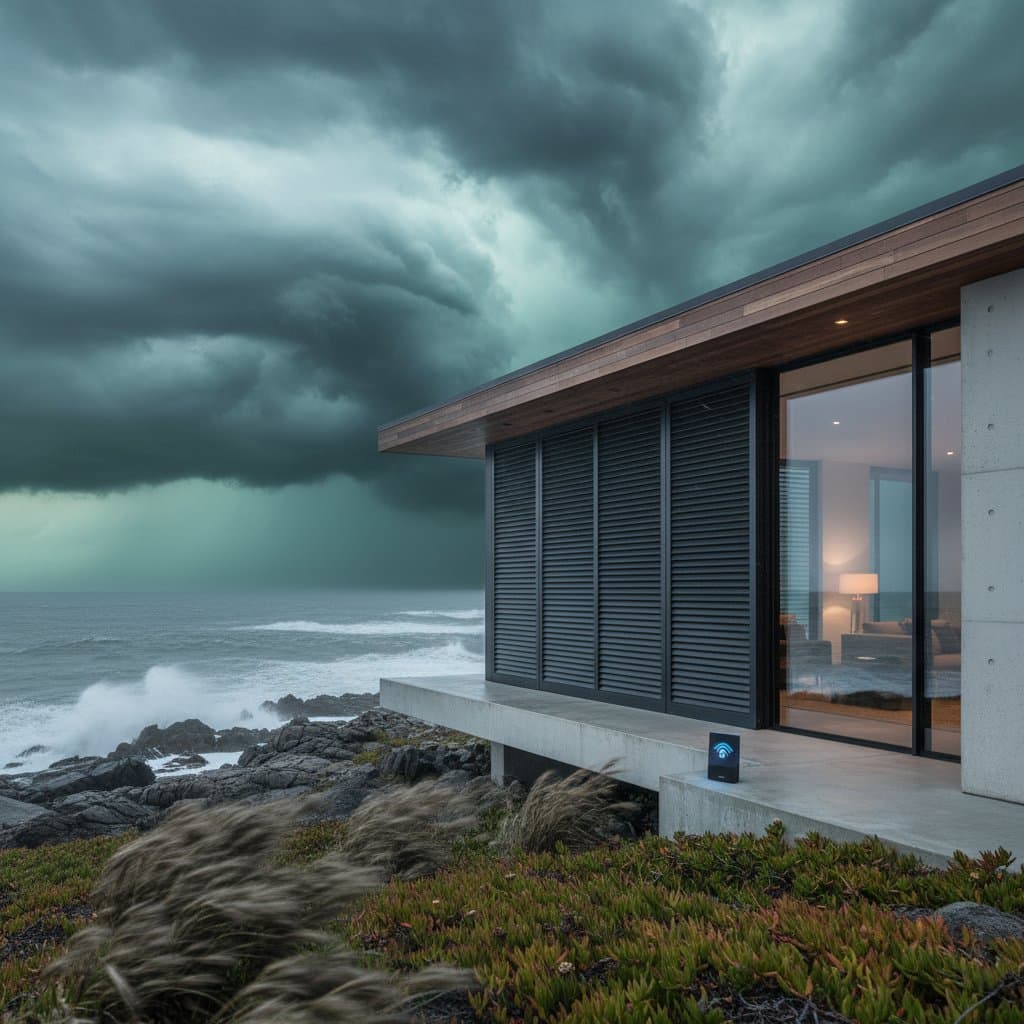
Smart Shutters Auto-Close to Shield Coastal Homes
Coastal homeowners confront persistent threats from high winds, heavy rain, and corrosive salt air. Smart shutters equipped with auto-close technology emerge as an effective solution, bolstering safety, convenience, and energy efficiency. These systems detect approaching weather changes and secure windows and doors automatically, offering protection even when residents are absent. Installation costs for such automated shutters typically fall between $35 and $60 per square foot, influenced by material choices, automation capabilities, and property dimensions.
Understanding Smart Shutters
Smart shutters function as motorized barriers for windows, integrated into broader home automation frameworks. Control options include smartphone applications, voice-activated devices, or environmental sensors that activate in response to shifting conditions. As high winds or storms near, the shutters deploy to safeguard openings against potential damage.
This blend of robust traditional protection and contemporary automation suits coastal residences prone to erratic weather patterns.
Key Features
- Automatic deployment activated by sensors monitoring wind or precipitation
- Remote operation via mobile devices or voice commands
- Backup power sources to maintain operation during electrical failures
- Seamless compatibility with smart home platforms for enhanced security and energy oversight
!(image-placeholder-automated-sunset.jpg)
Factors Influencing Cost and Performance
Multiple elements shape the expense and reliability of smart shutters in coastal settings.
1. Material Quality
- Aluminum: Lightweight and resistant to corrosion, perfect for saline atmospheres.
- Composite: Offers decorative appeal with solid durability for style-focused applications.
- Steel: Provides superior strength yet demands protective coatings to avert rust.
2. Motor and Sensor Systems
Premium motors paired with embedded sensors command higher prices but deliver superior responsiveness. Certain units incorporate wind velocity gauges, precipitation detectors, and climate regulators.
3. Smart Integration
Alignment with ecosystems like Google Home or Alexa enhances usability, though it may complicate setup. Wireless variants simplify retrofits into established structures.
4. Home Size and Layout
Expansive properties with numerous openings demand additional motors and detectors. Tailored solutions for non-standard windows further increment costs.
5. Local Climate Conditions
Regions experiencing regular tempests or excessive moisture benefit from specialized finishes and fortified elements to sustain longevity.
Budgeting and Planning Tips
Effective planning for smart shutter deployment involves weighing financial, stylistic, and operational priorities. Consider these steps to streamline the effort.
- Evaluate your residence: Pinpoint the most susceptible windows and entryways.
- Solicit varied estimates: Consult no fewer than three specialists in automated shutter installations.
- Determine automation scope: Weigh full smart home linkage against independent controls.
- Allocate reserves: Set aside 10 to 15 percent extra for wiring or enhancements.
- Focus on priorities: Initiate coverage for the highest-risk zones, scaling up progressively.
DIY vs. Professional Installation
Certain motorized shutter kits appeal to skilled self-installers, yet expert involvement guarantees optimal performance and compliance.
DIY Advantages
- Reduced upfront expenses
- Scheduling autonomy
- Appropriate for compact, ground-level dwellings
Professional Installation Advantages
- Comprehensive warranties
- Precise sensor and system tuning
- Adherence to codes and storm-resistant specifications
Professionals prove essential for coastal sites, given the intricacies of environmental exposure and controls.
Long-Term Value and ROI
Beyond immediate safeguards, smart shutters elevate property worth. Industry experts note that such systems can enhance marketability and value by up to 5 percent.
Key contributors to returns include:
- Diminished expenses from storm-related repairs, such as shattered panes or flooding.
- Potential reductions in insurance rates, with discounts for approved protective measures.
- Annual energy reductions of 10 to 20 percent through strategic thermal management.
| Benefit | Estimated Value Increase | Additional Notes |
|---|---|---|
| Property resale | 3% - 5% | Boosts purchaser assurance |
| Energy efficiency | 10% - 20% | Trims utility expenditures |
| Insurance savings | 5% - 15% | Depends on insurer and policy |
FAQs About Smart Shutters for Coastal Homes
What triggers the shutters to close automatically?
Sensors monitor wind speeds, rainfall, or atmospheric pressure, prompting closure ahead of intensifying conditions.
Can they be controlled manually?
Affirmative. Overrides occur via control panels, apps, or physical switches.
Do they work during power outages?
Many incorporate battery reserves or crank mechanisms for uninterrupted use.
How often do they need maintenance?
Annual checks for lubrication and sensor accuracy suffice, alongside electrical inspections.
Are smart shutters noisy during operation?
Contemporary drives operate quietly, at 35 to 50 decibels, akin to soft speech levels.
Do they affect home aesthetics?
Designs and colors align with coastal motifs, spanning modern aluminum to ornate colonial variants.
Sustaining Performance Over Time
Preserve shutter efficacy with biannual cleansing using mild detergent to eliminate salt buildup. Verify motor enclosures against dampness and clear drainage paths. Engage specialists periodically for sensor adjustments and power assessments.
Such investments secure coastal dwellings against seasonal rigors, merging protection with efficiency and enduring style.