
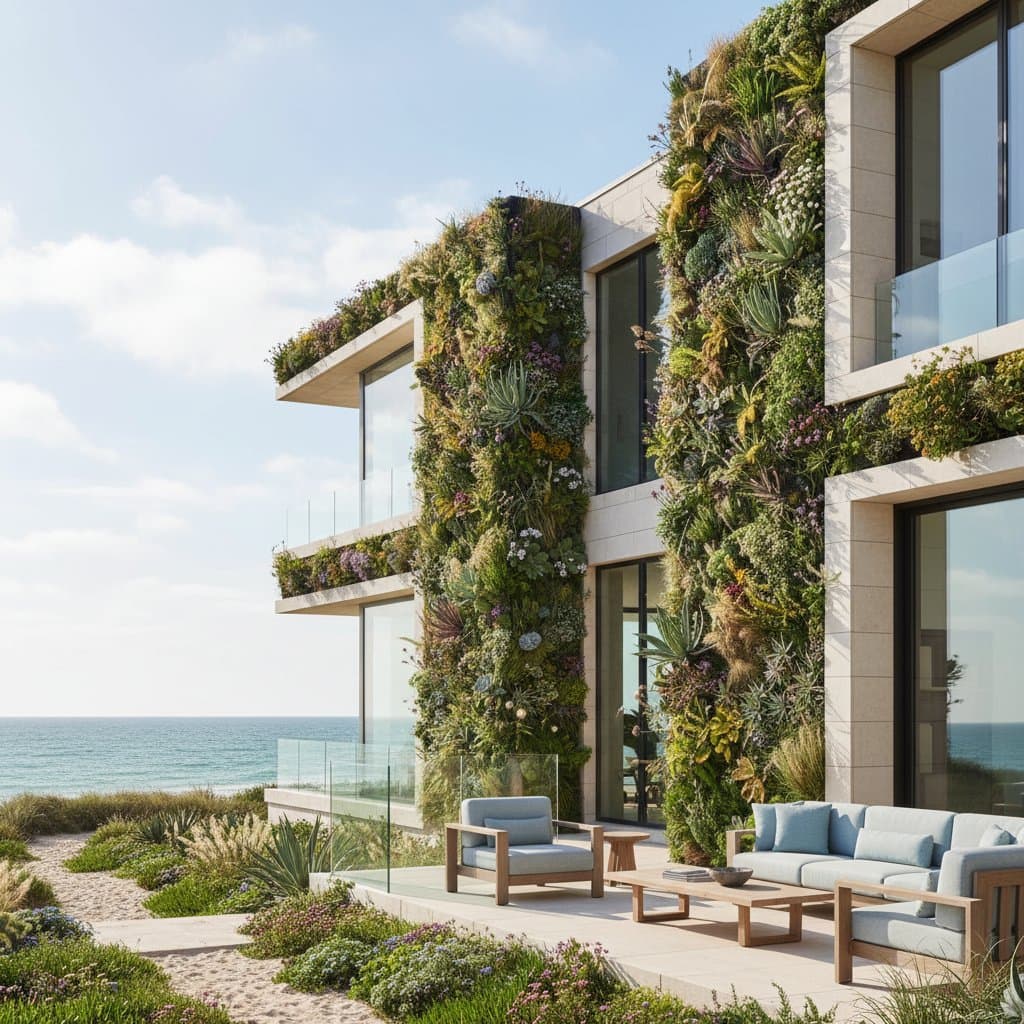
Vertical Gardens Reduce Beach Home Cooling Costs by 30%
Coastal residences often transform into overheated enclosures during summer afternoons. Ocean winds offer some relief, yet saline atmosphere and intense sunlight drive up air conditioning expenses. Property owners in seaside areas now embrace vertical gardens as an effective and aesthetically pleasing remedy. These verdant structures not only captivate the eye but also decrease interior temperatures and energy expenditures by as much as 30 percent, positioning them as a wise environmental enhancement for shoreline lifestyles.
Key Advantages
- Vertical gardens minimize heat uptake and decrease cooling expenses by approximately 30 percent
- They suit coastal settings with elevated sun exposure and moisture levels
- Living walls elevate air purity and provide seclusion without encroaching on lawn areas
- Customization with indigenous, water-efficient flora proves straightforward
- They represent a durable method to elevate exterior aesthetics and interior ease
Understanding Vertical Gardens
A vertical garden, alternatively termed a living wall, features vegetation ascending along a perpendicular plane rather than spreading horizontally. Configurations range from basic self-assembled planters to sophisticated, water-supplied frameworks integrated into building exteriors.
Photo: A seaside residence featuring a verdant wall of succulents and ferns that tempers sunlight on stucco surfaces.
Such gardens suit both interior and exterior placements, though external applications yield the greatest reductions in cooling demands for beach properties. Vegetation functions as organic shielding, obstructing direct solar rays and moderating ambient air via evapotranspiration. This mechanism diminishes reliance on continuous climate control, even amid intense thermal peaks.
Mechanisms of Energy Conservation in Vertical Gardens
The efficacy of vertical gardens in conserving energy stems from their capacity to obstruct solar irradiance. Conventional outer walls capture thermal energy, which permeates living spaces. In contrast, a living wall establishes a vegetative and aerial buffer that restricts thermal ingress.
The process unfolds as follows:
- Shading and Light Reflection: Foliage obscures the surface and bounces back rays, thereby diminishing material heat.
- Evaporative Cooling: Vegetation emits vapor, which naturally tempers nearby atmosphere.
- Thermal Barrier: The substrate or growth medium forms an additional impediment, retarding heat conduction.
Together, these elements can lower cooling expenditures by up to 30 percent, especially in brightly lit coastal regions where structures face prolonged afternoon illumination.
Tip: Select flora adapted to regional light and saline influences to minimize upkeep and optimize efficiency.
Selecting Appropriate Plants for Seaside Environments
Choosing suitable vegetation proves crucial for efficacy and allure. Seaside conditions demand varieties resilient to gusts, brine mist, and vivid illumination.
Recommended Plants for Coastal Vertical Gardens
- Succulents such as echeveria or sedum retain moisture and flourish under full exposure
- Indigenous Grasses like blue fescue contribute form and dynamism
- Ferns impart dense foliage to areas receiving partial shade
- Herbs including rosemary and thyme offer aroma and practicality
- Cascading Vines like ivy or bougainvillea generate striking垂挂 effects
Photo: A southward patio surface adorned with layered succulents and descending vines.
Opting for local or arid-adapted species maintains simplicity in care and fortitude against arid periods. Consult a nearby horticultural center or design specialist to assemble a blend aligned with your property's specific atmospheric nuances.
Installation Approaches: Self-Built Versus Expert Systems
Self-Built Vertical Gardens
Suitable for modest surfaces or terraces, self-built setups utilize segmented panels, repurposed crates, or affixed containers. These options remain economical and adaptable, though they necessitate routine hydration and oversight.
Pros:
- Reduced preliminary expenditure
- Straightforward assembly and alteration
- Ideal for tenants or confined zones
Cons:
- Demands hand-operated irrigation absent enhancements
- Constrained thermal mitigation for expansive regions
Expert Living Wall Frameworks
For comprehensive outer surfaces or broad elevations, expert frameworks provide mechanized watering, foundational security, and enduring robustness.
Pros:
- Built-in hydration for reliable nurturing
- Extensive coverage to maximize conservation
- Elevates real estate worth and scenic presence
Cons:
- Elevated starting expense
- Necessitates skilled setup and intermittent servicing
| Option | Ideal For | Cooling Benefit | Maintenance | Cost Range |
|---|---|---|---|---|
| Self-Built Panels | Modest terraces or focal walls | Moderate | Hand-operated | Low |
| Expert Systems | Complete outer elevations | Substantial | Mechanized | Moderate to Elevated |
Photo: Specialists fitting hydration conduits behind a living wall on a contemporary seaside dwelling.
Financial Analysis and Potential Returns
Installation expenses fluctuate based on scale and configuration, with expert systems typically costing $100 to $200 per square foot. Self-built endeavors may commence at $25 per square foot.
Conservation outcomes hinge on surface orientation, foliage thickness, and regional weather patterns. Research indicates that seaside properties equipped with living walls on solar-oriented aspects frequently experience cooling reductions of 20 to 30 percent in the initial year. These gains gradually recoup upfront outlays while augmenting livability and asset appreciation over time.
Tip: Pair the vertical garden with radiant-reflective coverings or pale-hued outer coatings to amplify overall energy efficiencies.
Additional Advantages Surpassing Energy Reduction
Vertical gardens deliver advantages extending past diminished invoices. Residents benefit from:
- Refined Air Composition through filtration of contaminants and particulates
- Sound Attenuation via the natural screen
- Seclusion absent rigid enclosures
- Amplified Exterior Charm that harmonizes structure with ecology
In compact coastal districts where land proves scarce, vertical gardens introduce botanical elegance without forfeiting usable area.
Sustaining Your Vertical Garden
Preserving a vertical garden demands less effort than anticipated. Systems generally require bi-monthly inspections for watering, clipping, and nutrient application. Swap out flora periodically or upon necessity, and monitor for excess moisture or saline accumulation.
Photo: A resident trimming succulents on a sunlit terrace surface.
For installations with programmed watering, calibrate schedules to accommodate fluctuating seasonal dampness. Seaside humidity often suffices with reduced volumes relative to interior locales.
Integrating Sustainability into Coastal Residences
Vertical gardens transcend ornamental roles. They embody a functional, eco-conscious modification that renders seaside homes cooler, purer, and more hospitable.