
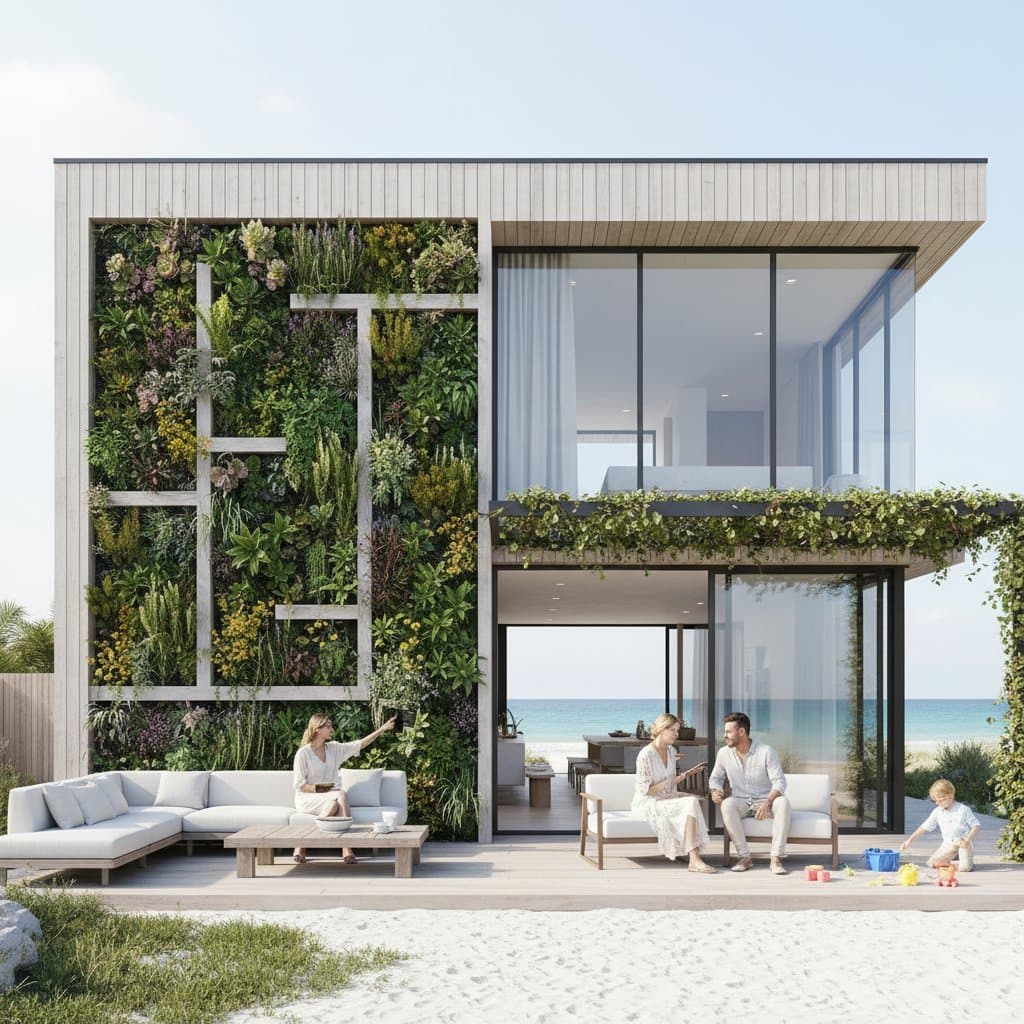
Reduce Beach Home Cooling Costs by 25% with Vertical Gardens
Beach homes capture the essence of sunlight, ocean breezes, and leisure, yet they often contend with intense heat from rising temperatures and reflective coastal light. This warmth drives up air conditioning demands and energy expenses. Vertical gardens, or living walls, offer a solution by cutting cooling costs up to 25 percent, while elevating the aesthetic and environmental quality of coastal properties. These installations provide natural insulation through strategic plant placement and design, yielding substantial improvements in comfort and efficiency.
Mechanisms of Cooling in Coastal Settings
Vertical gardens consist of plants cultivated on upright surfaces, such as exterior walls or freestanding structures. They serve as thermal barriers by absorbing solar radiation and moderating airflow, which prevents excessive heat from entering indoor areas. This process decreases wall temperatures and minimizes reliance on artificial cooling systems.
Primary Advantages Overview
| Benefit | Description | Projected Effect |
|---|---|---|
| Cooling expense decrease | Diminishes heat absorption on walls and interiors | Savings of up to 25 percent |
| Enhanced air purity | Captures salt, dust, and pollutants from sea air | Healthier indoor atmosphere |
| Noise reduction | Dampens sounds from waves and winds | More serene living spaces |
| Visual enhancement | Introduces organic elements to architecture | Elevated real estate appeal |
Living walls foster a localized climate that balances temperature, moisture, and ventilation. In beachside locations, where salt-laden air and humidity prevail, they protect structures and promote well-being.
Installation and Upkeep Expenses
Implementing a vertical garden proves more accessible than anticipated for beach property owners. Expenses hinge on system complexity, vegetation selections, and watering mechanisms.
| Installation Approach | Expense per Square Foot | Common Overall Expense | Upkeep Intensity |
|---|---|---|---|
| Self-assembled kit | $40 to $80 | $400 to $1,200 | Minimal |
| Expert modular setup | $100 to $200 | $2,000 to $6,000 | Standard |
| Bespoke engineered wall | $250 to $350 | $7,000 to $15,000+ | Standard to Elevated |
Initial outlays differ, but ongoing reductions in utility bills and upkeep offset them quickly. Property owners typically recover investments in three to five years via lower cooling charges and enhanced market value.
Typical cooling reduction: 20 to 25 percent
Expected payback timeline: 3 to 5 years
Image: Seaside residence featuring a verdant vertical garden that casts shade and infuses vibrancy.
Selecting Resilient Plants for Seaside Environments
Plant selection determines the effectiveness and endurance of vertical gardens amid coastal rigors like salt spray and variable moisture. Opt for species adapted to these conditions to ensure vitality and performance.
Recommended Varieties for Coastal Use
- Succulents, including echeveria and sedum, store water efficiently and demand little supplemental hydration.
- Ferns flourish in shaded spots, contributing lush foliage.
- Indigenous grasses such as blue fescue and muhly grass withstand saline influences.
- Blooming options like lantana or geranium introduce hues and draw beneficial insects.
- Culinary herbs, rosemary and thyme among them, adapt readily to upright configurations.
These choices demand scant intervention, sustaining lush growth that aids energy conservation.
Image: Detailed view of durable flora, succulents and ferns, flourishing in a seaside vertical installation.
Elements Affecting Thermal Performance
Efficiency in cooling varies based on design and environmental integration. Consider these aspects to optimize outcomes.
1. Surface Alignment
Exteriors oriented westward or southward encounter peak solar exposure in coastal zones. Positioning living walls here amplifies shading and heat deflection.
2. Vegetation Thickness
Dense arrangements heighten obstruction of sunlight, potentially cooling surfaces by 15 degrees Fahrenheit.
3. Water Delivery Methods
Efficient drip or nebulizer systems maintain plant health with precision, conserving resources during arid spells.
4. Substrate Composition
Materials like concrete or stucco hold warmth; overlaying them with greenery yields pronounced savings by dissipating accumulated heat.
5. Ventilation Dynamics
Adequate gaps between structures and plant supports facilitate breeze flow, averting dampness and boosting refrigeration.
Integrating these components maximizes heat mitigation and curtails air conditioning needs.
Image: Illustration depicting ventilation and solar blocking from a vertical garden on a beachfront facade.
Financial Gains and Investment Recovery
Effective vertical gardens yield annual savings of several hundred dollars on cooling for coastal dwellers. Returns correlate with installation scale and local utility rates.
| Residence Scale | Standard Annual Cooling Expense | Projected Annual Savings | Recovery Timeline |
|---|---|---|---|
| Compact seaside cabin | $800 | $160 to $200 | 3 to 4 years |
| Average coastal abode | $1,500 | $300 to $375 | 4 to 5 years |
| Expansive estate | $3,000 | $600 to $750 | 5 years |
Additional merits include boosted asset worth, superior thermal regulation, and ecological contributions. Such features nurture wildlife habitats, enhancing regional ecosystems.
Strategic Budgeting and Preparation
Thorough foresight ensures vertical gardens align with visual, functional, and care objectives.
Essential Preparation Measures
- Evaluate solar incidence on targeted surfaces.
- Establish a comprehensive budget encompassing components, watering, and periodic renewals.
- Prioritize local flora for robustness against seaside elements.
- Engage specialists versed in marine climates for resilient configurations.
- Incorporate upkeep protocols, including routine inspections and adjustments.
These practices secure enduring aesthetic and operational excellence.
Image: Resident examining watering conduits within a vertical garden assembly.
Self-Installation Versus Expert Services
Choices between personal and professional execution suit varying expertise, availability, and ambitions.
Self-Directed Projects
Suitable for modest features on patios or accents. Kits streamline construction. They incur fewer initial fees yet constrain personalization.
Specialist Interventions
Recommended for expansive or elevated applications. They incorporate tailored watering and runoff solutions. Experts select saline-resistant species. Though costlier initially, they deliver superior durability and efficiency.
For integrations with climate controls or automated hydration, professional oversight maximizes fiscal and thermal advantages.
Sustaining Performance Over Time
Reliable attention underpins vertical garden viability. Systems prioritize user-friendly protocols.
Standard Procedures
- Hydration: Automated delivery minimizes hands-on efforts.
- Shaping: Regular clipping preserves circulation and form.
- Nutrient application: Biannual organic supplements suffice.
- Intrusion management: Monitor for pests or fungi in moist seasons.
Consistent practices extend functionality across decades, perpetuating cost reductions.
Broader Ecological and Wellness Impacts
Vertical gardens extend value past thermal control and design.
- Air refinement: Vegetation sequesters contaminants and generates oxygen.
- Emission mitigation: Diminished power consumption curbs greenhouse gases.
- Psychological uplift: Verdant surroundings foster tranquility.
- Solar protection: Layers intercept ultraviolet exposure on surfaces.
These comprehensive gains position living walls as essential sustainable enhancements for seaside residences.
Common Queries on Vertical Gardens and Thermal Regulation
| Inquiry | Response |
|---|---|
| By what margin do vertical gardens cool interiors? | They reduce surface heat 10 to 15 degrees Fahrenheit, equating to 20 to 25 percent lower cooling requirements. |
| Are they suitable for moist seaside areas? | Indeed; appropriate runoff and species choices enable prosperity in humidity, leveraging ambient vapor. |
| What is their typical lifespan? | Over 15 years with diligent care; structural elements may require sporadic updates. |
| Is interior mounting feasible? | Yes; they humidify and purify air, though exterior placements yield greater thermal benefits. |
| Do ocean proximity pose upkeep issues? | Salinity impacts select plants; prioritize tolerant types like succulents and regional grasses. |
Realizing Enduring Advantages
Vertical gardens transcend ornamental roles, delivering quantifiable efficiencies and elevating seaside habitability. Through shading, barrier effects, and moisture evaporation, they temper indoor climates and trim utility outlays.
Established installations yield temperate spaces, fiscal relief, and enriched surroundings. Proper execution and oversight ensure year-round allure and respite from summer intensity.