
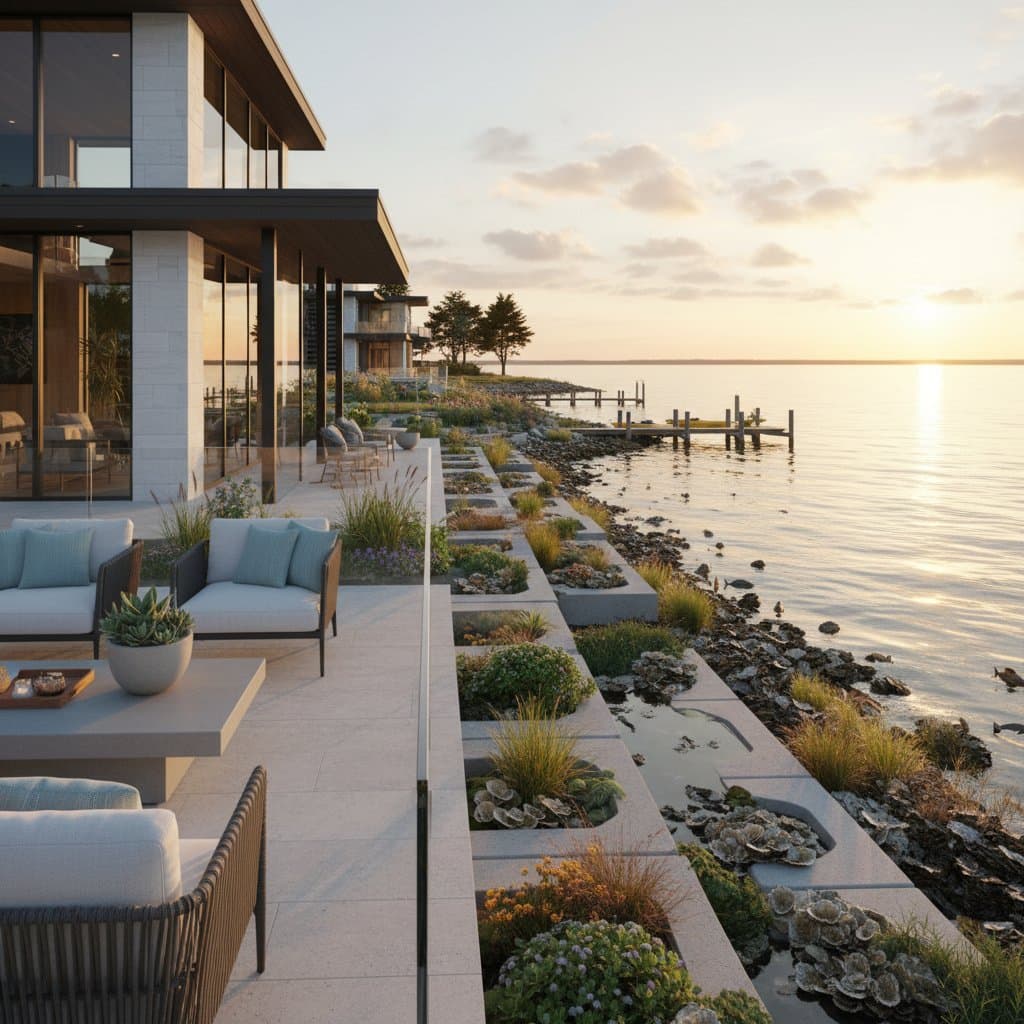
Living Seawalls: An Eco-Friendly Barrier for Eroding Waterfronts
Imagine awakening to ocean waves lapping at your doorstep, with a fresh sea breeze filling your home. Yet, relentless coastal erosion threatens to undermine that idyllic setting, transforming a cherished property into a source of concern. Living seawalls address this challenge by blending robust engineering with ecological restoration. These systems safeguard shorelines while fostering habitats for marine species. Costs generally fall between $250 and $1,200 per linear foot, varying with material choices and project scope.
Living seawalls deliver structural integrity alongside natural adaptability. Rather than relying on smooth concrete barriers, they incorporate textured surfaces or modular elements that replicate coastal environments. This approach not only defends against wave action but also attracts biodiversity, such as shellfish and fish populations. Property owners seeking durable, environmentally positive solutions increasingly adopt these innovations. For extensive installations or intricate coastal sites, consult experienced specialists in bioengineered coastal defenses.
Article Overview
- Factors affecting costs
- Available types and designs
- Professional versus self-installation
- Strategies for cost reduction
- Frequently asked questions
Factors Affecting Costs
Living seawalls typically cost $250 to $1,200 per linear foot, with many projects averaging $700 per linear foot. This spectrum arises from variations in customization, workforce requirements, and regulatory compliance.
Several elements drive these expenses:
-
Material choices: Systems featuring concrete panels integrated with habitat features command higher prices than those using basic rock armoring or shell structures.
-
Site-specific challenges: Properties with steep gradients or shifting substrates demand advanced engineering and reinforced bases.
-
Regulatory processes: Compliance with coastal laws frequently necessitates ecological assessments, which extend timelines and budgets.
-
Workforce and tools: Certified marine experts employ purpose-built equipment to operate effectively and safely along water edges.
Although conventional seawalls appear more affordable initially, living seawalls prove economical long-term through minimized upkeep and prolonged durability.
Types and Design Options
Modular Panel Systems
These consist of factory-made concrete panels designed with irregular textures resembling natural stone outcrops.
Ideal for: City-adjacent lots or pier structures requiring a structured aesthetic.
Such panels draw in oysters, mussels, and juvenile fish, which in turn enhance water clarity and absorb wave impacts.
Photo: John W Banagan / Getty Images
Hybrid Rock and Vegetation Systems
This design merges indigenous plants, degradable coir matting, and strategically positioned boulders.
Ideal for: Moderate inclines or unaltered coastal edges.
The arrangement integrates effortlessly into the landscape, forming a verdant shield that gains stability as root systems develop.
Photo: Lisa Hubbard / Getty Images
Oyster Reef Structures
These incorporate oyster shells or fabricated reef units to stimulate organic reef growth.
Ideal for: Regions with dynamic tidal flows.
In addition to preventing soil loss, these formations support diverse aquatic communities and naturally purify surrounding waters.
Photo: David Clapp / Getty Images
Professional Installation Versus DIY Approaches
Constructing a living seawall demands more than basic handiwork; it requires knowledge of tidal dynamics, substantial equipment, and meticulous site evaluation. Ambitious homeowners might manage minor enhancements, such as planting shoreline buffers or arranging small rock clusters. However, comprehensive barriers necessitate the expertise of permitted coastal engineers. These professionals evaluate water patterns, ground composition, and legal stipulations to guarantee enduring performance and regulatory adherence.
Strategies for Cost Reduction
-
Integrate hybrid elements: Deploy concrete in vulnerable areas while supplementing with plantings elsewhere to balance protection and expense.
-
Collaborate with adjacent owners: Joint efforts to fortify communal shorelines distribute financial burdens.
-
Source regional resources: Opt for local flora and aggregates to eliminate transportation fees.
-
Initiate planning early: Secure approvals in advance to prevent scheduling disruptions that inflate labor charges.
Consider phased implementation for larger sites, starting with critical segments to spread outlays over time.
Frequently Asked Questions
How durable are living seawalls?
Properly maintained systems endure 30 to 50 years. Biological elements frequently bolster resilience as vegetation roots deepen and organisms colonize surfaces.
Are permits required?
Yes, coastal jurisdictions mandate environmental reviews and construction approvals to uphold ecological integrity and structural safety.
Can living seawalls withstand severe weather?
Well-designed versions resist substantial hydrodynamic pressures, with hybrid configurations of rigid and pliant features providing optimal storm resistance.
What ongoing care do they need?
Conduct yearly inspections for wear, replenish vegetation as necessary, and clear accumulated sediment to maintain hydraulic efficiency.
Building a Resilient Coastal Legacy
Living seawalls extend beyond mere defense; they harmonize human development with natural processes at the water's edge. Select an appropriate configuration and commit to routine oversight to cultivate a shoreline that endures storms and nurtures wildlife for generations.